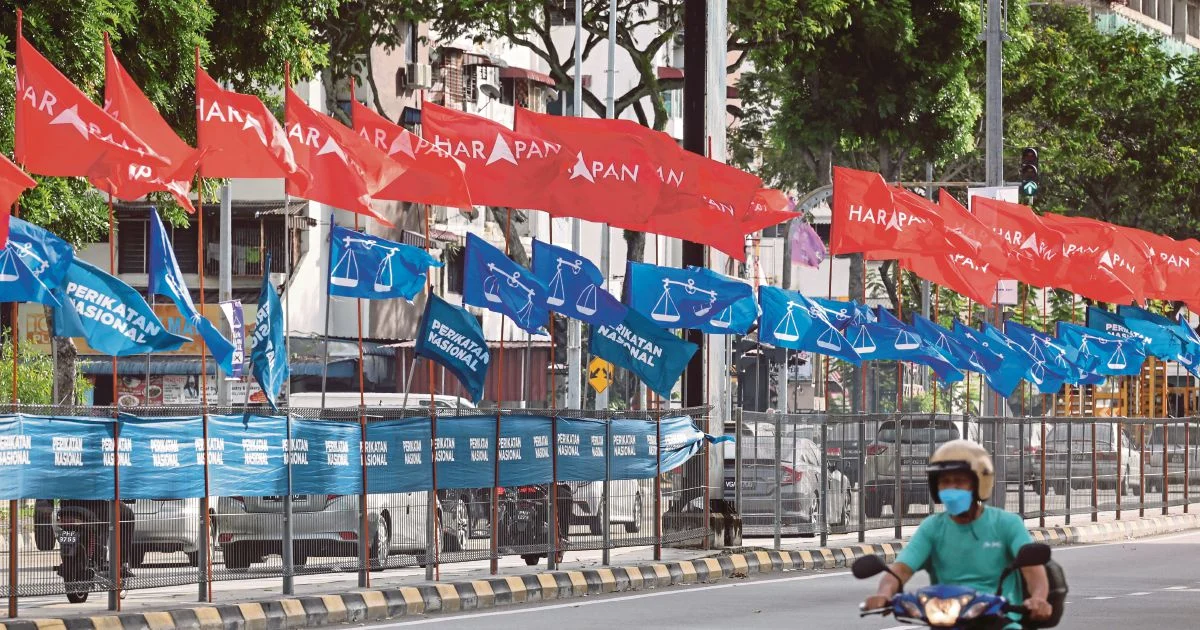
Malaysia's political heartland Johor is bracing for a tightly contested state election where the traditional two-coalition framework has given way to a more complex three-way competition. Barisan Nasional, Pakatan Harapan and Perikatan Nasional are poised to field candidates in 33 of the 56 state assembly seats scheduled for voting next month, according to early electoral arrangements. The scale of direct confrontation between all three political forces in nearly 60 percent of constituencies underscores the increasingly fractionalised nature of Malaysian politics at the state level.
This configuration represents a significant shift from the binary contests that have historically dominated Johor elections. For decades, BN's dominance meant that opposition parties typically faced a single challenger in most seats, but the emergence of PN as a consequential political force has fundamentally altered electoral dynamics across the peninsula. In Johor specifically, the simultaneous presence of all three coalitions signals that no single bloc can assume automatic advantages based on traditional vote-splitting between opponents.
The three-cornered contests carry particular weight because Johor remains Malaysia's second-most populous state and has long served as a crucial proving ground for national political trends. Electoral outcomes here frequently preview shifting sentiment ahead of general elections, making the state's voting patterns closely watched by political analysts, strategists and observers across the region. A state that delivered BN victories for decades has shown increasing volatility in recent years, with the 2022 general election demonstrating substantial support for opposition movements.
Barisan Nasional's presence in these contests reflects the coalition's determination to maintain its traditional stronghold, particularly given BN's recent resurgence in national politics. The coalition brings institutional advantages including longstanding grassroots networks, administrative machinery and incumbent advantage in seats it currently controls. However, BN's ability to consolidate support faces headwinds from both the other coalitions, which will campaign aggressively in these marginal and swing areas.
Pakatan Harapan's involvement across 33 seats demonstrates the coalition's strategic assessment that Johor presents genuine opportunities for electoral gains. The coalition's strength in urban centres and among younger voters provides a foundation for competitive campaigns in many constituencies, particularly those encompassing city areas and suburban sprawl. PH's 2018 federal victory showed it could successfully mobilise support in diverse constituencies, though translating that to the state level requires distinct campaigning approaches tailored to local concerns and community dynamics.
Perikatan Nasional's participation in such a substantial number of contests reflects its consolidation as a significant political force capable of attracting candidates and supporters willing to challenge the traditional coalitions. The bloc has successfully leveraged certain demographics and regional grievances to build electoral support, and its presence in Johor contests suggests the coalition believes it can compete effectively even against entrenched political machines.
The implications of this three-way configuration extend beyond Johor itself. A fragmented electoral battlefield means that plurality victories become more likely, potentially allowing candidates with less than majority support to win seats. This dynamic could significantly alter the composition of the Johor state assembly and the distribution of seats among the three major coalitions. The outcome will also provide crucial data points for understanding how Malaysian voters evaluate the three coalitions when presented with genuine choice, rather than voting based primarily on which opposition option can challenge the incumbent.
For Malaysian voters, particularly those in Johor, the three-way contests promise more vibrant electoral campaigns with substantive policy debates from multiple perspectives. Simultaneously, the fragmentation raises questions about coalition stability post-election and whether any single bloc can secure a clear working majority in the state legislature. Should no coalition win decisively, post-election negotiations between parties could determine which combination forms the state government, potentially creating scenarios where electoral arithmetic dictates outcomes as much as voter preference.
The Johor election also occurs within the broader context of Malaysian federalism and the balance between federal and state power. State elections increasingly serve as opportunities for voters to express views about national politics, and Johor's size and economic importance mean that its electoral verdict will reverberate through Malaysian political commentary and strategy. The three-way contests across 33 seats will provide the clearest possible picture of how voters simultaneously evaluate all major political options available in contemporary Malaysia.
Beyond the immediate electoral contest, the prevalence of three-way races underscores how Malaysian politics has genuinely transformed from the binary framework that characterised decades of post-independence electoral competition. Voters across Johor will cast ballots knowing that their choice carries implications not merely for who wins individual seats, but for the fundamental recalibration of coalition strength at both state and national levels. The election next month therefore represents more than routine state-level politics; it constitutes a meaningful moment in Malaysia's ongoing political evolution.

