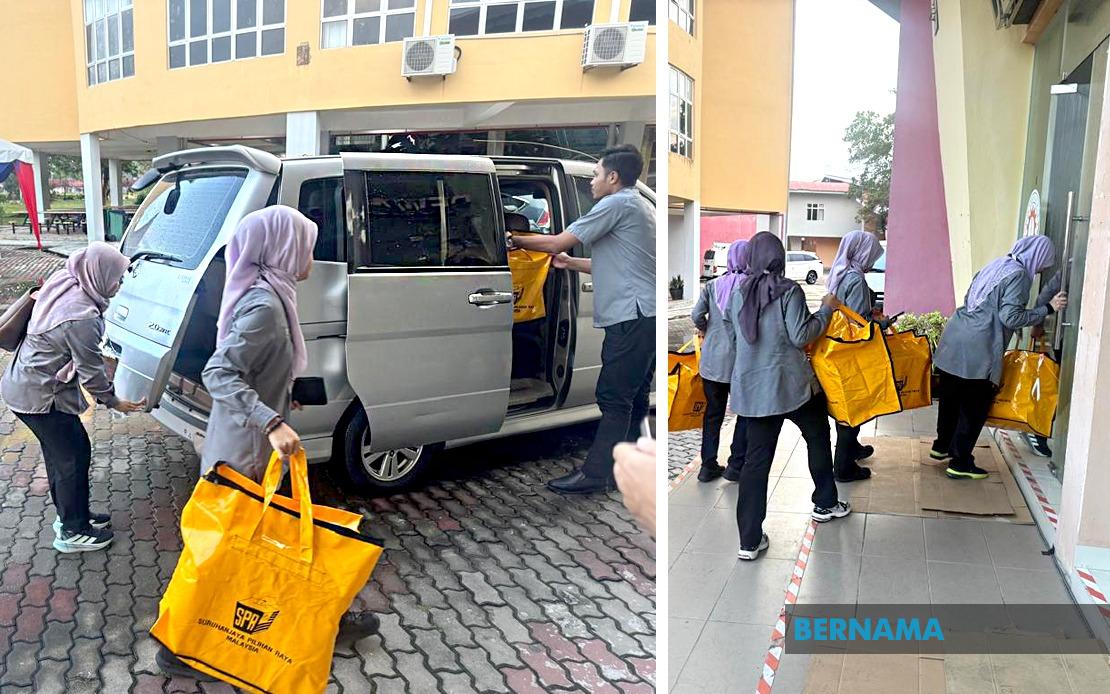
The counting process for Johor's 16th State Election got underway this evening as ballot boxes began trickling into designated tally centres across the state following the closure of all polling stations at 6 pm. The movement of boxes, which had been sealed after voting concluded, signals the start of what will likely be a lengthy night of vote verification and tallying across multiple venues throughout the southern state.
By 6 pm, the first batch of results began their journey to counting facilities. Three ballot boxes representing votes cast at island constituencies in the Tenggaroh seat—specifically from Pulau Sibu, Pulau Besar and Pulau Pemanggil—arrived at the counting centre housed in Dewan Jubli Intan Sultan Ibrahim in Mersing. The movement of these boxes, originating from the archipelago portions of the constituency, reflects the logistical complexity of managing an election across a state that includes coastal and island communities.
Parallel operations were conducted in other urban centres. Just over half an hour after the polls closed, two postal ballot boxes designated for the Perling constituency were delivered to the counting venue at Dewan Jubli Intan in Johor Bahru city. Postal voting, which allows citizens to cast ballots before election day through designated channels, represents an increasingly important component of modern elections and requires separate processing and verification procedures.
Similarly, personnel from the Election Commission transported two postal ballot boxes for the Kempas constituency to the counting centre at Dewan Cahaya TNB Kempas at 6:47 pm. The staggered arrival times of boxes from different constituencies reflect the geographical distribution of counting centres and the need to transport votes securely from dispersed polling locations. Each box movement was documented and tracked to maintain the integrity of the electoral process.
The scale of this election is reflected in the sheer number of polling centres that operated across Johor on election day. A total of 1,076 polling centres were active throughout the state, serving voters across all constituencies and ensuring accessible voting locations for the electorate. This infrastructure represents months of planning by the Election Commission to accommodate voter distribution patterns and demographic spread across Johor's urban, suburban and rural areas.
For Malaysian observers and international monitors, the smooth transition from voting to counting is a critical indicator of electoral competence. The ability to collect, transport and securely deliver ballot boxes to counting venues without incident demonstrates operational efficiency and adherence to established protocols. Each step in this chain of custody is essential to maintaining public confidence in the electoral system, particularly in a state as politically significant as Johor.
The arrival of boxes at multiple counting centres simultaneously, rather than a single centralised location, reflects the practical necessity of distributing counting work across geography and jurisdiction. The Johor State Election Commission would have coordinated the timing of box arrivals to ensure that trained counting officials were positioned and ready to begin verification processes as boxes arrived. This staggered approach also allows election observers from various political parties and independent monitors to witness proceedings at multiple venues.
Postal ballots require special attention during the counting process, as officials must verify that votes were cast by eligible voters using proper procedures. The separate transport and counting of postal votes from each constituency allows for detailed scrutiny and maintains a clear audit trail. This separation also prevents mingling of different voting methods, which could complicate verification procedures and create ambiguity in the final tallies.
The election night atmosphere in Johor reflects the political importance of this state election within Malaysia's broader political landscape. Johor has historically been a bellwether state, with results often foreshadowing broader trends affecting national politics. The arrival of ballot boxes therefore represents not merely a local electoral milestone but a significant moment in the state's political calendar.
As counting operations accelerated through the evening, the Election Commission faced the task of verifying and tallying votes across dozens of constituencies simultaneously. Different constituencies would complete their counts at different times, reflecting variations in polling centre numbers and voter turnout across different areas. Early results from less populous constituencies typically emerge first, while urban centres with higher voter numbers may require several more hours to process all ballots.

