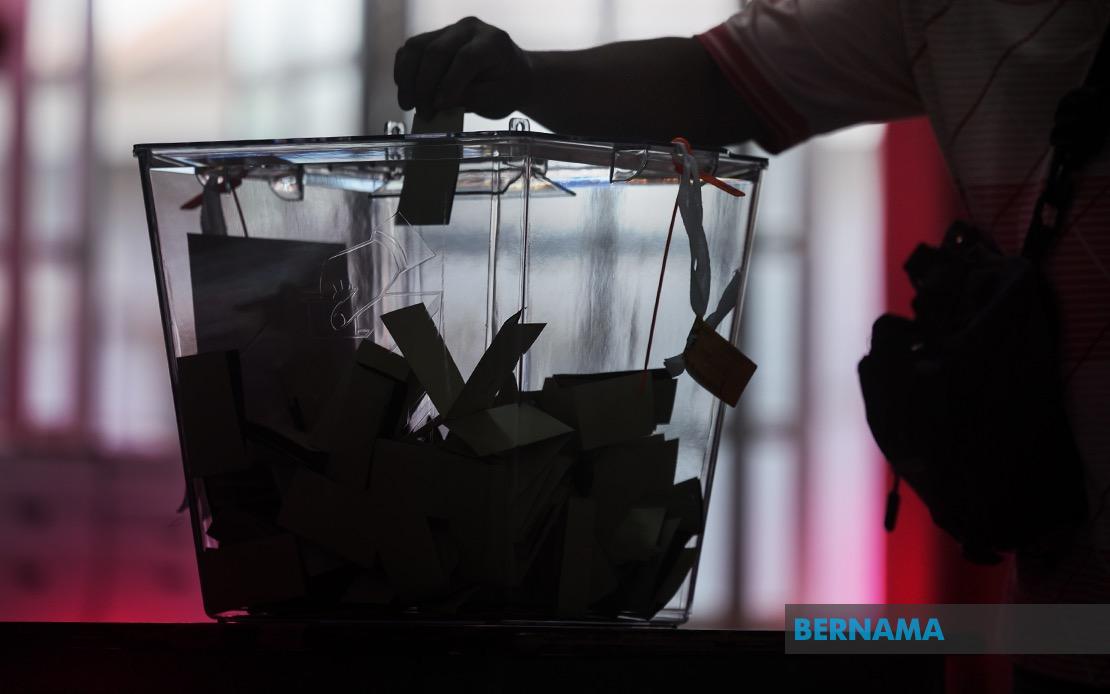
The upcoming 16th Johor state election may hinge on a single critical variable: whether voters who have left the state to work or study in other parts of Malaysia will make the effort to return home and cast their ballots. According to Associate Professor Dr Mazlan Ali, a political analyst and director of the Faculty of Social Sciences and Humanities at Universiti Teknologi Malaysia's Kuala Lumpur Campus, elevated voter participation would substantially advantage Pakatan Harapan (PH) candidates, particularly those contesting in urban and semi-urban constituencies where outstation voters, young professionals, and swing voters form a substantial portion of the electorate.
The analyst draws attention to a compelling historical pattern evident in Johor's recent electoral history. When the state held its elections in 2022, voter participation fell just above 50 per cent, a suppressed turnout that proved decisive in determining the election outcome. Under those circumstances, Barisan Nasional (BN) secured 40 state assembly seats, leveraging its entrenched local networks and a reliable base of longstanding supporters concentrated across the state. The depressed turnout particularly disadvantaged PH, as many of its potential voters—those who had relocated to Kuala Lumpur, Selangor, and other economic centres—did not journey back to Johor to participate in the democratic exercise.
However, the story shifted dramatically just months later when Malaysia held its 15th General Election (GE15) later that same year. Voter turnout surged to approximately 75 per cent, and the results presented a starkly different picture. PH captured 14 parliamentary seats across Johor, a performance underpinned by a remarkable expansion in the coalition's popular vote. Whereas PH garnered roughly 350,000 votes during the 2022 state election, this figure more than doubled to approximately 830,000 votes during GE15. This doubling of electoral support enabled the coalition to translate its increased vote share into significantly more parliamentary representation.
Dr Mazlan argues that the mechanics underlying PH's improved performance in GE15 provide a useful framework for understanding what might unfold in the forthcoming state election. The primary factor driving the swing was not a sudden conversion of existing BN supporters, but rather the mobilisation of voters who prefer PH's platform but were not present at the polling booth during the 2022 state contest. These are voters distributed across Malaysia's urban centres and industrial regions, maintaining voter registration in Johor even though they reside and work elsewhere. When elevated turnout creates conditions amenable to their participation, they tip the balance in PH's favour.
The external conditions surrounding this year's state election differ markedly from those of 2022, which operated under lingering pandemic constraints that discouraged travel. No such obstacles presently exist, and the analyst identifies several positive indicators suggesting outstation voters may be more inclined to return. Federal political stability, coupled with visible improvements in economic indicators and ongoing government assistance programmes—including subsidies on fuel—create a perception among PH's supporters that the coalition's continued governance is worth defending at both federal and state levels. These material factors translate into motivation to shoulder the inconvenience of returning to vote.
Dr Mazlan characterises PH's core voter base as possessing particular demographic and psychographic traits. These supporters tend to be outstation residents, younger voters, the more formally educated, individuals highly mobile for employment purposes, and those active across social media platforms. They are attracted to PH's messaging centred on justice and fair governance, distinguishing them from voters whose electoral choices are primarily shaped by racial and religious considerations. When this coalition of outstation voters, fence-sitters, and younger demographics return home in substantial numbers, their concentrated presence in urban and semi-urban constituencies can prove decisive, potentially shifting the outcome in several closely contested seats.
The analyst emphasises that urban and semi-urban areas will function as the true battlegrounds in this election. Voters inhabiting these constituencies demonstrate greater responsiveness to contemporary governance issues, economic policy performance, and broader narratives surrounding social justice. They are substantially more discerning consumers of political messaging and less subject to traditional appeals. For PH, these areas represent genuine opportunities to expand beyond its baseline support, provided that the outstation component of the electorate participates at elevated levels.
There exists, however, a crucial asymmetry between the two major coalitions' voter compositions. Barisan Nasional's support in Johor remains geographically concentrated and rooted in stable, long-term residence. BN voters are present in the state consistently and do not depend on elevated turnout to translate their preferences into electoral outcomes. By contrast, PH's relative advantage emerges precisely when turnout climbs, because doing so brings into the electorate precisely those voters most inclined toward the coalition. This structural reality explains why the 2022 state election, with depressed turnout, favoured BN, while GE15, with robust participation, benefited PH.
The final challenge confronting Pakatan Harapan during the remainder of the campaign period involves translating potential into practice. The coalition must ensure that its supporters, particularly those residing outside Johor, actually materialise at polling stations rather than simply harbouring intentions to vote. Mobilising outstation voters requires effective communication about voting logistics, creating sense of urgency regarding the stakes involved, and demonstrating that the effort involved in returning to vote will yield meaningful results. Organisational capacity to implement such mobilisation campaigns often separates narrow defeats from victories in competitive electoral contests.
Several structural factors render the 2024 Johor election distinctly different from the 2022 precedent, suggesting that the GE15 outcome may provide a more reliable forecasting template. The removal of pandemic-related constraints on movement, the apparent willingness of outstation voters to return home to vote—as evidenced by GE15 participation rates—and the continued focus by PH's constituency on justice-centred messaging all point toward conditions favouring higher turnout and consequentially greater PH representation. Whether this potential materialises depends substantially on the actual participation decisions made by voters scattered across Malaysian cities and towns, and the cumulative impact their ballots will exercise in suburban and urban constituencies throughout Johor.

