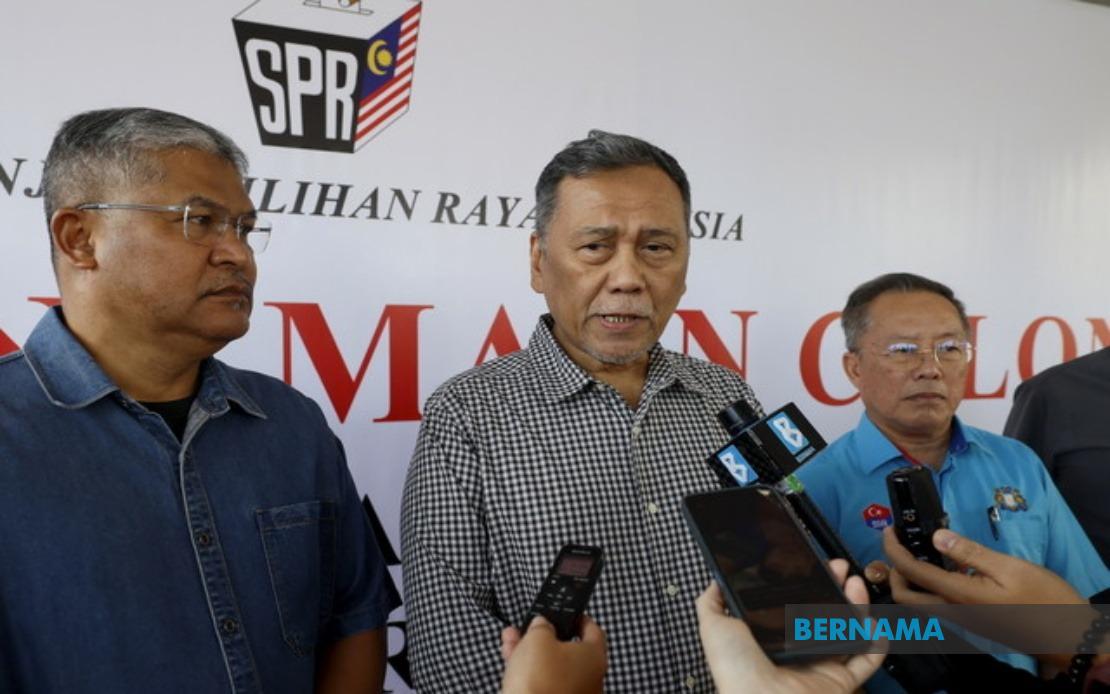
With just hours remaining before nomination day, the Election Commission has confirmed that 133 prospective candidates have formally committed to contesting the Johor state election by paying the required deposits, even as 593 nomination forms have been distributed across the state. The figure underscores the fluid nature of candidate declarations in the lead-up to Malaysia's critical state-level contest, where political parties are still finalising their lineups and independent candidates are making last-minute decisions about whether to enter the race.
Election Commission chairman Datuk Seri Ramlan Harun indicated that the deposit payment figures were likely to climb significantly before the nomination window officially opens. The EC remained optimistic that additional candidates would complete their registration formalities during the remaining hours, particularly those who may have already purchased nomination forms but delayed their financial commitments. This pattern is typical of Malaysian electoral contests, where some candidates only formalise their candidacy when deadlines loom.
The Johor dissolution on June 1 set in motion an electoral calendar that has compressed the traditional campaign timeline. The nomination process, scheduled to commence the following day, would determine the final roster of contestants across 56 state seats. Early voting has been scheduled for July 7, with the main polling day fixed for July 11. This compressed schedule contrasts with previous state elections and reflects the current political dynamics in Johor, a strategically important state that has historically swung between opposition and government control.
Acknowledging the extensive groundwork undertaken by the electoral body, Ramlan provided reassurance that all 56 nomination centres positioned throughout Johor had undergone comprehensive preparation procedures. The EC conducted consecutive trial runs to ensure the infrastructure, staffing, and administrative processes would function smoothly when candidates and their supporters converged on nomination day. This logistical preparation was essential given the potential for large crowds and the need to process multiple nominations simultaneously across geographically dispersed locations.
Security considerations featured prominently in the EC's messaging as nomination day approached. Party officials and supporters were explicitly cautioned to respect established regulations and refrain from provocative behaviour that might disrupt the nomination process or create tension between rival political groups. The EC recognised that nomination days can generate considerable excitement and partisan energy, and thus mandated stringent crowd management protocols to prevent confrontations that have occasionally marred previous electoral events in Malaysia.
The Maharani returning officer, Zainal Eran, elaborated on the specific measures that would govern access to nomination centres and supporter conduct. The protocol restricted physical entry to nomination venues to candidates, their official proposers, and a single designated supporter, ensuring that the nomination submission process itself remained orderly and streamlined. This limitation reflected lessons learned from earlier elections and balanced the need for candidates to demonstrate public support with the practical requirements of efficient administration.
Supporting crowds would occupy designated zones demarcated by physical barriers, with separate enclosures for each political party's followers. This spatial separation strategy, while sometimes appearing cumbersome, served a genuine purpose: preventing spontaneous confrontations between supporters of rival parties and maintaining the civil character of the electoral process. The arrangements acknowledged that nomination days generate emotional investment from party members and sympathisers who wish to witness their candidates' formal entry into the contest.
Packatan Harapan's decision to field a comprehensive slate across all 56 constituencies demonstrated its confidence in Johor as a territory where it could mount competitive campaigns. The coalition allocated its candidates across three component parties, with PKR contesting 20 seats, Amanah 19 seats, and DAP 17 seats. This distribution reflected internal coalition mathematics and strategic assessments of which parties possessed the strongest organisational footprint and electoral appeal in particular districts.
Barisan Nasional similarly committed to a statewide contest, leveraging its traditional electoral machinery across 56 seats through its three main component parties. UMNO would carry the coalition's primary load with 36 nominations, while MCA fielded 16 candidates and MIC contributed four contestants. The strategy represented continuity with Barisan's historical approach in Johor, where it has traditionally enjoyed significant organisational advantages and incumbent control of state resources.
Perikatan Nasional adopted a more selective approach, with PAS focusing on 11 constituencies while Bersatu mounted a more ambitious effort with 16 candidate nominations. The Malaysian Indian People's Party and Pejuang contributed five and one candidate respectively, reflecting the smaller scale of these component parties within the broader coalition. This differentiated participation pattern highlighted the varying levels of organisational capacity and electoral confidence among Perikatan's constituent parties across Johor's diverse districts.
Emerging players and smaller parties sought to utilise the Johor election as a platform for electoral expansion. The Malaysian United Democratic Alliance nominated candidates in four seats, while Parti Sosialis Malaysia registered a single nomination. Most notably, Parti Bersama Malaysia prepared to make its electoral debut in Malaysian state politics by contesting 15 Johor constituencies, representing an ambitious entry point for a newcomer seeking to establish itself as a significant political force.
The diverse candidate slate across 593 nomination forms reflected Johor's significance as a battleground state where multiple political actors harboured genuine ambitions of electoral success. Beyond the major coalitions and established parties, the presence of smaller parties and debutant contestants indicated that voters would encounter a genuinely competitive multiparty environment. This diversity, contingent on deposit payments proceeding as expected, would present Johor voters with unusually broad ideological and partisan choices in July.
As nomination day dawned, the actual number of registered candidates would reveal the true competitive landscape. The gap between the 593 nomination forms sold and the confirmed 133 deposits suggested that some prospective candidates remained undecided or faced last-minute logistical obstacles. The coming hours would determine whether Johor's 56 seats would be contested by upwards of 500 candidates or whether the final figure would prove more modest, ultimately shaping the campaign dynamics and voters' experience of the electoral process.

