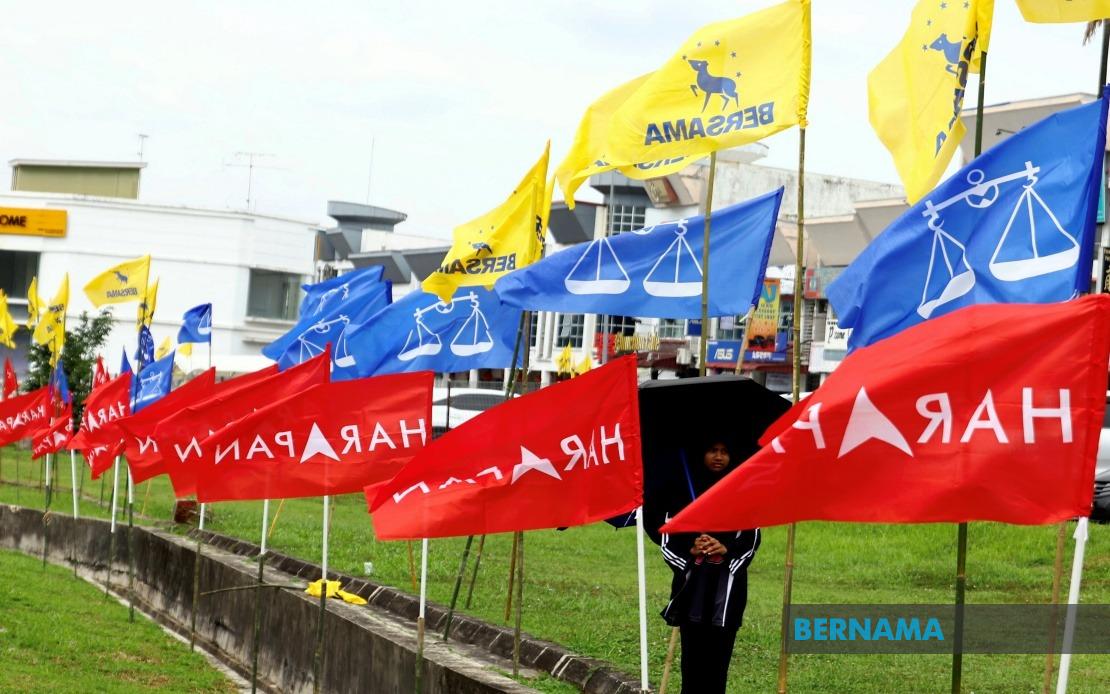
The intensive two-week campaign period for Johor's 16th state election will officially draw to a close at 11.59 pm tonight, marking the end of all visible political activity as Malaysia's southern state approaches a pivotal moment in its governance structure. From tomorrow morning at 8 am, the electoral machinery will shift into its final operational phase, with voting centres across the state ready to receive voters throughout the day. The outcome of this election will determine not only which coalition leads Johor for the next five years but also carries broader implications for Malaysia's political trajectory, given the state's historical significance and economic importance to the nation.
The scale of voter participation expected tomorrow underscores the magnitude of this electoral exercise. Approximately 2.7 million registered voters are eligible to cast their ballots across 1,076 polling centres, deciding the fates of 172 candidates competing for 56 state assembly seats. The number of candidates represents a notable decrease from the 239 contenders who stood in the previous state election, suggesting either consolidation within political parties or a more focused campaign strategy by the major coalitions. The Election Commission has indicated that comprehensive results should be available by 10 pm, allowing for rapid assessment of voting patterns and coalition performance across different regions of the state.
Two major coalitions have dominated the campaign narrative: Barisan Nasional, led by Deputy Prime Minister Datuk Seri Dr Ahmad Zahid Hamidi, and Pakatan Harapan, guided by Prime Minister Datuk Seri Anwar Ibrahim. Both coalitions fielded the maximum number of candidates at 56 each, effectively positioning this election as a direct contest between these two governing forces. The presence of Perikatan Nasional with 33 candidates, Parti Bersama Malaysia with 15, and several smaller parties indicates a fragmented opposition landscape, though these groupings present an alternative political narrative to voters dissatisfied with either major coalition. Prior to the dissolution of the state assembly in June, the composition reflected a Barisan Nasional-dominated legislature, with BN holding 40 seats compared to Pakatan Harapan's 12, Perikatan Nasional's three, and MUDA's single seat.
Political discourse throughout the two-week campaign period, which commenced on June 27, centred on interconnected economic and social concerns that resonate deeply with Johor's electorate. The cost of living crisis, economic recovery strategies, employment generation, and public welfare initiatives emerged as the primary battlegrounds where political parties sought to convince voters of their respective competencies and commitments. These themes reflect broader Malaysian concerns that extend beyond Johor's borders, making this state election a potential bellwether for how economic anxiety is translating into electoral behaviour across the nation. The manifestos presented by different political formations offered varying approaches to these challenges, yet voters ultimately must assess which parties possess both the credibility and capacity to implement their pledges.
Early voting procedures concluded last Tuesday, involving 20,607 members of the Malaysian Armed Forces, Royal Malaysia Police, General Operations Force, and their spouses. This segment represents a significant institutional voting bloc with distinct electoral characteristics. The advancement of early voting for security and uniformed personnel has become standard practice in Malaysian elections, ensuring that these essential services maintain operational continuity on polling day while their members exercise their democratic rights. The turnout and voting patterns within this cohort occasionally provide preliminary indicators of broader electoral trends, though they must be interpreted with caution given the specific demographic composition of uniformed personnel.
Dr Nazreena Mohammed Yasin, a political analyst from Universiti Tun Hussein Onn Malaysia, emphasises that overall voter turnout will constitute a critical barometer for translating campaign momentum into actual electoral support. However, she cautions against simplistic interpretations of turnout figures, noting that the relationship between participation rates and electoral outcomes varies substantially across different constituencies and demographic groups. The 2022 Johor state election achieved a turnout rate of 54.92 per cent, establishing a baseline against which tomorrow's participation can be measured. Dr Nazreena highlights that marginal seats—where victory margins are typically narrow—represent the most dynamic battlegrounds where turnout variations could prove decisive. Additionally, fence-sitters and undecided voters whose preferences crystallise only on polling day may hold decisive influence in closely contested constituencies, making last-minute campaign activities potentially consequential despite their compressed timeframe.
Beyond aggregate turnout figures, the efficacy of party machinery in mobilising supporters and executing flawless polling day operations will determine success in competitive constituencies. Dr Nazreena argues that changes in winning margins compared to previous elections provide valuable diagnostic information about whether political parties have strengthened their electoral foundations, experienced erosion in support, or witnessed significant shifts in voter preferences. Electoral performance must ultimately be contextualised within the government's track record, the credibility of individual candidates, political stability concerns, and each coalition's demonstrated capacity to address pressing economic challenges. These backward-looking assessments of performance often matter more than forward-looking promises, particularly when voters harbour concerns about policy implementation and follow-through on previous commitments.
Associate Professor Dr Mazlan Ali from Universiti Teknologi Malaysia observes that both Barisan Nasional and Pakatan Harapan have strategically emphasised political stability as their central campaign message. This narrative framing reflects the complex positioning of both coalitions within Malaysia's Unity Government arrangement, which fundamentally altered the political landscape after the 2022 general election. Dr Mazlan contends that the campaign narrative space has been essentially dominated by these two major coalitions, given their respective track records at federal and state governmental levels. While various manifestos and specific policy pledges have been articulated by competing parties, voters appear increasingly inclined to evaluate performance based on historical delivery rather than prospective commitments. This phenomenon suggests a maturation in electoral sophistication, where voters demand evidence-based assessment rather than accepting campaign rhetoric at face value.
Dr Mazlan anticipates that heightened public attention surrounding this election could stimulate elevated voter participation compared to the 2022 benchmark. When voter engagement increases, the significance of each individual vote intensifies correspondingly, potentially producing electoral outcomes that more closely reflect underlying voter preferences across the spectrum. The competitive dynamics between Barisan Nasional and Pakatan Harapan, combined with the presence of alternative political offerings through Perikatan Nasional and smaller parties, provides voters with a genuinely differentiated choice set. This multiplicity of options, however, also creates fragmentation risks where vote-splitting could produce outcomes that align poorly with majority voter preferences, a concern particularly acute in three-cornered or multi-way contests.
For Malaysian observers and analysts, the Johor election carries significance extending beyond state-level governance. The state represents one of Malaysia's economic powerhouses, hosting major port facilities, manufacturing zones, and agricultural production areas. Electoral shifts in Johor therefore potentially signal broader movements in voter sentiment that could presage changes in federal political dynamics. Additionally, Johor's historical importance as a Barisan Nasional stronghold means that any substantial erosion of BN support would constitute a significant political realignment. Conversely, Pakatan Harapan's performance in this election will indicate whether the coalition can consolidate and expand support beyond its 2022 baseline, or whether governing responsibilities have produced electoral costs.
The immediate post-election period will be equally consequential as voters make their choices tomorrow. Political party responses to the election outcome, coalition negotiations should results prove ambiguous, and the formation of a new state administration will unfold over the subsequent weeks. Whether the winning coalition enjoys sufficient legislative support to govern comfortably, or faces a fragmented assembly requiring negotiation and compromise with smaller parties, will shape governance capacity during the next five-year term. For Malaysian political observers and regional analysts tracking the country's democratic trajectory, tomorrow's results will provide crucial data points for understanding voter priorities and the sustainability of existing political arrangements.

