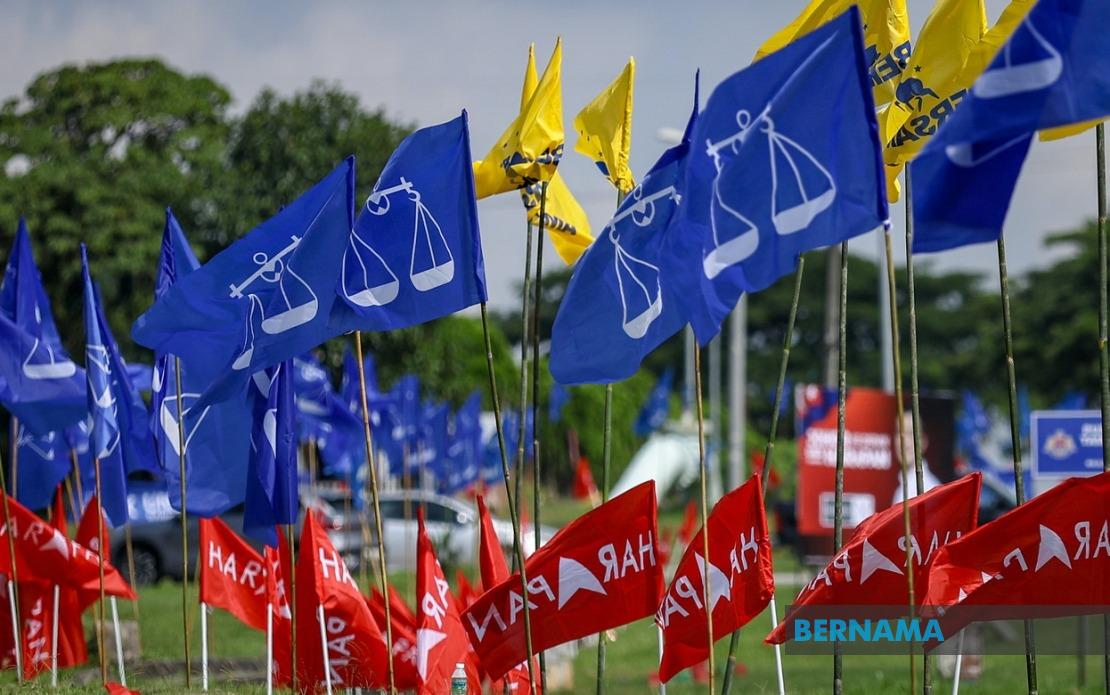
The Johor State Election Dialogue is set to proceed on schedule on Tuesday, July 7, despite the notable absence of Menteri Besar Datuk Onn Hafiz Ghazi, who has cited prior engagements that prevent his attendance at the high-profile event. The programme, being jointly mounted by RTM, Astro AWANI and Sinar Harian, will be held at the RTM Auditorium within the Johor Broadcasting Department premises from 8 pm, bringing together key political figures for public discourse on governance and electoral platforms.
The absence of the sitting Menteri Besar is particularly striking given the timing of the dialogue, which falls just four days before voters head to polling stations for the 16th Johor State Election on July 11. An aide to Onn Hafiz confirmed that the Menteri Besar's name does not appear on the programme itinerary, suggesting the decision to skip the event was made in advance. This creates an unusual dynamic for what organisers had intended as a balanced platform for presenting competing visions for the state's future.
Median estimates suggest approximately 200 representatives will attend the dialogue, drawn from government departments, statutory agencies, and MADANI Communities across the state. This broad cross-section of officials and stakeholders underscores the significance organisers have attached to the occasion, positioning it as an opportunity for state institutions and grassroots organisations to hear directly from leadership contenders. The breadth of participation reflects the national broadcasters' and print media's intent to ensure the dialogue reaches beyond typical political audiences.
Communications Minister Datuk Fahmi Fadzil is among the confirmed attendees, lending federal-level visibility to the proceedings. His participation signals the ruling coalition's commitment to active campaigning in the final stretch before Johor voters cast their ballots. Alongside Fahmi, Dr Maszlee Malik, the Pakatan Harapan candidate contesting the Puteri Wangsa state seat, is expected to be present, representing the opposition coalition's voice in the dialogue. The presence of both figures provides the framework for the planned head-to-head exchange of ideas and policy positions.
Organisers have positioned the dialogue as a carefully structured one-hour discussion intended to offer both participants an equitable opportunity to articulate their governance philosophies, strategic priorities, and responses to issues affecting ordinary Johoreans. By framing the event as balanced and fair-minded, the media partners aim to elevate the quality of electoral discourse beyond sound-bite politics and partisan slogans. The focus on substantive policy discussions reflects an effort to engage voters on matters of genuine consequence to their daily lives and the state's development trajectory.
The timing of the dialogue, coming during the official campaign period itself, carries political weight in shaping voter perceptions. With early voting scheduled for July 7, the same day as the dialogue, the event unfolds as part of the intensive final phase of campaigning when undecided voters are most likely to be attentive to political messaging. The juxtaposition of the dialogue with early voting underscores the stakes involved in the 16th Johor State Election, which will determine control of one of Malaysia's largest and economically important states.
The electoral contest itself is substantial in scope, with 172 candidates vying for 56 state assembly seats across various constituencies. This competitive landscape reflects broad political engagement across Johor, spanning multiple parties and coalitions beyond the traditional two-bloc framework. The sheer number of contenders and seats involved amplifies the importance of public forums where voters can assess candidates' qualifications and policy commitments before casting their votes.
Onn Hafiz's inability to participate in the dialogue may reflect the intensity of his campaign schedule during this critical electoral window. As the incumbent leading the state government, the Menteri Besar typically faces extensive demands on his time as he campaigns across constituencies to shore up support for his coalition's candidates. However, his absence from a nationally broadcast dialogue organised by major media outlets represents a missed opportunity for direct public engagement on his government's record and vision for Johor's future.
The decision to proceed without Onn Hafiz signals the broadcasters' and Sinar Harian's determination to conduct the dialogue regardless, suggesting that the event's informational value to the broader public was deemed significant enough to justify moving forward. This approach ensures that voters nonetheless receive substantive information about positions and priorities from the participating figures, even if the absent Menteri Besar's perspective is not directly represented in the live discussion. The participation of Minister Fahmi and candidate Dr Maszlee provides sufficient counterbalance to generate meaningful electoral discourse.
For Malaysian observers of Johor politics, the dialogue represents an important juncture in the state's democratic process, offering a window into competing visions for governance during a transformative electoral moment. The state's economic importance, its role as a gateway between Malaysia and Singapore, and its demographic diversity make the outcome of the July 11 election significant not only for Johor residents but for the broader political and economic health of the nation. Public forums like this dialogue serve as crucial mechanisms for transparent democratic deliberation before voters render their verdict.
The media's commitment to hosting the dialogue despite logistical challenges and the absence of the sitting Menteri Besar underscores broadcasting's perceived responsibility to facilitate informed electoral participation. By bringing together government officials, candidates from different coalitions, and diverse community representatives, RTM, Astro AWANI and Sinar Harian are attempting to elevate the tone of political discourse in Johor during this pivotal election season. The event stands as a reminder that substantive democratic engagement can and should occur even when not all key figures participate.

