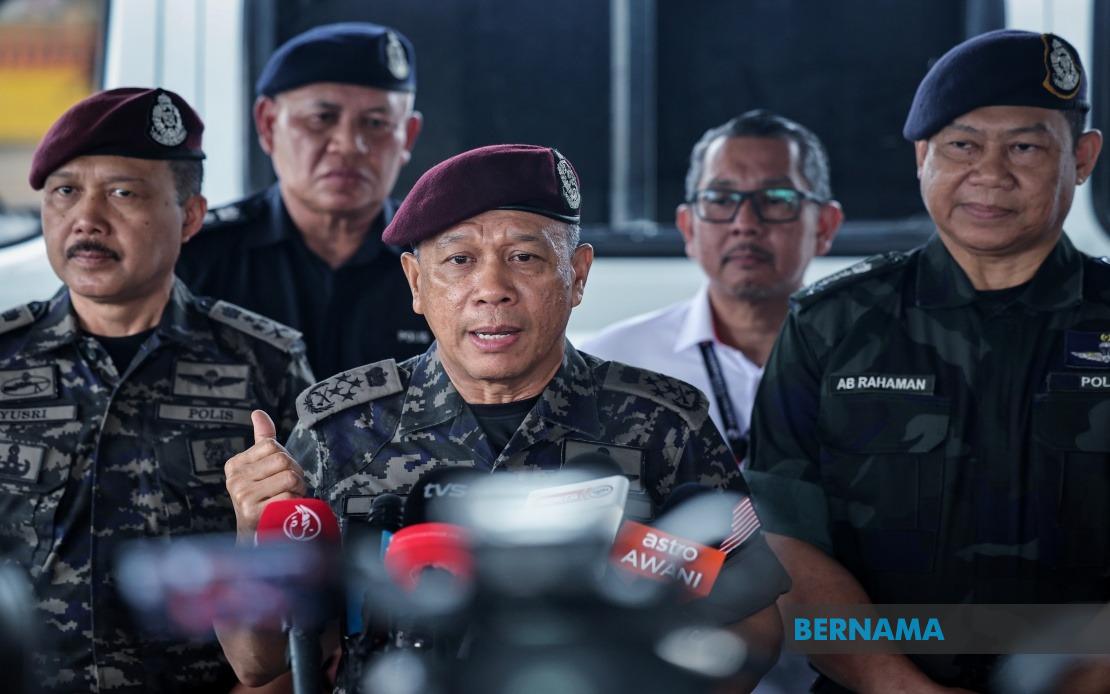
The 14-day campaign period for Johor's 16th state election concluded without incident involving candidates or top-tier political leadership, according to authorities overseeing the ballot. Inspector-General of Police Tan Sri Mohd Khalid Ismail disclosed that police departments across the southern state processed 90 separate reports during the campaign phase, which ended at midnight before polling day. Despite the volume of complaints and concerns raised by the public, none rose to the level of implicating the election candidates themselves or senior figures from the competing political parties, marking a relatively incident-free campaign.
The nature of the reports filed painted a picture of low-level campaign disruptions rather than coordinated electoral misconduct. Most complaints centred on damage to campaign materials, with police documenting instances of political party flags being defaced, removed, or deliberately set ablaze in scattered locations across Johor's 56 state constituencies. Such acts of mischief, while requiring investigation, appeared to stem from isolated incidents rather than systematic attempts to intimidate voters or disrupt the democratic process. The IGP characterised the overall campaign environment as orderly, though the police department proceeded methodically through the administrative procedures necessary to determine responsibility for each incident.
Investigative efforts were already underway to identify perpetrators, with 25 formal investigation papers having been opened by the time polling commenced. These papers represented cases deemed sufficiently serious or substantiated to warrant further inquiry under Malaysian electoral law. The remaining reports were either still under preliminary assessment or deemed insufficient to warrant formal investigation at that stage. Police indicated they would continue processing the documentation to reach conclusions about accountability, though the IGP offered no timeline for when investigations might conclude or charges might be filed. This deliberate pace of investigation reflected the police's commitment to thoroughness over speed in electoral matters.
The scale of law enforcement mobilisation for the polling day itself underscored the logistical complexity of conducting democratic exercises in Malaysia's second-largest state. Approximately 14,000 police officers and personnel were distributed across all 56 constituencies to maintain public order and ensure voting proceeded smoothly. The deployment included a significant contingent of 5,600 officers from police units nationwide, dispatched specifically to support electoral administration and security operations. This nationwide commitment demonstrated the seriousness with which the election was treated at the federal level, even as the contest remained primarily a state-level affair affecting Johor's governance.
With more than 2.7 million registered voters participating in the exercise, Johor's electorate represented a substantial portion of Malaysia's voting population. The sheer number of eligible voters meant that security and administrative coordination presented genuine challenges, requiring the presence of sufficient personnel to manage crowds, prevent disruption, and respond swiftly to any issues. The IGP's confirmation that voting had proceeded without untoward incidents by the time of his statement suggested that the heavy police presence had achieved its intended deterrent effect. The relative absence of serious election-day disruptions, despite the tensions that often accompany competitive state elections in Malaysia, reflected positively on both voter conduct and security preparations.
For Malaysian readers accustomed to occasionally contentious election campaigns, the absence of candidate involvement in reported incidents carried particular significance. In previous state elections across Malaysia, complaints have occasionally surfaced alleging that election contenders or their representatives engaged in misconduct ranging from illegal campaign activities to voter intimidation. The Johor campaign's clean record in this regard suggested either improved discipline among political operatives or, alternatively, heightened awareness of legal consequences for those crossing ethical boundaries. The fact that senior party leadership remained untouched by allegations during the campaign period also indicated a measure of internal party discipline in managing supporters' conduct.
The Inspector-General's explicit invitation for voters to report any grievances or complaints about the election process itself carried implications for how electoral disputes might be resolved post-polling. By encouraging citizens to lodge formal reports with police, the IGP underscored the role of law enforcement in addressing electoral integrity concerns. This approach ensured that the Election Commission and other relevant agencies would receive documentation of potential irregularities through official channels, creating a formal record and enabling coordinated response. For voters concerned about fairness or conduct, this pathway offered a mechanism to voice concerns and seek redress through established institutional channels.
The timing of the IGP's statement during active polling hours, combined with his visit to a secondary school polling centre in Taman Molek, demonstrated visible police presence and confidence that operations were proceeding appropriately. The presence of senior officials including the Internal Security and Public Order Department director and the Johor Police Chief further emphasised the hierarchical attention being paid to the election. Such high-level engagement in monitoring the voting process, while routine for significant elections, reinforced to the public that authorities were actively overseeing proceedings and prepared to respond to any developments.
From a regional perspective, Johor's election carried implications beyond the state's boundaries. As Malaysia's most developed state outside the federal territories, and hosting significant manufacturing, port, and tourism sectors, Johor's political stability mattered to investors and neighbouring economies including Singapore. The smooth conduct of the election campaign and polling day, undisturbed by major incidents, reinforced the impression of Malaysia as a functioning democracy capable of conducting competitive elections within orderly frameworks. For Southeast Asian observers, Johor's experience contributed to assessments of Malaysia's democratic health and institutional capacity.
The preliminary findings from police work during and immediately after the campaign period suggested that Malaysian voters in Johor had largely respected electoral norms despite the competitive intensity that state elections often generate. The predominance of property damage incidents over allegations of voter manipulation or coercion indicated that whatever tensions existed among partisan supporters, they had not translated into systematic efforts to compromise the integrity of the voting process itself. This distinction—between campaign passion expressed through vandalism and actual threats to democratic fairness—mattered considerably for evaluating the overall health of the electoral exercise.
Looking forward, the completion of investigations into the 90 reported incidents would provide authorities with intelligence about patterns of campaign misconduct and the effectiveness of existing preventive measures. Whether the incidents proved to represent a typical baseline for Malaysian state elections or whether enhanced police presence and civic awareness had genuinely reduced misconduct would become clearer once analysis of historical data could be conducted. For election administrators and security planners in other Malaysian states preparing for future polls, the Johor experience offered lessons about resource allocation, community engagement, and the conditions under which large electoral exercises could proceed with minimal disruption.

