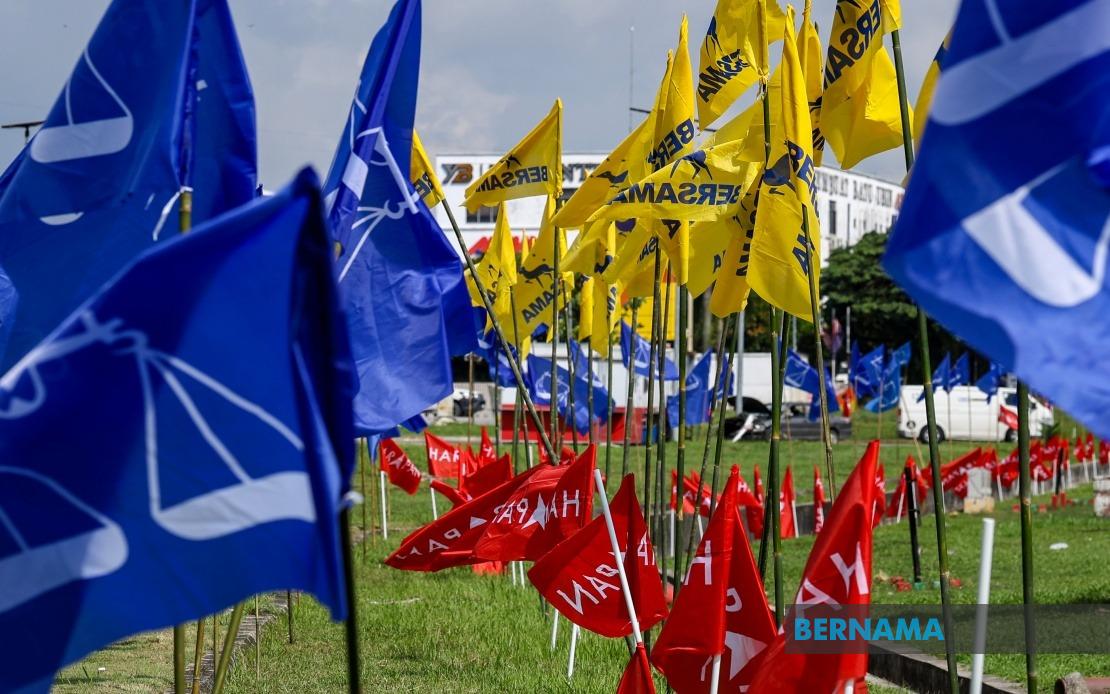
The inaugural phase of the 16th Johor state election has unfolded with controlled energy, departing sharply from the spectacle typically associated with Malaysian electoral contests. Rather than the trademark processions and stadium-sized gatherings, all competing parties have chosen instead to concentrate their initial efforts on direct, personalised voter contact—a strategic recalibration that reflects both practical resource management and evolving campaign philosophy across the region. This measured opening, spanning the first week leading into polling day on July 11, suggests a broader shift in how Malaysian political organisations now approach the critical early stages of mobilisation.
According to Prof Datuk Dr Sivamurugan Pandian, a Senior Lecturer in Political Sociology at Universiti Sains Malaysia, this departure from conventional mass-rally tactics represents a deliberate adaptation to contemporary political dynamics. The analyst points out that house-to-house visits, intimate community forums, and small-group discussions now form the backbone of the initial campaign framework, affording candidates invaluable face-to-face dialogue with residents while simultaneously strengthening party organisational structures. This granular approach, Sivamurugan suggests, is not merely a cost-saving measure but a calculated investment in foundational strength—building the interpersonal networks and neighbourhood-level presence that prove decisive when momentum accelerates in subsequent weeks.
The strategic importance of this opening phase cannot be overstated, as Sivamurugan emphasises that the first week functions primarily as a consolidation period before the machinery reaches full intensity. The second phase is expected to witness a dramatic escalation, with senior party leadership deployed to high-profile events and the campaign narrative amplified through both traditional and digital channels. This two-stage structure allows parties to calibrate their messaging and resource deployment based on early voter feedback, making the foundational groundwork of week one absolutely critical to long-term success.
Dr Azmi Hassan, a geostrategist and Senior Fellow at the Nusantara Academy for Strategic Research, contextualises this shift within the broader modernisation of Malaysian electoral strategy. He notes that contemporary campaigns increasingly operate as data-intensive enterprises, with sophisticated voter categorisation systems guiding where and how resources are deployed. The traditional outdoor rally, once the centrepiece of political communication, has given way to a hybrid ecosystem where direct personal persuasion—targeted at carefully identified voter segments classified as committed supporters, persuadable neutrals, and opposition sympathisers—operates alongside intensive social media deployment. This evolution reflects how Malaysian parties now view elections less as mass spectacles and more as precision instruments for voter conversion.
Meanwhile, Mujibu Abd Muis, a political science lecturer at Universiti Teknologi MARA and researcher at the Ilham Centre, has identified three dominant thematic pillars structuring campaign discourse across the competing parties. All contenders are emphasising their track records of delivery, projecting future pledges for development, and positioning themselves as guarantors of political stability—a trinity of appeals that addresses voter anxieties about both performance and governance continuity. However, Mujibu observes a critical limitation: these narratives have yet to crystallise into a singular dominant frame powerful enough to reshape the electoral terrain. The real turning point will arrive when these abstract promises connect viscerally to voters' lived experiences—cost of living pressures, employment accessibility, neighbourhood infrastructure, and the quality of public services that intersect daily with ordinary residents' concerns.
Geographic distribution of campaign activity reveals how tactical resource allocation mirrors coalition calculations about competitive battlegrounds. Northern Johor—encompassing constituencies in Muar, Tangkak, Segamat, and portions of Batu Pahat and Kluang—has emerged as the early focal point for intensive party machinery deployment. Mujibu characterises this concentration not as random distribution but as deliberate prioritisation of constituencies expected to prove decisive, with the prominent placement of national leadership signalling each coalition's assessment of these areas' strategic weight. The calculation is elementary yet revealing: parties invest their most valuable assets where margins are likely tightest and outcomes most uncertain.
Associate Professor Dr Mazlan Ali, Director of the Faculty of Social Sciences and Humanities at Universiti Teknologi Malaysia, frames the campaign architecture as fundamentally a two-coalition contest between Barisan Nasional and Pakatan Harapan, with each bloc's geographic strongholds already becoming evident. Pakatan Harapan demonstrates pronounced influence across southern and western Johor, whereas Barisan Nasional projects strength in the eastern coastal districts, particularly Mersing and Kota Tinggi. This geographic polarisation is neither accidental nor static—rather, it reflects years of accumulated organisational presence, community relationships, and the cumulative weight of past performance evaluations. How each coalition deploys its machinery is intrinsically connected to this probabilistic assessment of where victory is attainable and where efforts might prove futile.
One element transcending all analytical perspectives is the pivotal role of voter turnout. Every expert consulted emphasises that participation rates will substantially shape the ultimate result, yet paradoxically, the opening week's subdued character may already be influencing how readily voters perceive the election as consequential enough to warrant voting day engagement. The 56 state assembly seats contested across the state by 172 candidates represent the field within which these participation patterns will ultimately crystallise into a new government and opposition structure.
With early voting scheduled for July 7 and the main polling day arriving July 11, the second week will determine whether the foundational work accomplished through house visits and community programmes translates into electoral victory. The Johor election will ultimately test whether this new paradigm of quieter, more targeted campaigning proves superior to traditional spectacle-driven approaches, and whether Malaysian voters respond more decisively to intimate persuasion or public mobilisation. The coming days will provide crucial evidence for how election strategy will evolve across the region's future contests.

