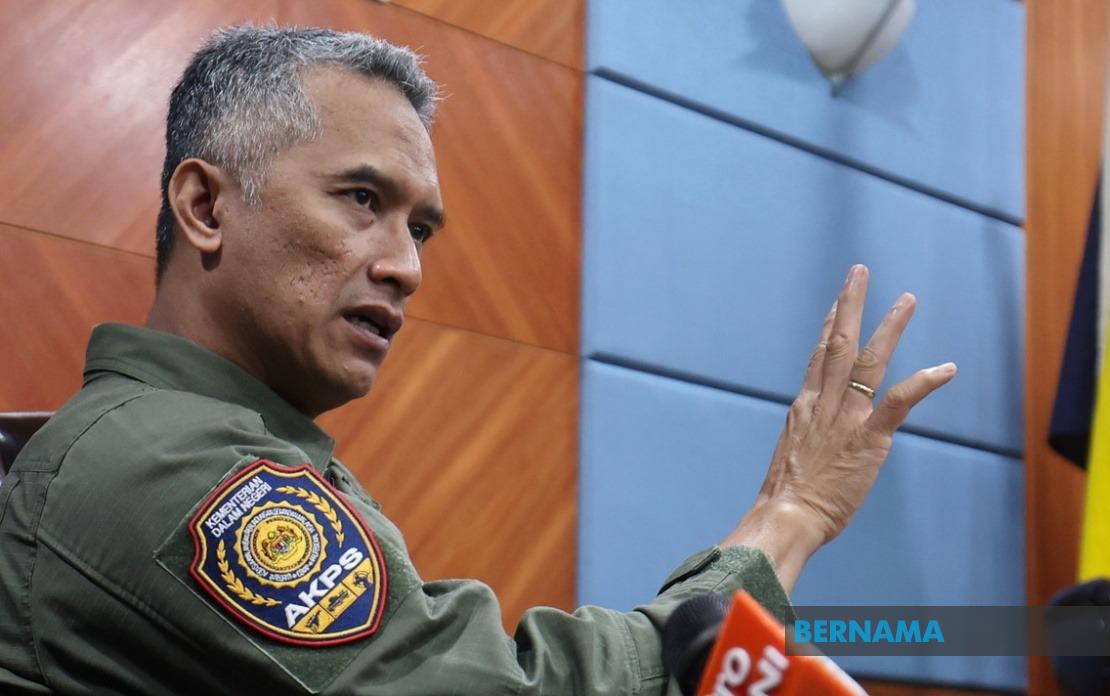
The Malaysian Border Control and Protection Agency (AKPS) is preparing for a significant uptick in cross-border traffic as voters stream back from Singapore ahead of the 16th Johor state election scheduled for Saturday, July 11. Director-General Datuk Seri Mohd Shuhaily Mohd Zain announced that both the Sultan Iskandar Building (BSI) and the Sultan Abu Bakar Complex (KSAB)—Malaysia's two primary land entry points from the island nation—will operate at maximum capacity to facilitate smooth movement and reduce queuing delays. The agency has implemented a comprehensive operational strategy that goes beyond routine procedures, reflecting the unique logistics challenge posed by conducting an election that directly affects Singaporean-based Malaysians who wish to exercise their voting rights.
The scope of additional measures reveals the scale of preparation required for this electoral event. At BSI, authorities will deploy 38 dedicated inbound counters in the car zone alongside the full operation of 35 electronic gates, two quick response code counters, and 18 manual processing stations. The KSAB facility will similarly expand its capacity with 24 car zone counters operational, complemented by between 18 and 24 electronic and manual counters at its bus processing area. These figures represent a deliberate augmentation of normal operations, with the dedicated lanes beginning Friday and continuing through polling day Saturday from 12:01 am until 6 pm. The strategic timing acknowledges that many voters will likely depart Singapore as early as Friday afternoon, creating potential bottlenecks that could compromise the integrity of the voting process if not properly managed.
Perhaps most revealing about AKPS's operational readiness are the contingency measures prepared for exceptional congestion. Hybrid counters and contra-flow lane systems stand ready for activation during peak travel periods, particularly Friday afternoon and Saturday morning when voter exodus is anticipated to peak. The agency has prepared additional capacity at BSI's bus hall, where eight extra manual counters and six autogates can be swiftly deployed if traveller volume threatens to overwhelm standard procedures. Should passenger processing areas reach maximum occupancy, the BSI Golden Service counter area has been earmarked for alternative use, allowing segregation of different traveller categories to optimise flow efficiency. This layered approach demonstrates sophisticated contingency planning rather than reactive crisis management.
Historical performance data provides context for these preparations. During the 2022 Johor state election, cross-border traffic increased only modestly, as most Malaysians employed in Singapore maintain daily commuting patterns rather than returning home permanently. Nevertheless, the exceptional capacity at these checkpoints underscores their engineering design. Each passenger hall at BSI accommodates approximately 1,500 people simultaneously for either arrivals or departures under normal conditions. However, the facility has previously processed around 5,500 people concurrently, with the existing electronic gates and manual counters capable of inspecting up to 6,400 individuals per hour. These figures suggest that while planners do not anticipate unmanageable chaos, they have thoroughly stress-tested potential scenarios and identified viable solutions.
Coordination across multiple agencies demonstrates the whole-of-government approach adopted for this election. AKPS is collaborating with the Road Transport Department (JPJ) and the People's Volunteer Corps (RELA) at KSAB to specifically manage public bus and factory bus movements, acknowledging that a significant portion of returning voters will likely use these transport modes rather than private vehicles. This inter-agency cooperation extends beyond Malaysia's borders, with AKPS having held coordination sessions with Singapore's Immigration and Checkpoints Authority (ICA) at the Woodlands Checkpoint to ensure immigration clearance operations on both sides of the border proceed in orderly synchronisation. Such bilateral coordination is essential, as congestion on the Singapore side could cascade into delays on the Malaysian side regardless of local operational excellence.
Technical preparations underscore operational seriousness. AKPS has postponed all scheduled system upgrades, maintenance work, and preventive technical operations on July 10 and 11, ensuring that technology supporting border processing—electronic gates, data systems, and network infrastructure—operates at optimal performance during the critical election period. This decision reflects recognition that technical failures at border checkpoints can rapidly create cascading delays affecting thousands of voters. The agency's proactive scheduling adjustment demonstrates prioritisation of election logistics over routine administrative maintenance, a telling indicator of the stakes involved.
Transport dynamics add another layer of complexity to this situation. Current data from AKPS covering January to May 2026 reveals that BSI processes between 300,000 and 350,000 traveller movements daily, with Malaysians comprising 67 per cent of total traffic, Singaporeans accounting for 29.5 per cent, and remaining foreign nationals making up the balance. These figures contextualise the election's impact: the agency manages enormous daily volumes under normal circumstances, so incremental increases during election periods, while significant, occur within a system already calibrated for very high throughput. Understanding this baseline helps explain why AKPS's response, while comprehensive, does not suggest panic about unsustainable demand.
Looking beyond the immediate election, officials have identified this event as a valuable planning exercise. Datuk Seri Mohd Shuhaily explicitly noted that operational experience gained managing the Johor election will inform future planning for the anticipated Johor Bahru-Singapore Rapid Transit System (RTS) Link, a major infrastructure project expected to become the preferred transport corridor for cross-border commuters and voters. The RTS Link represents a transformational shift in connectivity, and dry-run experience from managing concentrated voter movement provides valuable insights into how such systems will perform under demand stress. This forward-looking perspective suggests that election logistics planning integrates with broader regional transport infrastructure strategy.
The 56-seat contest involving 172 candidates competing across Johor state assembly constituencies generates sufficient electoral stakes to justify extraordinary logistical preparations. For Johor residents working in Singapore—a significant population segment given Singapore's economic pull and geographic proximity—the Saturday voting date requires deliberate travel planning and checkpoint management. The election's importance to national politics, combined with the practical challenges of managing a diaspora electorate concentrated in a single neighbouring city-state, explains why both Malaysian and Singaporean authorities have invested substantial coordination effort. For Malaysian voters abroad, particularly those in Singapore, this election demonstrates that despite geographic separation from home, participation mechanisms exist and authorities actively facilitate rather than obstruct such participation.
Public messaging reinforces operational preparedness through transparency. Citizens have been directed to monitor official Facebook pages of the AKPS Corporate and Communications Unit for real-time updates on checkpoint conditions, enabling travellers to time journeys strategically during less congested periods. This communication approach treats voters as rational agents capable of responding to information about queue conditions, rather than assuming fixed arrival patterns regardless of circumstances. The advice to plan journeys in advance reflects recognition that voluntary spacing of arrivals across multiple hours reduces peak-period congestion more effectively than reactive crisis management during severe bottlenecks.
Broader implications for Malaysian electoral administration emerge from these preparations. The scale and sophistication of cross-border voter management reveals how modern elections extend beyond domestic territorial boundaries, encompassing citizens resident abroad who maintain voting rights and exercise them despite geographic distance. The coordination mechanisms, technical preparations, and contingency planning demonstrate institutional capacity to manage complex logistical challenges. Whether such preparations translate into seamless voter experiences depends on execution, but the investment in planning suggests Malaysian authorities recognise that protecting voting accessibility—particularly for citizens abroad—constitutes an essential electoral duty. For regional observers, Johor's experience with managing concentrated cross-border voting flows offers operational lessons applicable to other countries with significant diaspora populations maintaining voting participation.

