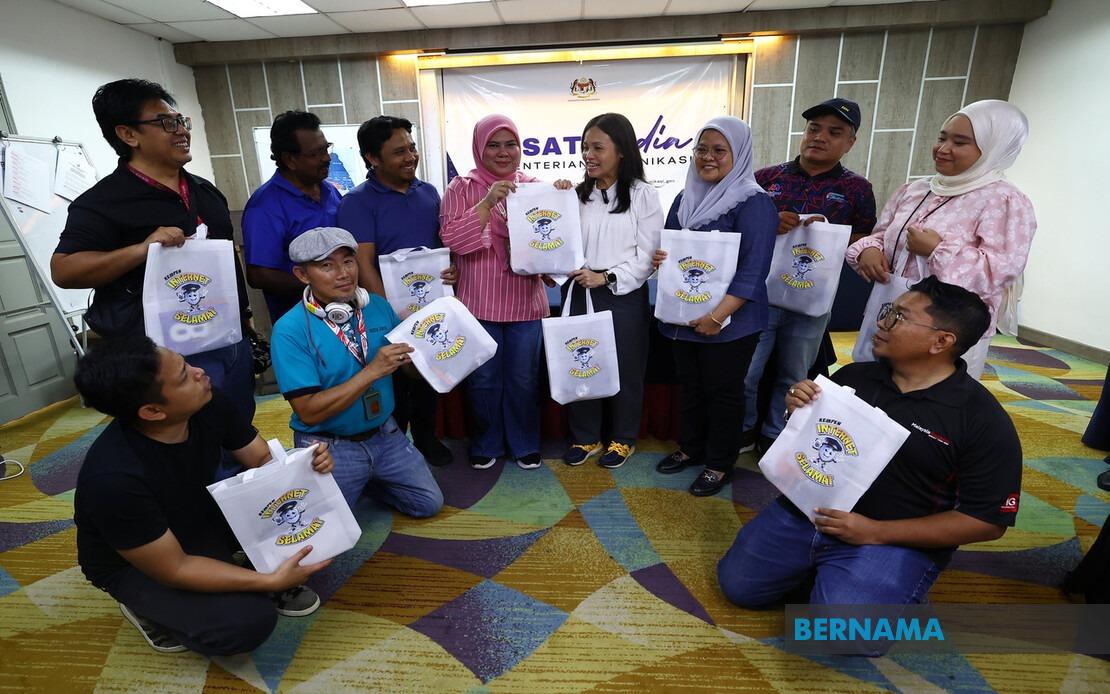
The Malaysian Communications Ministry has rolled out an extensive infrastructure programme to support media operations during the 16th Johor state election, deploying two main media centres and 100 National Information Dissemination Centres (NADI) across the state. Deputy Communications Minister Teo Nie Ching announced the initiative following a visit to the Hotel Seri Malaysia media centre in Johor Bahru on June 28, highlighting the government's commitment to enabling comprehensive election coverage across the peninsula's southern region.
The dual-hub approach places primary facilities at Hotel Seri Malaysia in Johor Bahru and NADI Kampung Sawah Awok in Muar, both operating extended hours from 9 am to 9 pm throughout the campaign period beginning June 26 and continuing until polling day on July 11. This geographic distribution ensures media personnel across Johor's diverse constituencies have accessible infrastructure, whether based in urban centres or covering more remote campaign activities. The extended operating hours reflect the intensity of election season reporting demands, allowing journalists to file stories around campaign schedules and breaking developments.
Connectivity represents a cornerstone of the infrastructure investment, with guaranteed internet speeds of no less than 100 Mbps enabling journalists to transmit multimedia content without delay or quality degradation. Modern election coverage increasingly relies on real-time video transmission and high-resolution photography, particularly for digital platforms serving younger Malaysian audiences. The bandwidth commitment addresses a persistent infrastructure challenge in Malaysian electoral reporting, where media centres historically struggled with congestion during peak filing periods, forcing journalists to seek alternative connectivity solutions or experience transmission delays that undermined deadline compliance.
Beyond internet provisioning, the facilities offer comprehensive technical infrastructure including desktop computers, laptops, photocopiers and printers—acknowledging that professional journalism still requires hybrid analogue-digital workflows. This practical recognition reflects how election coverage demands both traditional desk resources and modern connectivity, with reporters requiring spaces to organize notes, conduct interviews, collaborate with editors and prepare background materials alongside digital filing capabilities. The provision of dedicated workspace represents an often-overlooked but essential aspect of supporting quality journalism in demanding campaign environments.
Telecommunications monitoring during the campaign period falls under the Malaysian Communications and Multimedia Commission (MCMC), which will oversee telecommunications operators to maintain optimal service quality throughout. This supervisory role extends beyond merely ensuring adequate speeds; it encompasses managing network congestion that inevitably develops when large numbers of journalists and political operatives simultaneously attempt to transmit data from the same geographic areas. The MCMC's proactive monitoring approach signals recognition that infrastructure capacity requires active management during electoral peaks rather than reliance on passive, reactive responses to service degradation.
The MCMC Nexus application represents an innovative crowdsourcing mechanism, enabling public participation in real-time signal strength monitoring at granular geographic levels. By distributing monitoring responsibilities across users willing to download the application, the commission gains far more comprehensive data about network performance variations across Johor than traditional centralized monitoring could provide. The emphasis on personal data protection—limiting shared information to technical metrics rather than user identity or browsing behaviour—addresses privacy concerns that typically constrain public participation in telecommunications monitoring initiatives, potentially encouraging broader adoption of the application.
Election conduct standards formed another component of Teo's remarks, with explicit reminders that political parties and their supporters should maintain standards avoiding sensitive matters involving race, religion and royalty. This framing acknowledges that Malaysian elections operate within specific constitutional constraints reflecting the nation's multicultural fabric and constitutional protections for indigenous rights, Islam's constitutional position, and the institution of the monarchy. The communications ministry's emphasis on maintaining these boundaries during campaign periods reflects lessons from previous Malaysian elections where viral social media content occasionally tested these sensitivities, occasionally triggering regulatory or law enforcement responses.
The MCMC will coordinate with law enforcement to identify and remove social media content exhibiting extreme provocative elements during the campaign, representing a government intervention in electoral digital spaces that reflects Malaysian authorities' regulatory approach to managing political speech online. This collaborative law enforcement-MCMC model demonstrates how Malaysian election management has evolved to address digital-era challenges, moving beyond traditional print and broadcast monitoring toward comprehensive social media oversight. The approach raises ongoing questions about balancing election conduct standards against open political discourse, particularly regarding what constitutes "extreme provocation" requiring content removal versus permissible campaign messaging.
Fact-checking infrastructure emerged as another election conduct priority, with the Malaysian Media Council establishing dedicated platforms to assist public verification of electoral claims. The deputy minister's encouragement for citizens to habitually fact-check information before sharing reflects growing recognition that viral misinformation poses genuine risks during high-stakes electoral contests. This media council initiative recognizes that professional journalists alone cannot comprehensively fact-check the exponential volume of election-related claims circulating across social platforms, requiring public participation in verification ecosystems. The approach implicitly acknowledges that combating misinformation requires distributed verification rather than top-down content policing.
The timing of these infrastructure and conduct initiatives reflects the compressed campaign schedule, with early voting occurring July 7 and main polling scheduled for July 11. This relatively brief campaign window intensifies demands on both media infrastructure and election monitoring systems, necessitating pre-positioned resources and advance coordination among communications ministry, MCMC, law enforcement and media organizations. The six-week gap between announcement (late June) and polling day allowed physical infrastructure deployment while permitting telecommunications operators and media organizations to prepare for anticipated demand surges.
For regional context, Johor's electoral significance extends beyond its status as Malaysia's second-most populous state. The southern state's political complexion influences broader peninsula dynamics, and maintaining professional media coverage during the contest supports democratic accountability across the region. The infrastructure programme reflects Malaysian authorities' gradual evolution toward systematic election facilitation, moving from minimal official support toward comprehensive resource provisioning recognizing media's democratic accountability function. This represents incremental progress toward professionalized electoral administration across Southeast Asia's larger democracies, though debates continue regarding whether such state-supported media infrastructure adequately balances editorial independence against institutional capture.

