The Johor state election race is now entering its final critical phase, with candidates scrambling to capture voter attention through an increasingly sophisticated digital campaign that has become as important as traditional ground operations. With just three days separating voters from the ballot box on Saturday, the state's 2.7 million registered voters are being inundated with content across Facebook, TikTok, Instagram, and X as representatives from Pakatan Harapan, Barisan Nasional, Perikatan Nasional, Bersama Malaysia, and independent contenders battle for supremacy in cyberspace.
The shift toward digital campaigning reflects a fundamental change in how Malaysian politicians now engage with the electorate, particularly younger and undecided voters who spend significant portions of their day scrolling through social media feeds rather than attending physical rallies. Both major coalitions recognise that while ground operations remain essential, the online realm offers unprecedented reach and the ability to craft highly targeted messaging that resonates with different demographic segments across Johor's 56 state assembly seats.
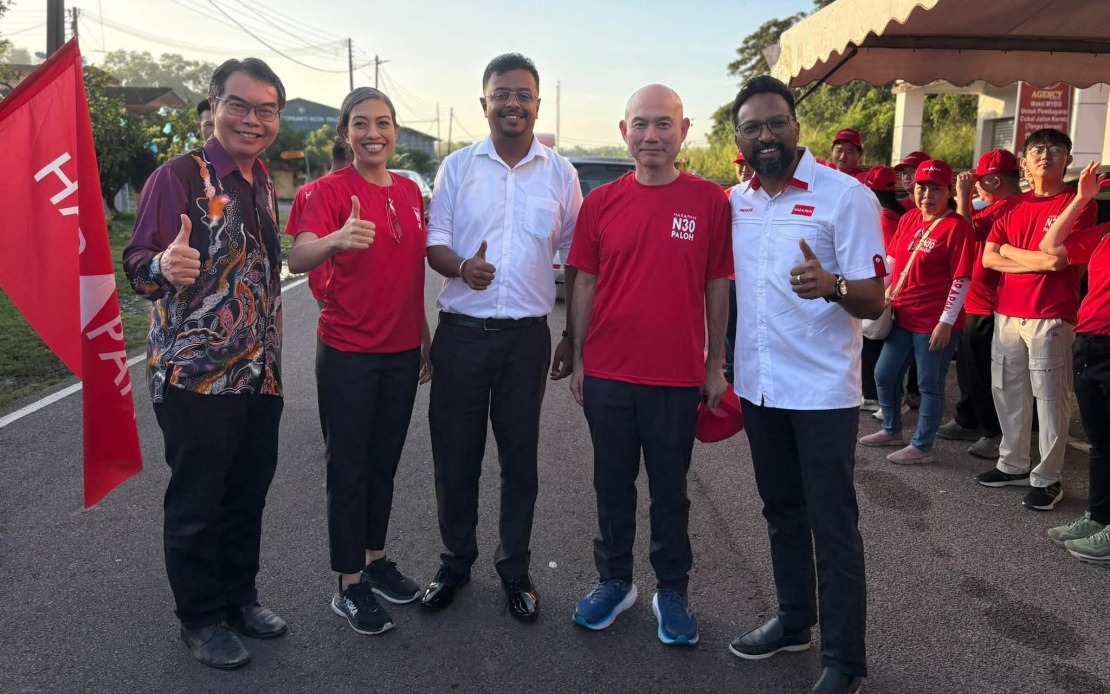
Pakatan Harapan candidates have embraced creative storytelling to differentiate themselves from competitors. In the Paloh constituency, Dr. A Ruban is leveraging social platforms to articulate a vision of transforming the rural district into a modern hub that prioritises youth empowerment and women's advancement, even as he recovers from a spinal condition requiring hospital treatment. His campaign team has demonstrated impressive agility by maintaining digital momentum despite this physical setback, demonstrating how contemporary political operations can continue functioning even when traditional campaigning becomes constrained. His messaging, centred on building sustainable foundations for future generations rather than offering quick-fix solutions, appeals to voters seeking long-term development over hollow promises.
Barisan Nasional's approach reflects the confidence of an incumbent coalition leveraging the advantages of governmental structures and established networks. Johor Menteri Besar Datuk Onn Hafiz Ghazi has positioned his coalition as the embodiment of experienced leadership, using his Facebook presence to emphasise the credentials and local knowledge of BN candidates across the state. This messaging strategy assumes voters will prioritise administrative competence and continuity over alternative visions—a calculation that may or may not resonate depending on voter sentiment regarding the incumbent government's performance over recent years.
The diversity of digital tactics deployed by opposition candidates suggests a competitive sophistication that transcends simple slogan-sharing. In Tanjung Surat, PH candidate Faizul Abdul Ghani employs a more informal, relationship-focused approach through regular community documentation that humanises his candidacy and suggests genuine engagement with constituents. Similarly, Dr. Maszlee Malik in Puteri Wangsa has positioned himself as the most prolific online content creator among contenders, consistently addressing voter misconceptions while highlighting his previous ministerial achievements in education and economic development. His focus on tangible benefits such as school shoe assistance demonstrates an understanding that voters care about concrete improvements in their daily lives, not abstract policy frameworks.
The viral momentum generated by seemingly mundane moments—such as Ir Nazri Abdul Rahman's breakfast at a local warung—illustrates how social media has democratised political visibility. A photograph of a candidate enjoying traditional goat soto with residents becomes a powerful statement about approachability and authenticity, potentially reaching more voters through organic sharing than through expensive paid advertising. This evolution suggests that political communication is increasingly about projecting relatability rather than projecting authority, a fundamental shift from earlier election cycles.
PH candidate Shazwan Dzainal Abidin's 'Tiga Tawaran HARAPAN' campaign demonstrates how digital platforms enable candidates to articulate community-specific policy offerings rather than generic national messaging. This localisation of campaign narrative, facilitated by social media's targeting capabilities, suggests voters across different constituencies are receiving tailored appeals designed to address their particular concerns—a departure from the one-size-fits-all approaches of earlier eras. BN incumbent Datuk Mohd Jafni Md Shukor similarly uses digital channels to consolidate support in Bukit Permai, suggesting that maintaining one's seat requires continuous engagement rather than complacency.
Smallerparties and independent candidates have also recognised that digital platforms offer a cost-effective alternative to expensive traditional media, with Perikatan Nasional, Bersama Malaysia, and independent contenders utilising live-streaming and short-form video to present their cases directly to voters. The prevalence of brief infographics and TikTok videos indicates a recognition that voter attention spans in the digital age are finite, and messages must be immediately comprehensible and emotionally compelling rather than intellectually demanding.
Election officials anticipate that online campaign intensity will peak within the final 48 hours before the 11:59 PM campaigning deadline on July 10, recognising that this final push represents the last opportunity to influence undecided voters and mobilise supporters. For candidates whose physical presence may be limited by geography, resources, or health considerations, social media becomes not merely an auxiliary tool but a primary campaign infrastructure upon which electoral viability depends.
The 16th Johor state election will see 172 candidates contesting the 56 assembly seats, meaning on average each seat features more than three candidates competing for voter support. This fragmentation makes social media dominance potentially more consequential than in previous elections, as candidates struggle to achieve visibility in a crowded field. The digital realm, unlike physical spaces constrained by time and geography, theoretically permits all candidates to achieve comparable visibility if their content proves sufficiently compelling or shareable.
For Malaysian observers beyond Johor, this election serves as a crucial indicator of how digital campaigns are reshaping electoral dynamics across the country. As social media platforms increasingly function as the primary information source for significant voter cohorts, political parties that fail to develop sophisticated digital strategies risk losing relevance regardless of their traditional strengths. The Johor election results will likely reveal whether digital campaign intensity correlates with electoral success, providing insights that will inform campaign strategies during subsequent state and federal election cycles across Malaysia.

