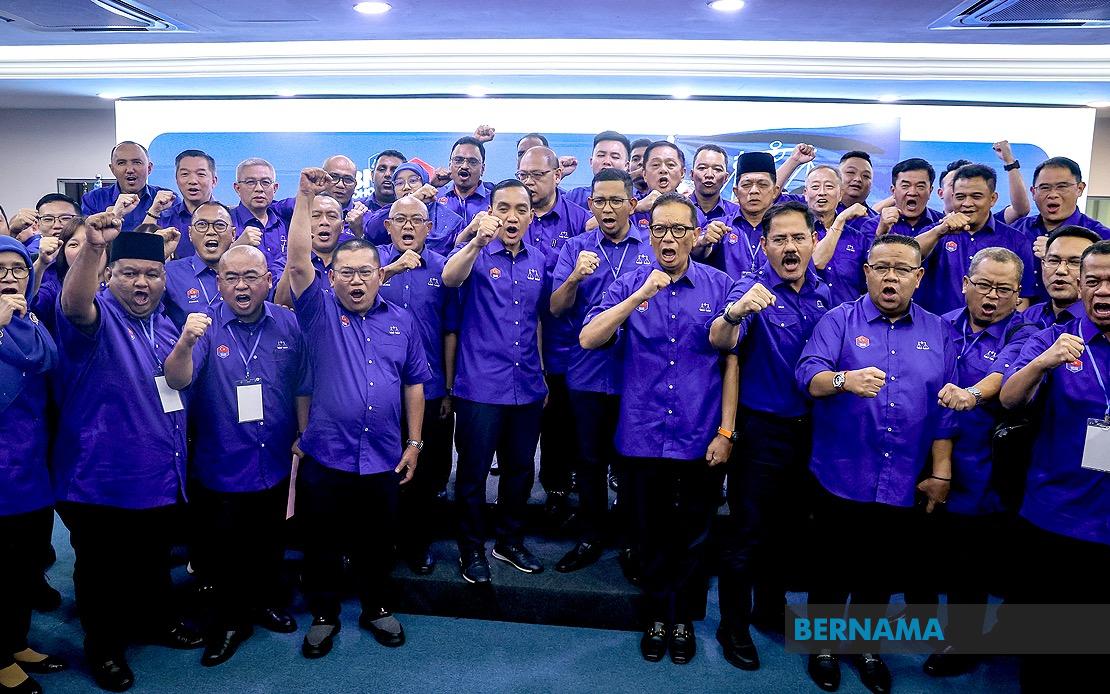
Johor Barisan Nasional has released its full roster of candidates for the forthcoming 16th state election, presenting a carefully balanced selection that combines veteran politicians with fresh contenders across all 56 state assembly constituencies. The unveiling, conducted at a ceremony in Johor Bahru, represents a critical moment for the coalition as it prepares to defend its dominance in Malaysia's economically significant southern state. Johor BN chairman Datuk Onn Hafiz Ghazi announced the lineup, which carries the endorsement of national BN chairman Datuk Seri Dr Ahmad Zahid Hamidi, signalling that the selection reflected both state-level and federal coalition priorities.
The candidate distribution reflects the traditional power dynamics within BN's tripartite structure. UMNO, as the dominant partner, secured 37 nominations, while the Malaysian Chinese Association obtained 15 seats and the Malaysian Indian Congress received four positions. This allocation underscores UMNO's continued organisational strength in Johor despite electoral headwinds faced by the coalition nationally in recent years. The composition reveals BN's strategic thinking about which constituencies require established figures and where new blood might energise campaigns, particularly in constituencies where demographic shifts or previous electoral performance warrant tactical adjustments.
Among the prominent names commanding attention is Datuk Seri Dr Adham Baba, the former federal health minister, who has been fielded to contest in Pasir Raja. Adham's return to the electoral fray carries considerable significance given his previous parliamentary experience and ministerial credentials. He previously held the Pasir Raja seat for two consecutive terms spanning 2008 to 2018, subsequently transitioning to federal politics where he represented the Tenggara constituency across two separate periods: 2004 to 2008 and again from 2018 to 2022. His current appointment as UMNO division chief for Tenggara reinforces his influence within the party machinery. Adham's re-entry into state politics after a six-year hiatus suggests BN is seeking to leverage his experience and standing to strengthen its performance in this strategically important southern constituency.
Onn Hafiz himself will seek re-election as the Menteri Besar, defending his Machap seat which he secured during the 2022 state election. His nomination essentially guarantees his continued role as chief minister should BN retain its majority, ensuring continuity in executive leadership. This reinforces the coalition's preference for stability and established governance structures, particularly at a time when economic management and state development remain central to voter concerns. The decision to renominate Onn Hafiz reflects confidence in his leadership record and performance over the preceding term.
Notably, the candidate list also documents significant shifts in BN's composition. Datuk Seri Hasni Mohammad, a former Menteri Besar who served as incumbent assemblyman for Benut, has been excluded from the nomination list for this election cycle. His replacement by UMNO working secretary Datuk Mohd Sumali Reduan indicates that seniority and past achievements do not guarantee automatic nomination, even for experienced politicians. Such decisions often reflect complex internal party assessments regarding electoral viability, generational renewal, or intra-party factional considerations. This development signals that BN leadership has undertaken rigorous evaluation of constituency-level performance and candidate appeal.
The retention strategy employed by BN demonstrates considerable stability in its overall candidate pool. Nine of the ten former executive councillors who contested during the 2022 state election have been retained as candidates for this election, indicating satisfaction with their performance and continued confidence in their ability to deliver results. This approach suggests BN is prioritising continuity and institutional memory, particularly among those who have undertaken executive responsibilities in government. However, Khairin-Nisa Ismail @ Md On, who previously chaired the State Women, Family and Community Development Committee as an executive councillor, has not been renominated to defend the Serom seat. Her exclusion may reflect broader considerations about seat allocation or internal party assessments.
Onn Hafiz's remarks during the candidate announcement ceremony emphasised the responsibilities incumbent upon those selected. He characterised nominations not as rewards or personal privileges but rather as sacred trusts demanding meticulous execution with unwavering integrity. This framing reflects growing awareness within Malaysian political circles about maintaining voter confidence and combating perceptions of entitlement or corrupt practices within elected officials. His call for courteous, respectful and judicious campaign conduct aligned with broader values that Johor residents hold dear signals an attempt to elevate discourse and distinguish BN's approach from potentially more aggressive or divisive campaign tactics.
The election occurs within a broader context of evolving Malaysian politics where state-level contests increasingly serve as barometers for national sentiment. Johor, as a BN stronghold and economically vital region, carries disproportionate political significance. A strong BN performance here would reinforce the coalition's national recovery narrative following its unprecedented 2018 federal election defeat, while conversely, any erosion of support could signal deeper structural problems within the coalition's appeal. The candidate selection process therefore represents not merely administrative procedure but rather a deliberate strategic positioning intended to maximise electoral prospects.
The inclusion of candidates across the full spectrum of Johor's electoral geography reflects BN's ambition to maintain comprehensive control. By fielding experienced politicians in potentially vulnerable constituencies and selecting fresh candidates in safer seats, BN appears to be pursuing a risk-mitigation strategy. The emphasis on both continuity and generational renewal suggests internal recognition that the party requires both institutional wisdom and youthful energy to remain competitive in evolving electoral environments. This balancing act will test whether BN can effectively marry experience with innovation across 56 diverse constituencies with distinct demographic and economic profiles.
For Malaysian observers beyond Johor, this candidate announcement provides insight into how BN operates at state level and which figures maintain influence within the coalition apparatus. The reappearance of figures like Adham Baba and the continuation of Onn Hafiz's leadership suggest that BN is attempting to stabilise its political position through familiar faces while simultaneously managing internal expectations about representation. The coming election will reveal whether this calculated approach translates into electoral success or whether voters have developed priorities that transcend the coalition's traditional bases of support. The outcome will likely influence how other state BN organisations structure their own candidate selections in subsequent elections, making this Johor exercise a consequential template for coalition strategy nationwide.

