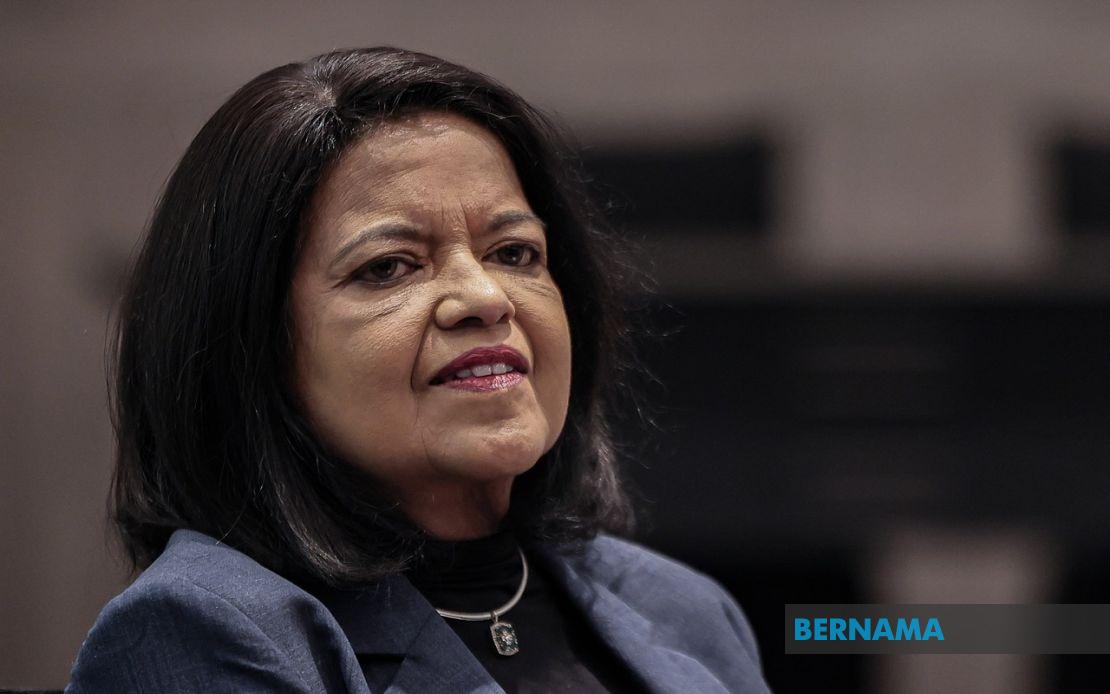
The Malaysian Media Council (MMC) is preparing to deploy an experimental mechanism designed to identify and counter false media content during the forthcoming state elections in Johor and Negeri Sembilan, leveraging the proximity of the two contests to refine its approach in real time. According to MMC chairperson Tan Sri Nallini Pathmanathan, the scheduling of these elections—Johor on July 11 followed by Negeri Sembilan on August 1—creates an ideal testing ground for the council's newly developed Rapid Response Election Initiative, allowing lessons learned in the first contest to be applied directly to the second.
The underlying concern driving this initiative reflects broader anxieties about information integrity during election campaigns. Nallini explained that the pilot programme concentrates specifically on verifying content falsely attributed to established media organisations, a category encompassing fabricated graphics bearing legitimate news logos, manipulated screenshots presented as authentic journalism, and doctored reports designed to appear as though they originated from credible sources. By focusing narrowly on attribution verification rather than broader fact-checking, the council seeks to establish a workable system without overstepping into editorial judgement of political claims or manifestos.
Structurally, the initiative distributes responsibilities across multiple institutional actors to create checks and cross-verification. The MMC itself functions as coordinator rather than arbiter, while individual media organisations retain authority to determine whether specific disputed content actually came from their platforms or archives. The Election Commission becomes the reference authority for election-procedure queries, enabling rapid clarification when false claims about voting rules or candidate eligibility circulate. Bernama, Malaysia's national news agency, assumes responsibility for disseminating verified corrections to the broader public, ensuring corrections reach audiences as comprehensively as initial misinformation might have.
Supporting this institutional architecture are several additional partners, each contributing distinct capabilities. Content Forum Malaysia specialises in digital platform engagement and media literacy, addressing the mechanisms through which false content spreads online. The Department of Community Communications and the National Information Dissemination Centres will translate verified information into community-accessible formats, recognising that misinformation often flourishes in local contexts where central corrections struggle to penetrate. The Malaysian Communications and Multimedia Commission provides regulatory backing and technical expertise when necessary, though officials emphasise this remains a supporting rather than primary role.
The practical operation of this system hinges on speed and immediacy. A hypothetical scenario illustrates the mechanism: a graphic falsely displaying a major news outlet's branding and claiming a candidate has withdrawn from the race could be verified within minutes by the organisation concerned, allowing a correction to circulate before the false claim achieves wider viral distribution. Similarly, fabricated information about election procedures—such as incorrect voting times or ineligible voter categories—can be quickly routed to the Election Commission for authoritative clarification and public communication. This responsiveness addresses a fundamental challenge in the misinformation era: by the time corrections appear, false content has often already achieved saturation in target audiences.
The threat the MMC seeks to address extends beyond traditional fabrication to encompassing synthetic and artificially generated content. Nallini highlighted how rapidly such material can be produced and dispersed during election campaigns, when emotional engagement peaks and critical evaluation often declines. Technologies enabling deepfakes and AI-generated images create unprecedented capacity for deception at scale, a problem particularly acute in Southeast Asian contexts where digital literacy varies considerably and trust in institutions remains contested.
Paralleling its institutional initiative, the MMC is launching a public awareness campaign centred on the slogan "Who Said It? What's The Source?"—deliberately mirroring this concept in Malay as "Siapa kata? Sos mana?" This dual-language formulation reflects recognition that Malaysian audiences consume political information across linguistic communities and that vernacular framing enhances message retention. The campaign explicitly rejects prescriptive censorship, instead inviting citizens to engage in verification practices before accepting or sharing information. As Nallini articulated, the message constitutes an invitation to critical thinking rather than silence, acknowledging voters' rights to read, debate and participate while grounding healthy participation in reliable information foundations.
For Malaysian politics specifically, this framework addresses vulnerabilities evident in previous electoral cycles. State elections in Malaysia have witnessed proliferation of false content targeting specific demographic communities, often designed to inflame ethnic or religious sensitivities. The MMC's attribution-focused approach sidesteps the fraught question of determining political truth while still providing mechanism to contain false claims about media's own reporting—a category where objective verification is comparatively straightforward. By preventing misinformation from borrowing institutional credibility through false attribution, the system potentially starves such content of persuasive force.
The initiative also reflects subtle shifts in how Malaysian institutions conceptualise information governance. Rather than imposing top-down truth determinations, the framework distributes responsibility across autonomous actors—media organisations, election authorities, community disseminators—creating distributed verification rather than centralised censorship. This approach may prove more sustainable than command-and-control models, particularly in an environment where media trust remains contested and government messaging faces considerable scepticism among opposition supporters.
For Southeast Asia more broadly, Malaysia's experiment offers a template for other democracies confronting similar misinformation challenges. Regional elections across Indonesia, Thailand, and the Philippines have experienced comparable difficulties with synthetic content and false attribution, yet few formal mechanisms exist to counter these phenomena at scale. The MMC's framework potentially demonstrates how regional democracies might address information integrity without requiring the restrictive regulatory apparatus that authoritarian systems employ.
The test cases of Johor and Negeri Sembilan will generate considerable data about whether rapid-response verification can meaningfully reduce false content circulation, how institutional partnerships function under electoral pressure, and whether public awareness campaigns actually shift voter behaviour toward greater information scrutiny. Success would require not merely institutional efficiency but genuine changes in how voters themselves approach election information—a considerably more ambitious goal than technical mechanism-building alone can achieve.

