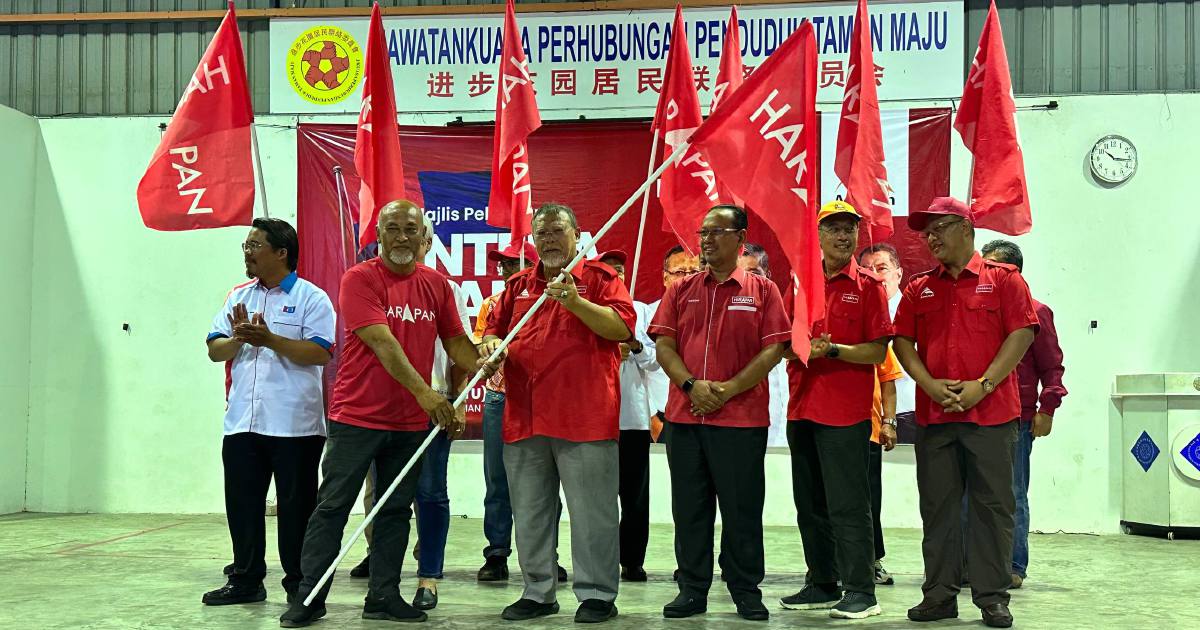
Johor Amanah has declared confident expectations of capturing at least six of the ten state assembly seats it will contest in the northern zone during the July 11 state election, a benchmark that would represent a significant performance in the politically competitive Johor landscape. The announcement, made in Batu Pahat, underscores the party's strategic positioning ahead of the polling date and reflects broader PKR-affiliated efforts to consolidate Pakatan Harapan's presence across the peninsular state's constituencies.
The northern zone of Johor comprises a demographically diverse region with distinct political leaning patterns that have shifted considerably in recent electoral cycles. Amanah's targeting of six seats out of ten reflects both the party's internal polling assessments and its calculation of how voters may respond to its messaging and candidates in these particular constituencies. This objective places the party in a realistic position relative to its historical performance, avoiding overambitious claims whilst maintaining visibility as a serious contender for legislative representation.
The party's confidence appears anchored in localised grassroots organising and candidate positioning in specific constituencies where Amanah believes it has developed sufficient community engagement. The northern zone has traditionally been contested terrain where multiple coalitions compete for voter support, and Amanah's participation represents the continuation of Pakatan Harapan's multi-party strategy to fragment opposition votes and consolidate progressive electoral blocs across different demographic segments.
July 11 marks the critical date for Johor's state-level poll, occurring within a broader calendar of Malaysian electoral activities that shape national political momentum. For Amanah specifically, performance in Johor carries implications beyond the state itself, as the party's electoral credibility affects its negotiating position within the Pakatan coalition and influences internal dynamics around seat allocation in other states' forthcoming contests. A strong showing would validate the party's claim to represent a distinct ideological space within the opposition spectrum.
The northern zone focus reflects strategic resource allocation by Amanah, concentrating campaigning energy where internal data suggests receptiveness to the party's platform. This approach contrasts with attempting broad state-wide competitive presence, instead prioritising zones where party machinery has deeper roots and candidates possess stronger local legitimacy. Such targeted strategy has become standard across Malaysian political parties, who increasingly rely on sophisticated voter segmentation rather than uniform nationwide campaigning.
Amanah's participation in the July 11 election occurs amid broader Johor political realignment following the 2022 general election and subsequent state-level developments. The party's positioning alongside other Pakatan components reflects ongoing coalition management and the challenge of maintaining unity whilst allowing each partner to pursue independent electoral aspirations. The six-seat target signals equilibrium between ambition and realism, projecting strength without inviting excessive scrutiny of ambitious claims should outcomes disappoint.
The northern zone of Johor encompasses constituencies with varying urbanisation levels, economic structures, and demographic profiles. Amanah's seat selection reflects calculations about where the party's messaging around governance, religious affairs moderation, and progressive reform resonates most effectively with local voters. Each contested seat represents a distinct political microenvironment requiring tailored approaches, and the party's confidence presumably reflects constituency-specific analysis rather than uniform expectations.
For Malaysian political observers, Amanah's declared targets in Johor illuminate the opposition coalition's broader state election strategy as Pakatan seeks to demonstrate electoral viability despite national government status limitations. The six-seat objective, if achieved, would constitute meaningful representation and provide the party with a platform for legislative influence in state-level debates. Conversely, outcomes substantially below this target could raise questions about Amanah's electoral relevance and bargaining power within the Pakatan alliance structure.
The timing of such confidence declarations serves multiple purposes within Malaysian political communication. Public confidence statements function as internal morale-boosting mechanisms for party members and supporters whilst simultaneously signalling to floating voters that the party represents a viable choice. However, they also establish benchmarks against which electoral outcomes will subsequently be evaluated by both political rivals and media analysts.
Looking forward to July 11, Amanah's Johor campaign will test whether the party can translate local organising efforts into actual vote transfers and seat gains. The outcome will provide crucial data about opposition coalition effectiveness in state contests and about Amanah's specific capacity to mobilise support in competitive multi-candidate environments. Beyond immediate electoral consequences, the result will inform strategic planning for subsequent state elections scheduled across Malaysia in coming years, making this Johor contest a significant indicator of broader political trajectories.

