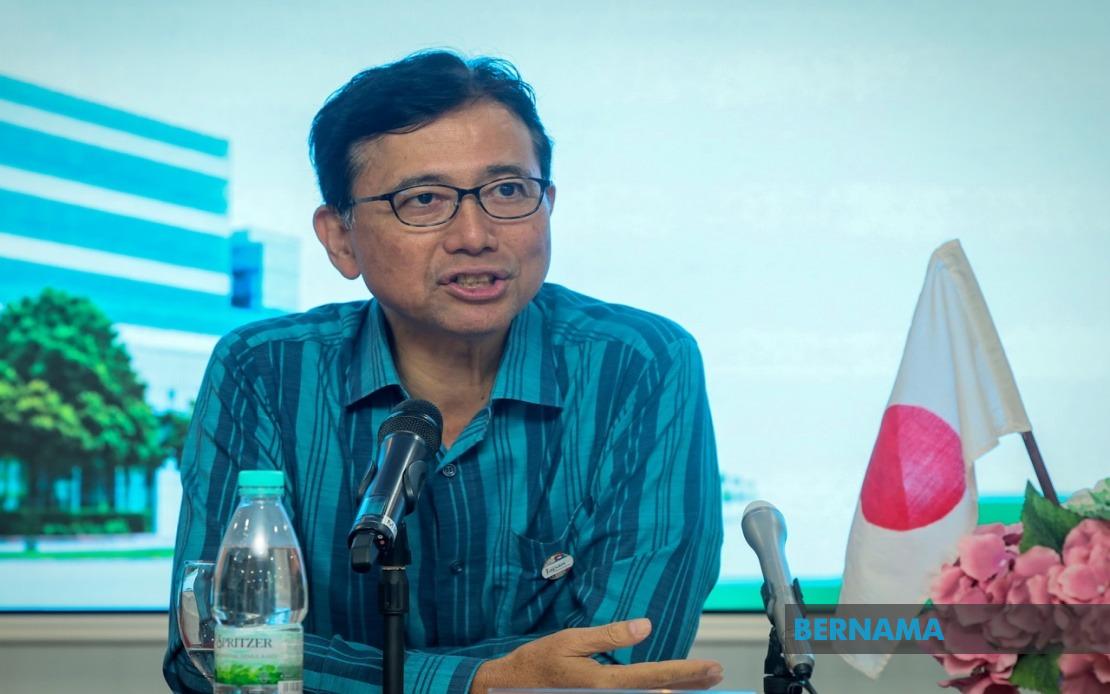
Malaysia stands to benefit significantly from Japan's evolved regional strategy as Tokyo shifts its Indo-Pacific vision towards concrete technological collaboration and economic resilience. Japanese Ambassador to Malaysia Noriyuki Shikata outlined how Prime Minister Sanae Takaichi's updated Free and Open Indo-Pacific (FOIP) framework, unveiled in May, creates fresh opportunities for the country to consolidate its position as Southeast Asia's premier digital and technology centre. The framework's emphasis on artificial intelligence, secure data infrastructure, undersea communications cables and satellite connectivity directly addresses the capabilities Malaysia is seeking to develop as part of its broader industrial modernisation agenda.
Originally conceived by former Prime Minister Shinzo Abe in 2016, the FOIP has evolved from a geopolitical concept focused on maintaining regional stability into what Shikata characterises as a pragmatic instrument for shared prosperity. The ambassador's assessment reveals a fundamental reorientation of Tokyo's approach—moving away from traditional security paradigms towards economic partnerships that benefit nations across the Global South. This philosophical shift proves particularly relevant for Malaysia, which has long sought to balance strategic relationships with tangible economic gains. The updated framework demonstrates Japan's recognition that regional influence in the 21st century flows through technological leadership and investment capacity rather than military posture alone.
Crucially, the revamped FOIP arrives backed by substantial financial firepower. The POWERR Asia initiative, anchored by a US$10 billion commitment, provides ASEAN nations including Malaysia with resources to diversify energy sources, build resilient fuel reserves and secure access to critical raw materials essential for technology manufacturing. For a country like Malaysia that depends heavily on imported energy and faces competition in semiconductor manufacturing, this financial framework addresses genuine vulnerabilities. The initiative signals Japan's willingness to move beyond rhetorical partnership into mechanisms that enable practical capacity building across multiple sectors simultaneously.
The alignment between Japan's strategy and Malaysia's existing frameworks proves mutually reinforcing. Shikata points to consistency with the ASEAN Outlook on the Indo-Pacific, meaning Malaysian policymakers can pursue deeper engagement with Tokyo without compromising regional consensus or broader Southeast Asian positioning. This compatibility matters enormously in a region where balancing multiple great power relationships remains a perpetual diplomatic challenge. Malaysia can advance its technology transformation agenda while maintaining its commitment to ASEAN centrality and non-alignment principles.
For the Japanese business community already embedded in Malaysia, the framework promises a more stable operational ecosystem. Shikata indicates that Japanese corporations view the updated FOIP as signalling a long-term commitment to the region, reducing business uncertainty and encouraging companies to deepen rather than retreat from regional operations. More significantly, the ambassador emphasises that Japanese firms now see Malaysia as a platform for transitioning from conventional manufacturing towards high-value technology development. This distinction carries enormous implications—it suggests Japanese investment will increasingly flow towards research facilities, advanced design centres and innovation hubs rather than labour-intensive assembly operations.
Malaysia's established strength in semiconductor manufacturing becomes increasingly valuable under this framework. Japanese companies recognise the country's capabilities in advanced chip packaging, infrastructure for artificial intelligence applications and cloud computing platforms. These sectors represent precisely the next-generation industries that both Japan and Malaysia wish to develop, creating genuine complementarities rather than competitive dynamics. Japanese firms seeking to establish regional technology clusters find Malaysia's combination of existing semiconductor expertise, English-speaking workforce and established business infrastructure highly attractive compared to alternatives in the region.
The December 2023 Comprehensive Strategic Partnership between Japan and Malaysia formalises this evolution beyond the historic Look East Policy that defined Malaysia-Japan relations for decades. That earlier framework emphasised learning from Japanese industrial methods and management practices. The current partnership instead emphasises collaborative creation of new capabilities, particularly in artificial intelligence and quantum computing. This generational shift reflects changing economic realities—Malaysia has matured beyond the stage of simply importing best practices and now possesses the technical sophistication to co-develop solutions with Japanese partners.
Prime Minister Datuk Seri Anwar Ibrahim's recent Japan visit crystallised these partnership ambitions through direct engagement with Japan's industrial leadership. Conversations with Mitsubishi Corporation, ENEOS, DENSO, IBM and Marubeni revealed concrete sectoral opportunities spanning energy, automotive components, semiconductors and technology services. Such high-level exchanges serve dual purposes—they communicate Malaysia's seriousness about technological advancement while allowing Japanese executives to assess partnership potential directly. The calibre of companies engaged suggests Japan views Malaysia as genuinely important to its regional technology strategy rather than merely one option among many Southeast Asian alternatives.
The infrastructure protection and supply chain security initiatives mentioned by Shikata address vulnerabilities highlighted by recent global disruptions. Both Japan and Malaysia depend on resilient supply chains for critical materials and components. A coordinated approach to protecting undersea cables, securing semiconductor supply networks and ensuring data infrastructure integrity benefits both nations substantially. For Malaysia particularly, participating in Japanese-led initiatives around critical infrastructure strengthens its own economic resilience while positioning the country as a key node in secure regional technology networks.
Implementing this partnership framework will require sustained commitment across multiple dimensions. Educational exchanges in technology fields, regulatory harmonisation for digital services, and coordinated investment in research institutions represent logical next steps. Malaysian universities and research centres must develop capabilities that make them attractive partners for Japanese technology companies seeking regional innovation hubs. Simultaneously, Malaysian policymakers should ensure that foreign investment in technology sectors includes genuine technology transfer and local capability development rather than simply relocating lower-value operations.
The timing of Japan's updated FOIP strategy aligns with Malaysia's own urgency around digital transformation. As global competition for technology leadership intensifies and supply chain vulnerabilities become apparent, countries that establish themselves as trusted partners to major technological powers secure competitive advantages. Malaysia's positioning as a reliable Japanese partner in the Indo-Pacific offers concrete benefits—not merely geopolitical status but genuine economic opportunities through investment flows, technology partnerships and participation in regional innovation networks that Japan is actively constructing.
For Malaysia's broader development trajectory, the partnership exemplifies a viable pathway for middle-income countries seeking to graduate towards higher-value economic activities. Rather than competing directly with Japan in mature industries, Malaysia can establish complementary roles in technology ecosystems, leveraging existing manufacturing strength while building new capabilities in emerging fields. This approach acknowledges the reality that technology leadership requires enormous resources while maintaining that Malaysia possesses genuine comparative advantages that Japanese companies require. The framework succeeds because it reflects mutual interest rather than Japanese benevolence—both countries benefit substantially from deeper technological collaboration.

