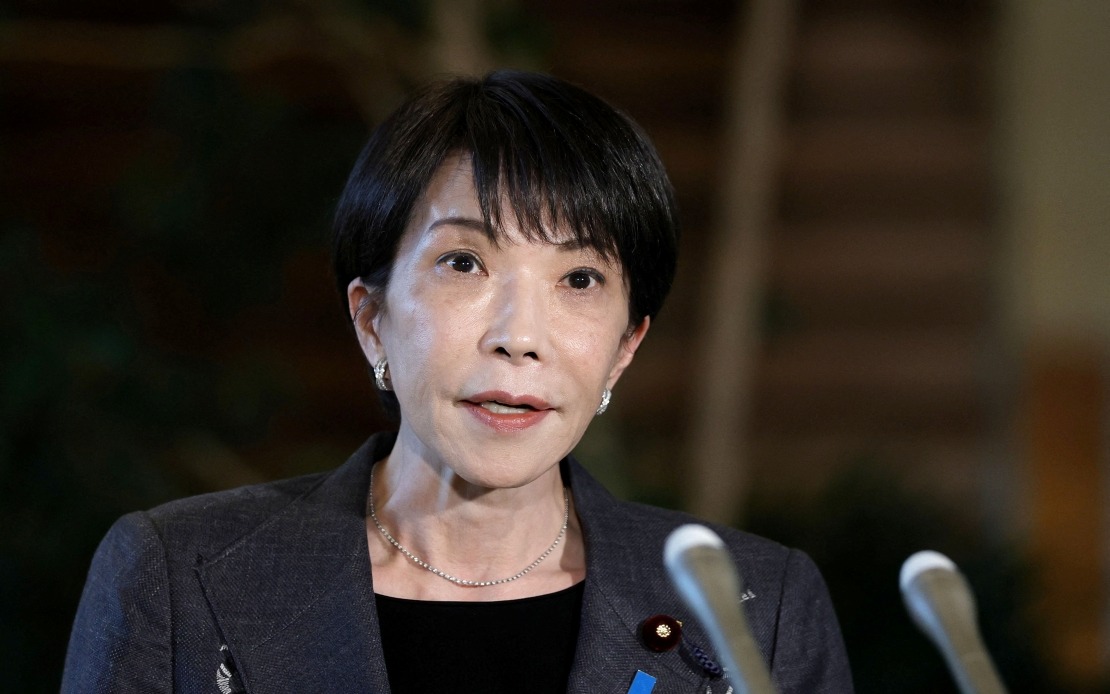
Prime Minister Sanae Takaichi has made a formal commitment to restore Japan's consumption tax on food to its standard 8 per cent level after implementing a temporary reduction, a declaration that marks a significant shift in the ruling party's approach to managing competing economic pressures. Speaking during a House of Representatives committee session on Monday, Takaichi left no ambiguity about her government's intentions, stating that the tax rate would return to its previous level exactly two years following the implementation of the cut. This announcement comes as Japan grapples with persistent inflationary pressures while simultaneously contending with the industrialised world's most strained fiscal position.
The policy represents a deliberate retreat from the Liberal Democratic Party's more ambitious campaign promises made ahead of the February lower house election, when the party pledged a complete elimination of consumption tax on food products. The practical considerations underlying this compromise reveal the complexities Japan faces in balancing household relief against administrative and budgetary realities. Rather than pursuing a zero-rate scenario, the LDP has instead proposed reducing the tax to just 1 per cent for the two-year window commencing April 2027, a modest adjustment that nonetheless provides meaningful assistance to Japanese consumers struggling with rising living costs.
The rationale for selecting the 1 per cent rate rather than zero reflects genuine operational obstacles within Japan's retail infrastructure. Implementing a zero rate would require extensive modifications to point-of-sale systems across countless retailers throughout the nation, a transition that experts determined would consume considerable time and resources. By opting for the 1 per cent rate, the government can achieve its core objective of reducing food costs for households while avoiding the logistical nightmare of a complete tax elimination. This pragmatic approach emerged from discussions within a cross-party national council on taxation and social security, which has been deliberating comprehensive reforms across multiple economic policy areas.
Opposition voices have raised legitimate concerns about the government's ability to follow through on its restoration pledge. Ken Tanaka, a lawmaker representing the opposition Democratic Party for the People, articulated the political difficulty inherent in raising taxes once they have been lowered. Tanaka's point reflects economic reality: when consumers have experienced lower prices, any subsequent increase carries psychological and political weight that transcends the actual tax rate change. Voters naturally perceive rate restoration as a tax increase rather than a return to normal conditions, creating powerful electoral incentives to maintain reduced rates indefinitely. Takaichi's explicit public commitment appears designed to overcome this credibility challenge by establishing clear expectations from the outset.
The fiscal context underpinning this policy debate cannot be overlooked. Japan's government bond yields have recently surged to their highest levels in decades, signalling market concerns about the nation's debt sustainability. The Japanese yen has simultaneously weakened against major currencies, a development that complicates import costs and inflation management. These financial market signals reflect deep anxieties among investors about Japan's deteriorating fiscal trajectory, which now represents the worst among Group of Seven developed economies. Any further reduction in tax revenue, even on a temporary basis, risks exacerbating these concerns and potentially triggering additional capital market turbulence.
To maintain the effective value of tax relief while collecting some revenue, the LDP has proposed an alternative mechanism: annual cash handouts totalling 600 billion yen, approximately US$3.7 billion at current exchange rates. This amount precisely matches the estimated revenue that would be foregone through the 1 per cent consumption tax on food products. By substituting direct payments for tax rate reductions, the government creates a more transparent fiscal mechanism that makes the true cost of the relief programme explicit. This approach also provides flexibility; future administrations can adjust or eliminate these payments without the political baggage attached to raising consumption tax rates.
The timing of implementation carries particular significance for Japan's broader economic situation. Beginning in April 2027, the reduced rate will take effect during a period when the Bank of Japan and government policymakers hope inflation has moderated substantially from current levels. If deflationary pressures have not fully materialised by that time, the food tax reduction will provide targeted relief to household purchasing power at a moment when consumer price pressures might still warrant intervention. Conversely, if inflation has been successfully contained, the government can justify the restoration of the full rate as reflective of normalised economic conditions.
For Southeast Asian observers, Japan's struggle with this policy dilemma offers instructive parallels. Many countries across the region face similar tensions between providing cost-of-living relief to citizens and maintaining fiscal discipline amid rising government debt levels. The deliberate sequencing of a temporary tax cut with a predetermined restoration date represents one potential template for managing these competing pressures, though implementation success ultimately depends on political will and economic circumstances. Japan's experience demonstrates that clearly communicating the temporary nature of such measures from inception can help establish credibility, though market participants remain sceptical given the historical difficulty of actually raising taxes once lowered.
The LDP's junior coalition partner, the Japan Innovation Party, alongside numerous opposition factions, had previously supported more dramatic tax relief measures during election campaigns. The shift toward the more modest 1 per cent reduction reflects either changed circumstances since those campaigns or a more sober assessment of Japan's genuine fiscal constraints. Takaichi has indicated enthusiasm for advancing the tax reduction programme as soon as the national council completes its interim report on the broader taxation and social security reform agenda, suggesting the government may seek to implement this policy within the coming fiscal year if legislative consensus can be assembled.
The broader tax and social security council discussions will ultimately shape how the food tax proposal integrates into Japan's overall fiscal structure. Rather than existing as an isolated relief measure, the food tax reduction forms part of comprehensive discussions about taxation philosophy, social support systems, and long-term fiscal sustainability. These deliberations carry implications extending well beyond the immediate food price question, potentially reshaping how Japan funds pensions, healthcare, and other social programmes as the nation confronts demographic ageing and shrinking workforce participation rates. Takaichi's government faces the challenge of threading this needle skillfully: providing meaningful relief to struggling households while simultaneously demonstrating fiscal responsibility to increasingly anxious international investors and domestic taxpayers.

