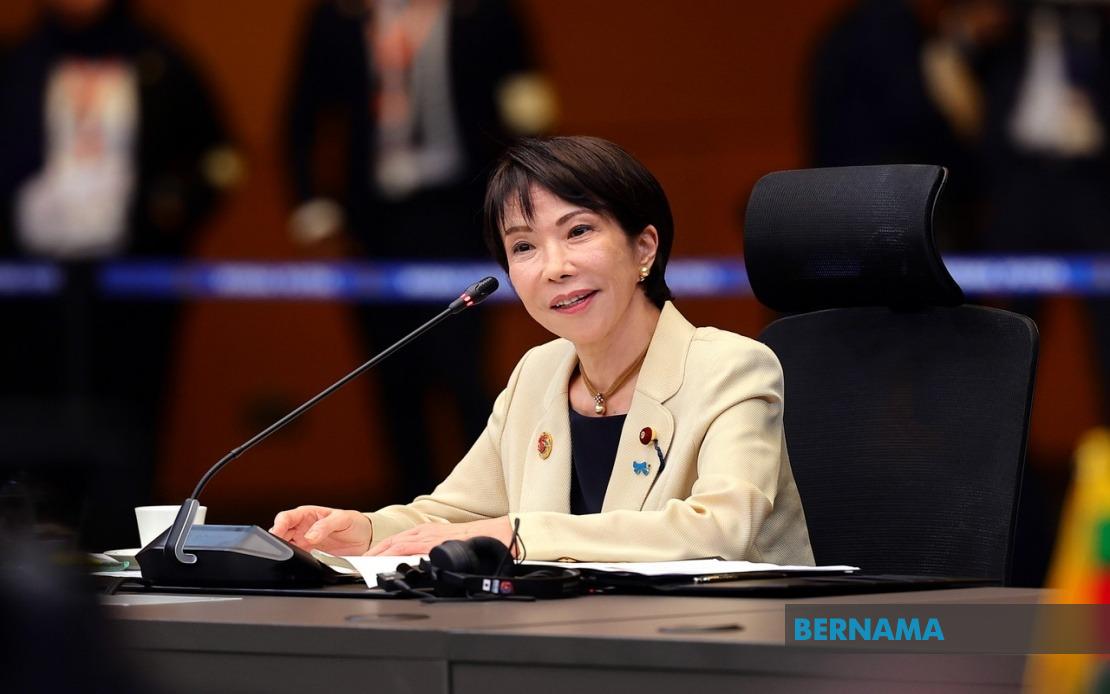
Japanese Prime Minister Sanae Takaichi has escalated Tokyo's diplomatic efforts to safeguard maritime commerce through the Strait of Hormuz, one of the world's most critical chokepoints, by directly engaging Oman's Sultan Haitham bin Tariq al-Said in telephone discussions on Monday. The timing of her intervention underscores growing international concern that deteriorating US-Iranian relations could further destabilize shipping lanes upon which numerous countries, particularly Japan and other Asian economies, depend heavily for energy security and trade continuity.
During their conversation, Takaichi emphasised the urgent need to restore and maintain open passage through the waterway, which serves as the gateway for a substantial portion of global petroleum exports. Her decision to contact Oman's leadership directly reflects Japan's strategic positioning as a major importer of Middle Eastern crude oil and its historical investment in regional stability. The Strait of Hormuz, which separates Iran from Oman across just 21 nautical miles at its narrowest point, handles approximately one-third of the world's liquefied natural gas trade and roughly one-quarter of all petroleum consumed globally, making any disruption to flows a matter of serious economic consequence for Tokyo and the broader Asia-Pacific region.
Oman occupies a delicate position in Gulf geopolitics, historically maintaining diplomatic channels with Iran while sustaining ties with Gulf Cooperation Council states and Western powers. According to Kyodo News, the sultanate is currently engaged in separate negotiations with Tehran, reportedly addressing concerns related to shipping routes and maritime commerce through the contested waters. This mediatory role, while offering potential pathways to de-escalation, also exposes Oman to competing pressures from multiple stakeholders seeking to influence outcomes affecting regional security and commercial interests.
During their exchange, Sultan Haitham responded positively to Takaichi's overtures, reportedly indicating that Oman would give serious consideration to the perspectives and concerns of all nations that utilise the waterway for legitimate commercial purposes. The Sultan's measured response suggests a commitment to consultative diplomacy, though it remains unclear whether this commitment will translate into concrete action capable of preventing further incidents or security disruptions. Takaichi subsequently briefed Tokyo journalists at her office about the conversation's substance and tenor, underlining Japan's determination to pursue quiet but sustained diplomatic engagement on this critical issue.
The broader context of stalled negotiations between the United States and Iran looms large over these developments. Diplomatic efforts to de-escalate tensions and potentially restore elements of previous agreements have encountered significant obstacles, leaving multiple actors uncertain about the trajectory of regional relations. This uncertainty directly threatens the safety and predictability of maritime operations, particularly for merchant vessels transiting the narrow passage where incidents involving Iranian Revolutionary Guard Corps vessels have increasingly provoked international alarm and prompted naval deployments by Western powers seeking to deter hostile actions.
For Malaysia and other Southeast Asian nations, the implications extend beyond abstract concern about international relations. Many regional economies depend substantially on imports of petroleum and liquefied natural gas sourced from the Gulf, making Hormuz stability directly relevant to domestic energy costs and industrial competitiveness. Any prolonged disruption to flows through the strait would trigger immediate ripple effects across ASEAN member states through higher energy prices, increased shipping costs, and broader inflationary pressures. Malaysia's substantial petrochemical and refining industries would face particular vulnerability to supply chain disruptions and price volatility.
Japan's diplomatic initiative also reflects broader realisation among major energy-importing nations that traditional reliance on great-power mediation may prove insufficient to manage emerging risks. By engaging Oman directly, Takaichi is pursuing what might be characterised as a supplementary diplomatic track, one that acknowledges Oman's unique position and capacity to maintain constructive relationships across the region's various divides. This approach recognises that while US-Iran hostilities dominate headlines, quieter bilateral conversations between directly affected parties and regional intermediaries may ultimately prove more productive in maintaining the status quo.
The substance of Takaichi's message—that free and safe passage must be maintained—represents a minimum threshold position held by virtually all maritime nations. Yet achieving even this baseline objective requires sustained attention and diplomatic coordination precisely because the alternative—any interruption to flows through Hormuz—would prove economically catastrophic at a moment when global supply chains are already under considerable strain. Oman's willingness to consult broadly rather than impose solutions suggests openness to multilateral approaches that might accommodate diverse interests.
Looking forward, Japan's diplomatic engagement signals that Tokyo intends to remain actively involved in efforts to stabilise the Gulf region through means beyond formal government-to-government relations with the United States and its allies. The conversation with Sultan Haitham represents an investment in maintaining functional channels of communication and demonstrating solidarity with regional stability even as superpower relations deteriorate. For Malaysia and other nations in Southeast Asia observing these developments, the example set by Japanese diplomatic persistence offers instruction in how to protect vital national interests through sustained engagement during periods of international tension.

