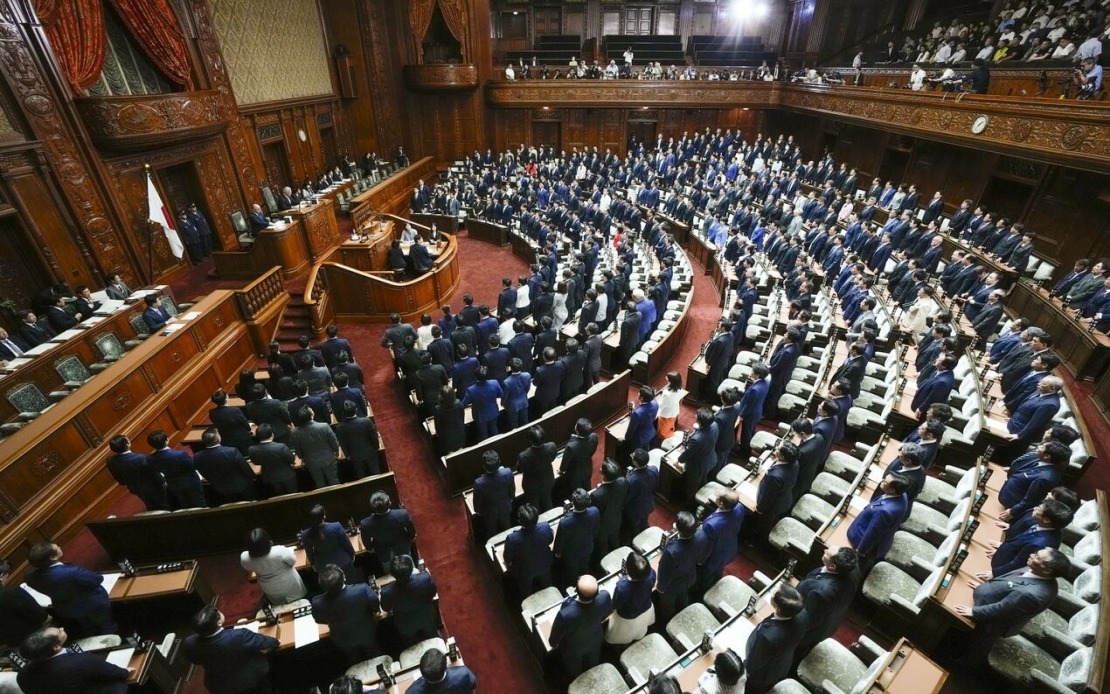
Japan's House of Representatives has approved a historic overhaul of the nation's Imperial House Law, marking the first substantive amendment to this foundational legislation in over seven decades. The bill, which advanced through parliament on Friday following a single day of deliberations, represents a watershed moment in how Tokyo intends to manage succession concerns within its imperial institution. Prime Minister Sanae Takaichi's government now aims to secure passage through the House of Councillors before the parliamentary session concludes on July 17, capitalizing on the ruling coalition's commanding supermajority in the lower chamber to advance what many view as constitutionally delicate reforms.
The legislative package tackles one of Japan's most persistent constitutional dilemmas: the steadily shrinking pool of individuals eligible to inherit the Chrysanthemum Throne. Under rules in place since 1947, only males descended patrilineally from emperors qualify for succession, while female family members automatically lose their imperial status upon marrying outside the imperial circle. These restrictions have created a demographic crisis, with the number of potential heirs dwindling and the broader imperial household contracting. The new framework addresses these structural problems through two principal mechanisms that would fundamentally alter how the institution sustains itself across generations.
At its core, the legislation permits the imperial family to adopt males aged fifteen or older who trace their descent through the male line to one of eleven former imperial branch families that lost their status after World War II. This represents a dramatic departure from rigid hereditary tradition, introducing adoption as a legitimate pathway for reinforcing the succession line. Simultaneously, the bill would allow female imperial family members to retain their imperial status even after marrying commoners—a recognition that women should not forfeit institutional standing through matrimonial choice. Together, these provisions represent a pragmatic compromise designed to expand the available pool of successors without abandoning the constitutional principle that only those with direct male-line descent from previous emperors may ascend the throne.
However, the legislation deliberately stops short of permitting either female monarchs or those descended through the maternal line to become emperor. These more radical options have emerged as frontrunners in public opinion polling and among some parliamentarians, yet the ruling coalition deemed them politically untenable. Instead, while barring adoptees themselves from becoming emperor, the law would permit their male descendants to eventually qualify for succession—a compromise that acknowledges adoption's legitimacy while preserving the traditional patrilineal requirement for the throne itself. This middle ground reveals the tensions between modernizing an antiquated institution and respecting constitutional conservatism.
The rapid parliamentary progression masks considerable political tension that preceded the vote. Prime Minister Takaichi submitted the bill late June, but parliamentary debate stalled as opposition parties boycotted proceedings to protest what they characterized as high-handed tactics by the ruling Liberal Democratic Party and its junior coalition partner, the Japan Innovation Party. The obstruction centered on two separate government initiatives: one reducing lower house seats and another establishing a "second capital" to decentralize governance from Tokyo. Opposition forces leveraged the imperial law as negotiating leverage, demanding accountability over media reports alleging Takaichi's political camp had produced online videos attacking rivals.
This confrontation highlighted deeper dysfunction within Japan's parliament regarding coalition management and deliberative norms. The gridlock extended from late June until Tuesday of the current week, when the ruling camp made strategic concessions, notably abandoning plans to force the seat-reduction bill through parliament during this session. These negotiations underscore how even matters of constitutional significance become entangled with partisan maneuvering and parliamentary procedure disputes. The resolution—a commitment to hold formal debate sessions between Takaichi and opposition leaders on Wednesday—signals a tentative normalization of parliamentary relations, though underlying tensions remain unresolved.
The bill's legislative pedigree deserves examination for what it reveals about Japanese constitutional deliberation. The proposals emerged from consultations involving all thirteen parliamentary parties and groups, conducted by joint committees of both chambers convened by the lower and upper house speakers. This multipartisan process produced a foundational framework emphasizing practical succession management without adventuring into questions of female emperorship. Yet when government drafters transformed these proposals into legislation, they incorporated additional provisions—particularly regarding male descendants of adoptees—that departed from the consensual blueprint. Opposition parties have criticized these unilateral expansions as betraying the collaborative intent of the speakers' initiative.
For regional observers, Japan's approach to imperial succession reform carries implications extending beyond domestic constitutional mechanics. Southeast Asian monarchies often confront succession challenges, though most handle these through different constitutional frameworks. Japan's willingness to adopt individuals as a succession mechanism offers one model for institutions facing demographic or hereditary constraints. The deliberate rejection of female succession, despite public support, reveals how traditional institutions—even those under modern pressure—resist fundamental restructuring. This conservative approach may paradoxically strengthen public acceptance of imperial adaptation by preserving continuity with historic precedent.
The legislative initiative also reflects broader anxieties about institutional sustainability in aging societies. Japan's overall demographic decline intersects directly with questions about the imperial family's future. The imperial household cannot expand through natural population growth alone; adoption becomes not merely a cultural accommodation but a demographic necessity. This intersection of constitutional tradition with population dynamics distinguishes Japan's challenge from purely ceremonial questions about monarchy and modernity. Nations confronting similar demographic realities may increasingly consider how institutional frameworks require adaptation to changed social conditions.
The pathway forward depends on upper house approval, which the ruling coalition appears positioned to secure given its legislative strength. However, the contentious lower house passage, combined with opposition criticism regarding deviations from the speakers' proposal, suggests the upper chamber deliberations may prove equally fraught. Should the legislation survive this remaining hurdle before July 17, the question then becomes implementation. Questions persist regarding how the imperial household will navigate adoption procedures, what criteria will govern selection from former branch families, and how administrative machinery will manage the expanded categories of eligible imperial members. These practical details, while less dramatic than constitutional principle, will ultimately determine whether the reforms achieve their intended demographic stabilization.
Prime Minister Takaichi's coalition has framed the imperial law revision as integral to their governing agenda, with the reformation agreement forming part of the October coalition accord that enabled her historic selection as Japan's first female premier. This linkage between imperial modernization and leadership legitimacy elevates the legislation beyond technical adjustment into symbolic terrain. Successfully enacting these changes would represent a tangible policy accomplishment for her administration, particularly on an issue touching the nation's constitutional identity. Conversely, failure to advance the bill would constitute a political reversal that could destabilize her coalition at a critical early phase of her premiership.

