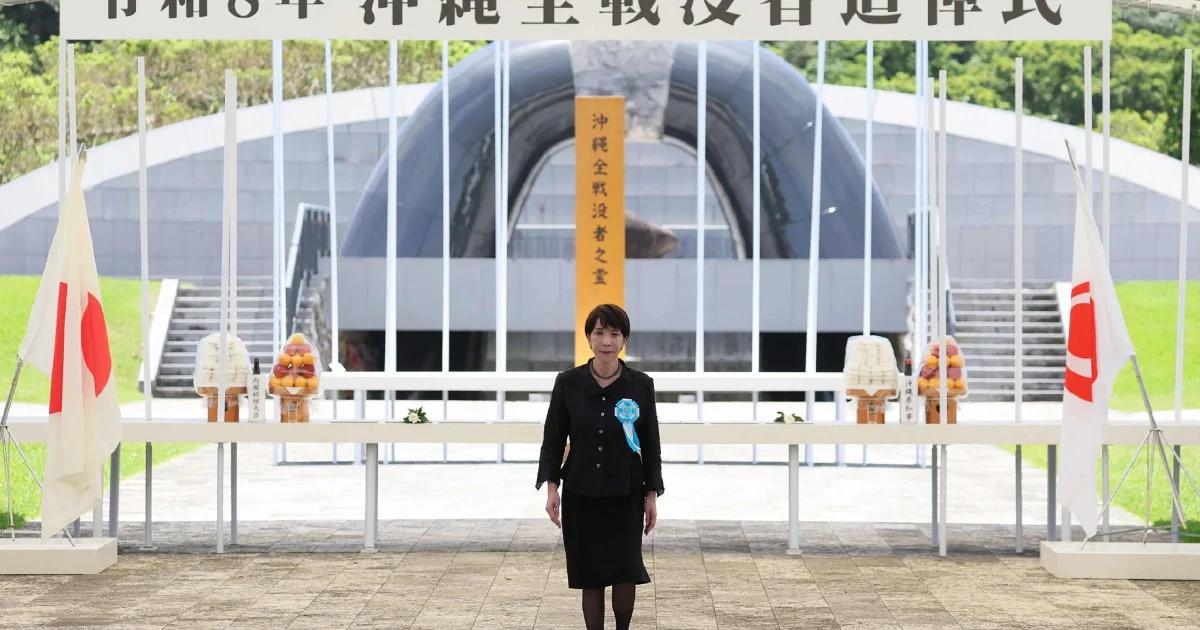
Japanese Prime Minister Sanae Takaichi encountered significant public resistance during remarks at a World War II memorial ceremony, with protesters openly voicing their opposition to the government's accelerating military expansion. Television recordings of the incident captured the tense exchange, highlighting deepening divisions within Japan over defence policy direction and the nation's historical commitment to pacifism.
The confrontation underscores mounting pressure facing Takaichi as she navigates Japan's complex relationship with its wartime past while simultaneously pursuing security realignment to counter regional threats. Tokyo's strategic posture has undergone substantial transformation in recent years, particularly as China's military capabilities expand and North Korea's weapons programme advances. These geopolitical pressures have compelled successive Japanese administrations to reconsider constitutional constraints and budgetary limitations on military spending that have defined the postwar era.
Takaichi's administration represents an acceleration of policies initiated under her predecessors, with proposed increases to defence expenditure and discussions around enhanced military capabilities that represent departures from Japan's Self-Defence Forces framework. The heckling incident demonstrates that portions of the Japanese public remain deeply attached to the pacifist principles enshrined in the 1947 constitution, which renounced war and military aggression following Japan's devastating defeat in World War II.
For Malaysian readers and Southeast Asian observers, Japan's military evolution carries significant implications for regional security architecture. As a technologically advanced, wealthy nation with substantial military potential, Japan's defence decisions influence the balance of power affecting smaller regional economies. Malaysia, along with other ASEAN nations, maintains complicated relationships balancing ties with China against traditional partnerships with Japan and the Western alliance. Any Japanese military expansion necessarily affects calculations about regional military balance and strategic interdependence.
The protesters at the memorial appear to represent a generational constituency concerned that Japan risks repeating historical mistakes through remilitarisation. These voices warn that increased military spending and enhanced capabilities could trigger regional arms races or miscalculations, particularly in contested maritime areas where Japanese, Chinese, and other nations' interests collide. The memorial event itself carries symbolic weight, as these sites traditionally serve as spaces for peaceful reflection rather than platforms for defence policy announcements.
Takaichi's government faces a delicate political balancing act. Domestically, she must maintain sufficient public support for defence initiatives necessary to address security challenges. Externally, Tokyo must pursue strategic realignment with allies including the United States without appearing to abandon the pacifist identity that defines Japan's international standing. The heckling suggests this balance remains precarious, with substantial segments of the population unconvinced that military expansion represents the appropriate response to contemporary security concerns.
Historically, Japanese civil society has maintained robust debate over defence matters, with significant constituencies opposing expanded military roles. The incident reflects this continuing tension between those who believe security demands military preparation and those who maintain that pacifism remains morally and strategically preferable. This debate, invisible to many international observers, profoundly shapes Tokyo's policy options and constrains what Japanese leaders can accomplish regarding defence matters.
Regional observers should recognize that Japanese public opinion, while shifting, has not universally endorsed military expansion. The heckling incident provides evidence that pacifist sentiment retains substantial strength. This matters because sustained public opposition could eventually constrain government defence spending or limit participation in regional security initiatives. ASEAN nations considering security partnerships with Japan should account for these domestic political factors when evaluating Japan's long-term reliability as a strategic partner.
The memorial itself served as the contested venue, perhaps appropriately. World War II remembrance remains a sensitive matter across Asia, with different nations and communities holding disparate interpretations of that conflict. Japan's efforts to strengthen military capabilities invoke historical anxieties in neighbouring countries that experienced Japanese aggression. By announcing defence policy at such sites, Takaichi risks appearing insensitive to these regional concerns, potentially triggering broader criticism beyond domestic pacifists.
Looking ahead, Takaichi's government will likely encounter continued public contestation over defence spending and military policy. These disputes will play out within Japan's democratic institutions, potentially constraining policy implementation. For Malaysia and other Southeast Asian nations, Japan's internal defence debates matter because they determine what security initiatives Tokyo can credibly commit to and sustain. A weakened domestic consensus could undermine Japan's ability to serve as a reliable counterbalance to expanding Chinese influence in regional maritime domains where Malaysian interests require stability.
The heckling incident ultimately reveals that Japan remains internally divided over its strategic direction. While government leaders move decisively toward military expansion, public opinion surveys and street-level confrontations demonstrate substantial reservations persist. This disconnect between elite preferences and popular sentiment characterizes many democracies navigating security dilemmas, but in Japan's case, it carries particular weight given the nation's unique historical experience with military aggression and the constitutional constraints that remain partially reflective of pacifist sentiment.

