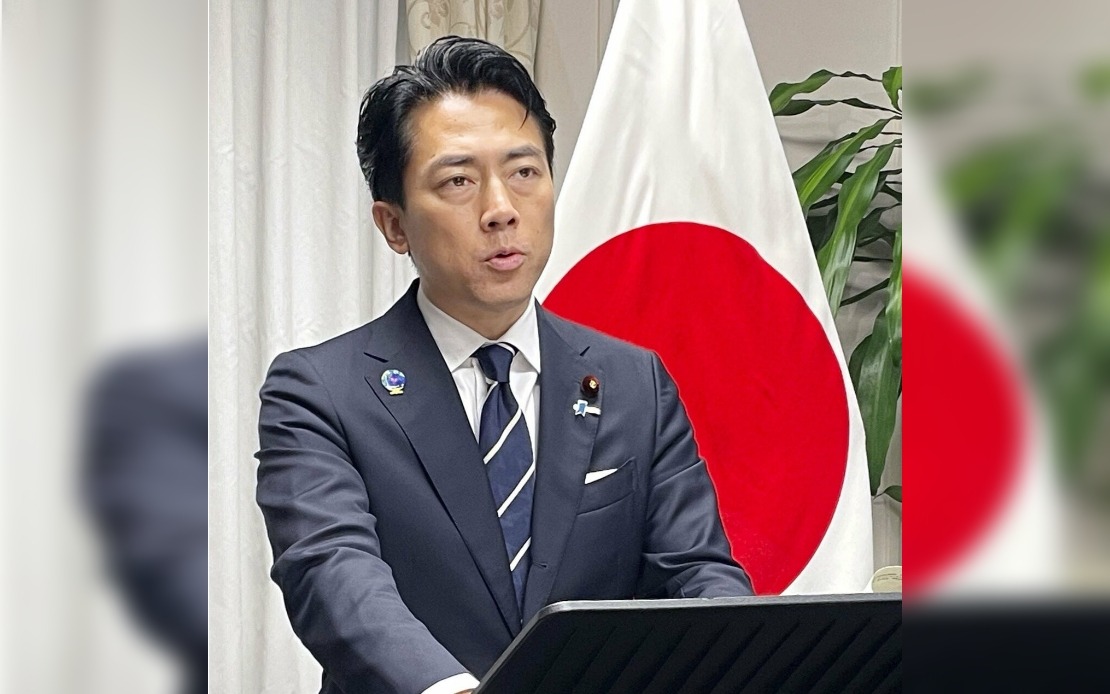
Japan's Defence Minister Shinjiro Koizumi has initiated what may prove a watershed moment in Tokyo's defence policy by advocating for serious national discussion on nuclear weapons capabilities. Speaking through an online programme released on Friday, Koizumi framed the debate as unavoidable given Japan's evolving security landscape, pointing to European nations that are reassessing their own nuclear deterrence strategies. His remarks appear timed to inform the government's comprehensive overhaul of three cornerstone national security documents scheduled for completion by year-end.
The Defence Minister specifically highlighted the nuclear policy trajectories of France and Finland as examples worthy of Japan's consideration. France, under President Emmanuel Macron, announced in March its intention to expand its nuclear warhead arsenal, signalling renewed emphasis on atomic deterrence within Europe. Finland's parliamentary decision in June to permit the transit and stationing of nuclear weapons on its soil represents another significant policy shift, demonstrating how even traditionally non-nuclear-aligned nations are reconsidering their strategic posture in response to regional instability.
Japan occupies a unique and historically fraught position in this global conversation. As the sole nation to experience nuclear weapons deployment in warfare—the atomic bombings of Hiroshima and Nagasaki in 1945—Japan has cultivated three foundational principles: the country will neither manufacture nuclear weapons, possess them, nor permit their presence on Japanese territory. These commitments have anchored Japan's peace advocacy and shaped its international identity for nearly eight decades. Despite this principled stance, Japan maintains an extensive security partnership with the United States, effectively sheltering beneath the American nuclear umbrella through formal alliance structures.
Koizumi's intervention suggests the government believes Japan's security environment has deteriorated sufficiently to warrant reexamining previously settled questions. The Defence Minister argued that Japan cannot maintain a deliberate silence on nuclear issues and that societal taboos against discussing certain topics have become counterproductive to rational strategic planning. This rhetorical framing—positioning the debate itself as a necessity rather than a preference—reflects how officials are attempting to normalize a conversation that would have seemed politically radioactive merely years ago.
The timing of Koizumi's comments follows a pattern of incremental norm-shifting within Japanese security circles. In December of the previous year, an official advising Prime Minister Sanae Takaichi's administration provocatively suggested Japan should acquire nuclear weapons, triggering swift condemnation from opposition political parties and several foreign governments. Former Defence Minister Itsunori Onodera similarly ventured into controversial territory by arguing Japan must seriously contemplate the sustainability of its three non-nuclear principles. These sequential interventions by senior defence figures suggest a coordinated, if carefully calibrated, effort to shift the bounds of acceptable policy discourse.
For Malaysia and the broader Southeast Asian region, Japan's nuclear posture carries substantial implications. Japanese military capabilities and strategic orientations directly influence regional security architecture, particularly given Tokyo's role in maintaining freedom of navigation through critical sea lanes and its involvement in multilateral security partnerships spanning the Indo-Pacific. Should Japan fundamentally alter its nuclear weapons position, such a shift would reverberate through regional security calculations and potentially influence other nations' strategic reassessments.
The geopolitical context driving this Japanese reconsideration centres on North Korea's accelerating nuclear weapons programme and the modernization of China's strategic arsenal. Japanese analysts have grown increasingly concerned that traditional security arrangements, while valuable, may prove insufficient against adversaries acquiring more sophisticated nuclear capabilities. The deteriorating security environment in Northeast Asia, coupled with perceived constraints on American strategic resources owing to commitments elsewhere, has created an opening for officials to argue that Japan cannot indefinitely abstain from nuclear weapons discussions.
Opposition to reconsidering Japan's non-nuclear principles remains substantial both domestically and internationally. Peace movements within Japan, diplomatic partners especially South Korea and non-aligned nations, and international organizations advocating nuclear disarmament have consistently resisted any movement away from Japan's three principles. Public opinion within Japan, while gradually shifting, still predominantly supports maintaining the non-nuclear stance. These countervailing pressures explain why officials like Koizumi frame their position cautiously as advocating debate rather than policy change.
The distinction between opening dialogue and adopting new policy represents crucial political terrain. By characterizing this as a necessary conversation about Japan's future security needs, Koizumi and his colleagues maintain rhetorical plausibility while beginning the lengthy process of shifting public and international expectations. The completion of revised security documents by year-end will provide a crucial indicator of how far the government intends to proceed with this repositioning.
The implications extend beyond Japan itself. A Japanese nuclear weapons programme would fundamentally alter Northeast Asian security dynamics, potentially triggering cascading regional developments. South Korea's own nuclear weapons discussions might accelerate, while the regional non-proliferation regime would face unprecedented stress. For Southeast Asia, such developments would reinforce concerns about great power competition and the destabilization of rules-based regional order.
Koizumi's intervention ultimately represents an attempt to create political space for Japan to consider options previously deemed unthinkable. Whether this conversation yields concrete policy changes or remains contained within elite discourse remains unclear. What is evident is that Japan's security establishment increasingly believes the country cannot maintain permanent silence on nuclear weapons amid a threatening regional environment. The coming months will reveal whether public opinion and international pressure can constrain this nascent policy shift or whether Japan has begun an irreversible journey toward nuclear weapons acquisition.

