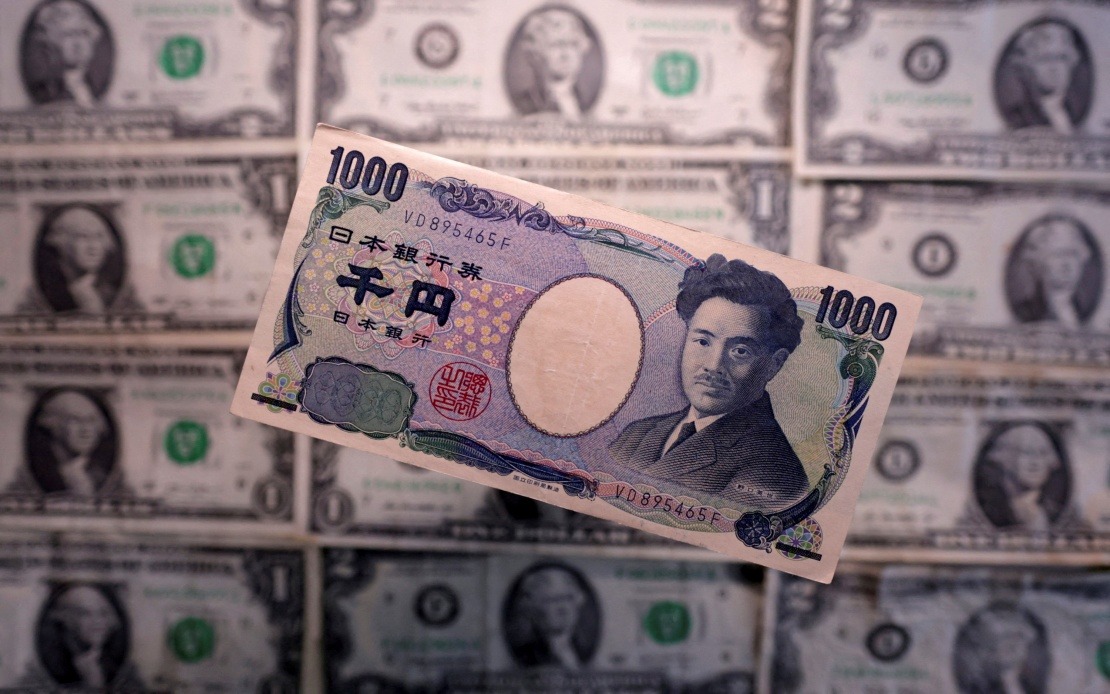
The Japanese yen staged a dramatic but brief rally on Thursday evening in Tokyo, punching through the psychologically significant 158 level against the US dollar before settling back. The sudden move triggered immediate speculation among currency traders and analysts that Japanese authorities had intervened directly in the foreign exchange market to arrest the yen's ongoing weakness. By 5 pm local time, the yen had retreated to trade at 163.73-74 per dollar, though the earlier surge had clearly rattled market participants who were caught off guard by the unexpected strength.
The timing of the yen's bounce proved particularly intriguing to observers of Japanese economic policy. Just hours before the Bank of Japan was scheduled to announce its monetary policy decision following a two-day meeting, and merely one day after the US Federal Reserve chose to hold its key interest rate steady, the sudden buying pressure on the yen appeared coordinated rather than organic. One market participant's candid admission—"I have no clue why the yen had to be bought all of a sudden"—reflected the broader confusion about the move's origins. However, more seasoned traders quickly connected the dots, reasoning that Tokyo may have seized what it viewed as an opportune window following the Fed's decision, which itself had triggered dollar-selling pressure against the yen.
The yen has endured a punishing slide in recent months, touching its weakest level in approximately four decades against the US dollar. This sustained depreciation reflects deepening concerns among international investors about Japan's economic trajectory and policy direction. The catalyst for much of this pessimism centres on Prime Minister Sanae Takaichi, whose administration is widely expected to pursue substantial fiscal expansion despite mounting evidence that Japan's public finances are deteriorating rapidly. As the most indebted major economy globally, Japan's fiscal position already strains under the weight of decades of accumulated deficits, making additional spending initiatives particularly concerning to bond markets and currency traders alike.
Takaichi's proposals only amplified these anxieties. On Thursday, she unveiled plans to slash the consumption tax on food and beverages from the current 8 per cent down to just 1 per cent, a two-year measure scheduled to take effect in April. This would mark the first consumption tax reduction since the system's introduction in 1989, representing a radical departure from the previous direction of fiscal policy. While such a reduction might offer temporary relief to household budgets and could stimulate consumer spending, the mechanism for financing this measure remains conspicuously absent from official announcements. Market participants have grown increasingly vocal about their concern that the tax cut will proceed without identified revenue sources to offset the lost government income, a policy combination virtually guaranteed to deteriorate Japan's already dire fiscal metrics.
Japanese authorities are no strangers to currency market intervention. Officials last engaged in direct market operations between April and May of this year, buying the yen by selling dollars in an effort to support the weakening currency. Such interventions, while sometimes effective in the short term, typically require sustained commitment to shift market sentiment permanently. The fact that authorities returned to intervention—if indeed Thursday's move represented official action—suggests growing concern in Tokyo about the yen's decline and its potential consequences for inflation, import costs, and Japanese competitiveness in global markets. Each intervention also depletes Japan's foreign exchange reserves, a finite resource that cannot be deployed indefinitely.
The broader context illustrates a fundamental policy dilemma confronting Japanese officials. The Bank of Japan has maintained an extremely accommodative monetary stance, keeping interest rates near zero and engaging in extensive asset purchases to support economic activity. This loose monetary policy, while intended to stimulate growth and inflation, simultaneously weakens the yen by making dollar-denominated assets more attractive to investors seeking better returns. Meanwhile, the prospective fiscal expansion outlined by the Takaichi administration points in the opposite direction, as increased government spending could theoretically raise inflation and interest rates. The contradiction between these approaches—loose monetary policy paired with expansionary fiscal policy—creates confusion in markets about Japan's true economic objectives and raises questions about policy coordination between the central bank and government.
For Malaysian readers and Southeast Asian observers, Japan's currency and fiscal challenges carry immediate relevance. Japan remains a crucial trading partner for Malaysia and the broader region, and a weaker yen affects the competitiveness of Japanese exports throughout Asia. A persistently weak yen could trigger competitive currency devaluations elsewhere in the region as trading nations attempt to maintain their own export competitiveness. Additionally, Japanese investors and businesses operate extensively throughout Southeast Asia, and currency weakness at home can influence their appetites for regional investments. The uncertainty surrounding Japan's fiscal sustainability also matters for regional financial markets, given Japan's role as a major holder of US Treasury securities and its influence on broader Asia-Pacific economic dynamics.
The intervention speculation reflects deeper market scepticism about Japan's policy framework. Traders understand that sporadic currency market operations, unless backed by sustained policy changes, offer only cosmetic relief. Stabilising the yen durably would require either higher Japanese interest rates, reduced fiscal deficits, or both—outcomes that seem unlikely under the Takaichi administration's stated policy direction. This mismatch between official objectives and the underlying drivers of currency weakness creates a credibility problem that successive interventions may struggle to overcome. Markets have grown accustomed to intervention attempts in recent decades, and each successive effort potentially requires larger scale to achieve the same impact.
The Bank of Japan's monetary policy announcement, due following its two-day meeting, will provide crucial signals about officials' views on the currency situation and inflation dynamics. Should the central bank signal continued accommodation or further easing, it would reinforce the market's perception of downward pressure on the yen, potentially undoing any confidence gained from Thursday's intervention. Conversely, any hint of policy tightening could surprise markets and potentially support the currency, though such a move would contradict the Bank of Japan's recent communications and could conflict with the government's fiscal expansion plans. The apparent disconnect between monetary and fiscal authorities underscores the complexity of managing both inflation and currency stability within Japan's constrained economic circumstances.
Looking ahead, the yen's trajectory will likely remain volatile and sensitive to shifts in US-Japan interest rate differentials, global risk sentiment, and the credibility of Japanese policy statements. Market participants will continue scrutinising the pace of fiscal implementation and the Bank of Japan's response to any inflationary pressures that emerge. For now, Thursday's mysterious surge and the intervention speculation it provoked serve as a reminder that even major economies struggle to control currency markets in the face of fundamental economic challenges. Japan's authorities can intervene in the foreign exchange market, but sustaining yen strength requires addressing the underlying fiscal and monetary imbalances that have driven the currency's decline over recent months.

