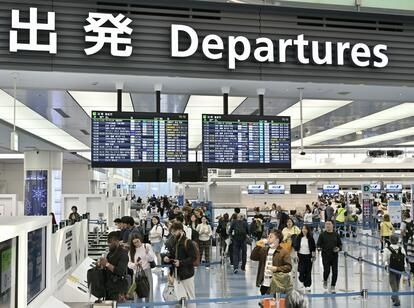
Japan has substantially escalated the financial burden on departing travellers and foreign visitors seeking entry, implementing changes that represent the most significant overhaul of its tourism-related levies in decades. From July 1, the departure tax climbed to 3,000 yen per person, tripling from its previous level of 1,000 yen, whilst visa fees for foreign nationals jumped to 15,000 yen for single-entry permits and 30,000 yen for multiple-entry visas—the first adjustment since 1978. These moves underscore Japan's determination to address infrastructure strain and regional imbalances created by an unprecedented influx of international visitors seeking to experience the country's cultural and natural attractions.
The departure tax, formally recognised as the international tourist tax, now represents a more substantial component of travel costs for anyone leaving Japanese shores. The tax applies uniformly to all passengers regardless of nationality and is collected by airlines, cruise operators, and travel agencies at the point of ticket purchase. The government projects this elevated levy will generate approximately 130 billion yen during fiscal 2026, a marked increase from the roughly 49 billion yen raised in the previous fiscal year. This substantial revenue stream will be dedicated to alleviating the challenges posed by concentrated tourist flows, particularly in iconic destinations where foreign visitors cluster in dangerous numbers around popular photography locations.
Beyond simple congestion management, Tokyo has articulated a deliberate strategy to redistribute visitor spending toward underutilised regions. The revenue from increased taxes will fund infrastructure improvements designed to make secondary and tertiary destinations more attractive, including initiatives to rebrand local railway networks as tourist experiences and renovate station facilities to create welcoming gateways outside major urban centres. This dispersal approach reflects a sophisticated understanding that sustainable tourism requires not merely limiting visitor numbers but channelling them productively toward areas where economic benefits remain concentrated among major attractions. For Southeast Asian readers, Japan's approach offers insights into managing tourism's double-edged nature: the economic stimulus it provides alongside the infrastructure and social pressures it generates.
Foreign Minister Toshimitsu Motegi characterised the visa fee increases as a necessary adjustment to account for inflation and the yen's depreciation rather than a deliberate deterrent to international travel. Japan's visa charges had long remained comparatively modest relative to other Group of Seven nations, suggesting the government views these increases as a calibration toward international norms rather than a fundamental reorientation of policy. Motegi explicitly stated that policymakers do not anticipate the fee changes will produce immediate measurable declines in visitor numbers, indicating confidence that Japan remains an attractive destination despite higher entry costs. This measured framing suggests the government seeks to balance revenue generation with the maintenance of Japan's competitive positioning in global tourism markets.
The measures reveal a telling asymmetry in Tokyo's approach: whilst foreign visitors face substantially increased costs, Japanese nationals receive relief through reduced passport fees. The government lowered charges for standard counter applications from 16,300 yen to 9,300 yen for ten-year passports and standardised five-year passport fees at 4,800 yen, with further discounts available for online applications. These reductions form part of a broader initiative to elevate Japan's passport ownership rate, which remains lower than comparable advanced economies despite the nation's wealth and global integration. By subsidising domestic travel document acquisition, the government appears intent on encouraging Japanese citizens to venture abroad, potentially offsetting any deterrent effects from higher visa fees on inbound tourism.
Certain traveller categories receive exemptions from the departure tax, reflecting policymaker awareness of unintended consequences. Transit passengers who remain in Japan fewer than 24 hours and children under two years old are excluded from the levy, recognising that brief stopovers and young children represent categories where the tax would impose disproportionate burden. Importantly, passengers who had already purchased departure tickets prior to the implementation date remained subject to the original 1,000 yen rate, honouring prior expectations and avoiding retroactive application of the new charges. These exemptions demonstrate consideration of equity and fairness alongside revenue maximisation, though critics might argue that brief transits of wealthy hub cities like Tokyo represent precisely the sort of low-value-add tourism that benefits few residents beyond hospitality workers.
The timing and magnitude of these increases carry implications extending beyond Japan's borders into the broader Southeast Asian tourism ecosystem. As major regional competitor destinations to Japan, nations such as Thailand, Malaysia, and Vietnam monitor changes in Japan's tourism economics closely. Higher entry costs to Japan could marginally shift international visitor flows toward more affordable Southeast Asian alternatives, potentially benefiting regional hospitality sectors already recovering from pandemic-era disruptions. Conversely, Japan's commitment to infrastructure investment and regional development funded through tourism levies establishes a potential model for other countries grappling with the tension between maximising tourism revenue and managing its social and environmental costs.
The revenue trajectory anticipated by Japanese planners—growing from 49 billion yen to approximately 130 billion yen annually—suggests the government intends tourism-derived taxation to fund substantial public investment over coming years. This transition from a minor levy to a meaningful revenue source reflects shifting assumptions about tourism's role in national finance. Rather than treating international visitors as a source of modest supplementary income, Tokyo now explicitly positions them as funders of significant infrastructure and development initiatives. For developing nations in Southeast Asia facing similar pressures from growing tourism volumes, Japan's model demonstrates both the potential and pitfalls of funding public goods through visitor-derived taxation, raising questions about optimal tax levels that generate revenue without dampening demand.
The historical context of visa fee stability proves particularly striking. The previous fee structure had remained unchanged for nearly half a century—since 1978—meaning multiple generations of foreign travellers had paid identical charges whilst global inflation and currency movements substantially eroded their real value. This extended period of stability arguably reflected bureaucratic inertia and complacency about competitive positioning rather than deliberate policy. By rectifying this outdated fee structure, Japan acknowledges that static pricing in dynamic global markets eventually becomes disconnected from underlying costs and comparative economics. The 1978 baseline coincided with a very different era of international travel, when long-haul tourism remained a luxury good accessible primarily to wealthy populations from advanced economies.
The government's simultaneous announcements—raising charges on foreign visitors whilst reducing fees for Japanese citizens—reveal subtle political considerations within domestic Japanese discourse. By framing the departure tax increase as necessary infrastructure funding rather than tourist discouragement, and by offsetting it with tangible benefits for Japanese passport holders, policymakers sought to construct a narrative where tourism contributes meaningfully to national development whilst protecting citizen interests. This balancing reflects Japan's mature democracy where domestic political constituencies exercise influence over policy formulation. Developing nations aspiring to implement similar tourism levies must navigate comparable domestic political pressures, requiring careful communication about how international visitor spending benefits local communities rather than simply extracting wealth.
Looking forward, the sustainability of Japan's tourism model will depend on whether increased taxes genuinely fund effective regional dispersal mechanisms or whether they become generic revenue sources with declining connection to tourism-specific benefits. The success of local railway renovations and station improvements in drawing visitors away from congested central areas will ultimately test whether the government's infrastructure strategy achieves its stated objectives. For Malaysian policymakers considering similar measures to address tourism pressures in Kuala Lumpur, Penang, and other popular destinations, Japan's experience offers valuable lessons about implementation sequencing—establishing alternative attractions before imposing costs that might otherwise simply reduce overall visitor numbers without improving distribution patterns.

