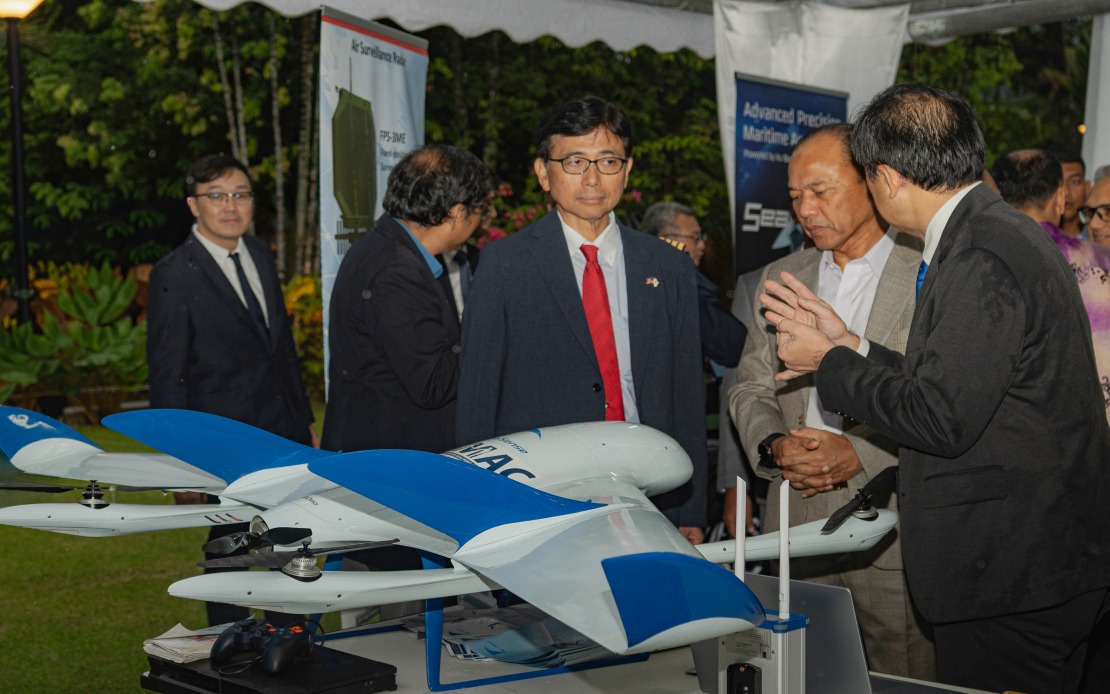
Japan is preparing to significantly expand its defence and security partnership with Malaysia, reflecting Tokyo's broader strategy to strengthen ties with Southeast Asian allies amid mounting geopolitical pressures in the Indo-Pacific region. Japan Ambassador to Malaysia Noriyuki Shikata made the commitment during the 72nd Japan Self-Defence Forces Day Reception in Kuala Lumpur on Wednesday, signalling that both nations are committed to moving beyond symbolic gestures toward concrete operational cooperation.
The announcement gains prominence following Prime Minister Datuk Seri Anwar Ibrahim's recent visit to Japan, during which he met with Prime Minister Sanae Takaichi. Both leaders reaffirmed their determination to deepen strategic cooperation, placing defence and security matters at the forefront of the bilateral relationship. This timing reflects a deliberate effort by Japan to consolidate partnerships with key Southeast Asian partners as regional security dynamics continue to shift. For Malaysia, the deepening ties with Japan provide an opportunity to diversify its security partnerships while maintaining its non-aligned stance in the region's great power competition.
The relationship between Japan and Malaysia reached a significant milestone in 2023 when the two countries elevated their ties to a Comprehensive Strategic Partnership status. Shikata's recent remarks suggest Japan intends to leverage this framework to move the partnership beyond its current trajectory, particularly as the nations prepare to commemorate the 70th anniversary of diplomatic relations next year. This milestone presents a natural juncture for both governments to deepen institutional cooperation across multiple domains, with defence forming the central pillar of expanded engagement.
A cornerstone of this enhanced cooperation is alignment between Japan's Free and Open Indo-Pacific vision and the ASEAN Outlook on the Indo-Pacific. Both frameworks share fundamental objectives regarding regional stability, freedom of navigation, and adherence to international law—principles that have become increasingly important given concerns about unilateral actions in critical sea lanes. By harmonising these visions, Japan and Malaysia are working to establish a coherent regional architecture that preserves the existing rules-based order while addressing emerging security challenges.
Maritime security represents a particularly vital area of cooperation between the two nations. The bilateral MALPAN exercise, conducted regularly by the Japan Maritime Self-Defence Force and the Royal Malaysian Navy in the South China Sea and the Strait of Malacca, provides both navies with opportunities to build operational trust and enhance interoperability. The April edition of MALPAN marked a significant development by including the Royal Malaysian Air Force, effectively creating a tri-service exercise that strengthens Malaysia's capacity to maintain situational awareness across maritime and aerial domains. These practical exercises serve the dual purpose of building institutional relationships while simultaneously addressing the concrete security concerns of both nations regarding the safety of critical international shipping routes that remain vital to regional economic prosperity.
Beyond traditional defence cooperation, Japan has introduced Official Security Assistance as a mechanism for providing equipment and technology to partners including Malaysia. Since its launch in 2023, this initiative has delivered unmanned aerial vehicles and rescue boats to Malaysia. Looking toward 2025, Japan has pledged to provide equipment for ceasefire monitoring to the ASEAN Observer Team and commit a diving support vessel to the Royal Malaysian Navy. These contributions underscore Japan's willingness to invest resources in enhancing Malaysia's operational capabilities while supporting broader ASEAN-level security initiatives. Such assistance acknowledges Malaysia's significant role in regional peacekeeping and maritime security operations.
The defence industry dimension of the partnership reflects growing recognition that security cooperation extends beyond military-to-military contact. Ten Japanese companies participated in Defence Services Asia 2026 in Kuala Lumpur, showcasing cutting-edge technologies and equipment relevant to Malaysia's modernisation requirements. More substantially, Japan and Malaysia signed Terms of Reference during the event to establish a bilateral defence industry dialogue. This institutional mechanism will facilitate ongoing conversations between defence manufacturers, government officials, and military experts, creating pathways for technology transfer, joint development projects, and increased commercial engagement in the defence sector. For Malaysian defence planners, such industry cooperation offers access to advanced Japanese technologies while enabling potential local manufacturing or assembly initiatives.
The emphasis on security cooperation reflects broader regional dynamics that have heightened interest in defence partnerships among Indo-Pacific nations. Malaysia, as a major ASEAN economy and a country with extensive maritime interests, occupies a strategically important position in the region. Its cooperation with Japan signals to other regional actors that Southeast Asian nations are actively building multidirectional security partnerships rather than aligning exclusively with any single power. This approach aligns with Malaysia's consistent foreign policy principle of maintaining strategic autonomy while deepening relationships with multiple partners.
From Japan's perspective, the enhanced partnership with Malaysia forms part of a comprehensive strategy to strengthen the security architecture supporting its Free and Open Indo-Pacific vision. As Japan faces its own security challenges and seeks to maintain influence in an increasingly competitive region, deepening ties with ASEAN nations provides crucial ballast. Malaysia's central position within ASEAN, combined with its geographic location controlling key maritime chokepoints, makes it an especially valuable partner for Tokyo's regional objectives.
The timing of these announcements also merits consideration given the current international environment. The emphasis on de-escalation, international law, and keeping sea lanes open suggests both nations are responding to perceived threats to the regional order. While neither country has explicitly named specific adversaries, the consistent references to upholding rules-based frameworks and maintaining freedom of navigation carry implicit warnings about unilateral actions that might undermine regional stability. This messaging resonates particularly strongly in Southeast Asia, where smaller nations have historically relied on international legal frameworks to protect their interests against more powerful neighbours.
Looking forward, the partnership trajectory outlined by Ambassador Shikata suggests Japan intends to position itself as a security provider of choice for Malaysia and other ASEAN nations. The combination of military exercises, technology transfer, defence industry engagement, and targeted security assistance creates multiple channels through which both countries can deepen cooperation. For Malaysian observers, this represents an opportunity to access advanced security capabilities and institutional expertise from a technologically sophisticated ally with demonstrated commitment to regional stability.
The 70th diplomatic anniversary milestone presents both countries with an opportunity to institutionalise these partnerships further through formal agreements, regular dialogue mechanisms, and long-term planning frameworks. As regional security environments continue to evolve, maintaining strong partnerships built on mutual trust and shared strategic interests will remain essential for Malaysia's capacity to navigate the complex geopolitical landscape of the Indo-Pacific.

