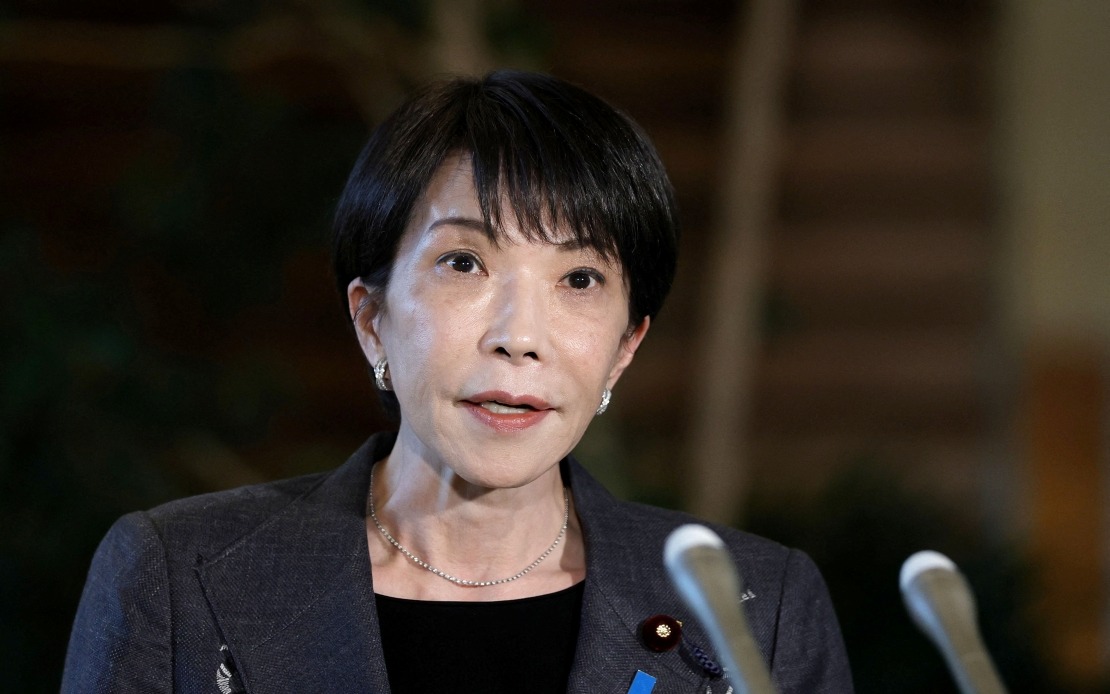
Japanese Prime Minister Sanae Takaichi made a symbolic gesture towards the Yasukuni shrine in Tokyo on Saturday, the 81st anniversary marking the conclusion of World War II, by dispatching a ritual offering rather than visiting in person. The move reflects the delicate political balancing act her conservative administration must navigate around one of Japan's most contentious historical landmarks, particularly given the intense regional sensitivities it continues to provoke across East Asia.
While Takaichi refrained from a direct appearance at the shrine, Defence Minister Shinjiro Koizumi proceeded to visit the site on the war anniversary itself, becoming the first sitting defence minister to do so since Minoru Kihara made the journey on August 15, 2024. Kihara, who now serves as chief Cabinet secretary within Takaichi's government, had similarly visited during the previous year's commemoration. The distinction between sending an offering and making a personal pilgrimage carries significant weight in Japan's domestic political discourse, allowing leadership figures to acknowledge the shrine's importance to their political base whilst attempting to minimise diplomatic friction abroad.
Takaichi, whose role as president of the ruling Liberal Democratic Party entitles her to make such offerings, funded the shrine donation entirely from her personal resources according to a senior party official. This detail carries particular significance in Japan's political culture, where the source of funding can distinguish between official state business and private individual actions—a crucial distinction when managing relations with Beijing and Seoul. Prior to assuming the premiership last October, Takaichi had visited Yasukuni during seasonal festivals and on previous August 15 commemorations, but has deliberately abstained from shrine visits in her current capacity as prime minister.
The Yasukuni shrine occupies an extraordinarily fraught position in East Asian geopolitics. The institution formally enshrined fourteen wartime Japanese leaders as deities during 1978, most of whom were convicted as Class-A war criminals by Allied tribunals. Among these figures is General Hideki Tojo, who served as wartime prime minister and was executed in 1948 on charges relating to crimes against peace. Such enshrinements transformed the shrine from a simple military memorial into a symbolic repository of Japan's wartime leadership, creating an ongoing diplomatic flashpoint that reverberates through the region decades later.
China and South Korea maintain particularly strong objections to high-level visits to Yasukuni, given the historical weight of Japanese imperial aggression that both nations endured. Japan's occupation of extensive Chinese territories by warfare's end and its colonisation of the Korean Peninsula from 1910 through 1945 established foundations for grievances that remain politically potent today. When Japanese prime ministers and parliamentary members pay respects at the shrine, governments in Beijing and Seoul view such actions as rehabilitation of wartime militarism and affront to the suffering their populations experienced.
Beyond the prime minister and defence minister, several other Cabinet members and senior Liberal Democratic Party executives visited Yasukuni on the anniversary. Hitoshi Kikawada, who serves as state minister overseeing matters concerning the Northern Territories adjacent to Hokkaido, joined the pilgrimage. These islands represent another significant source of bilateral tension, as Tokyo maintains that the former Soviet Union illegally seized them following the war's conclusion—a territorial dispute that remains unresolved and occasionally erupts into diplomatic protests. The involvement of officials responsible for this portfolio suggests deliberate messaging regarding Japan's nationalist positioning.
Senior party leadership including Secretary General Shunichi Suzuki, Haruko Arimura as head of the General Council, and Yasutoshi Nishimura heading the Election Strategy Committee also made visits to the shrine. This coordinated attendance by multiple tiers of conservative political hierarchy underscores the Yasukuni pilgrimage's significance within LDP calculations and its resonance with the party's core electoral base, particularly older and more traditionally-minded voters who view the shrine as deserving respect.
Takaichi's approach—sending an offering whilst avoiding a personal appearance—reflects the sophisticated political mathematics required of contemporary Japanese leadership. By maintaining distance from the physical site while still acknowledging it financially and symbolically, she attempts to satisfy domestic constituents invested in honouring wartime sacrifice without providing Beijing and Seoul with the visual evidence of a prime ministerial pilgrimage that would trigger predictable diplomatic protests. This distinction matters substantially in international relations, where optics and symbolism often carry as much weight as substantive policy.
Japan's constitutional framework since 1945 has committed the nation explicitly to peace renunciation, establishing a foundational identity around demilitarisation and pacifism that stands in considerable tension with contemporary defence policies. The government has justified increasing military expenditure and expanded defence capabilities by pointing to what it characterises as an increasingly severe security environment in the Indo-Pacific region, referencing rising tensions involving China, Russia, and North Korea. This security narrative competes with historical memory around Yasukuni, creating interpretive challenges for how Japan positions itself—simultaneously as a peace-committed democracy and as a nation reasserting strategic military capacity.
For Malaysian and Southeast Asian observers, these developments carry implications extending beyond Japanese domestic politics. The region's strategic environment involves managing relationships with both Japan and China whilst maintaining stability across multiple territorial disputes and competing security interests. Japan's internal debates around historical memory, nationalism, and defence posture inevitably influence its regional behaviour and partnerships. The Yasukuni controversy exemplifies how unresolved historical grievances continue shaping contemporary geopolitics, a lesson particularly relevant to Southeast Asia where colonial legacies and wartime experiences remain politically salient across multiple nations.

