Japan's cabinet has moved decisively to address a looming succession crisis within the imperial family, approving a bill on Tuesday that would allow the adoption of eligible male heirs from historical branch families as a means of sustaining the world's oldest monarchy. The legislation represents the government's attempt to navigate deepening demographic pressures threatening the stability of the imperial institution, though it reflects a fundamentally conservative approach that sidesteps broader reforms demanded by ordinary Japanese citizens.
Prime Minister Sanae Takaichi's ruling coalition, comprising the Liberal Democratic Party and its junior partner the Japan Innovation Party, has set an ambitious timeline for enacting the revised Imperial House Law before the current parliamentary session concludes on July 17. The bill targets two specific objectives: enabling the imperial family to absorb adult males aged fifteen and upwards who descend patrilineally from emperors belonging to eleven former branch families, and granting female members the right to maintain their imperial status following marriage to commoners. These provisions aim to expand the pool of potential successors without fundamentally altering the male-only succession principle that has governed the imperial throne for centuries.
The adoption mechanism embedded within the bill represents a carefully calibrated legal manoeuvre. Legislation currently prohibits imperial family adoption, but the new framework would carve out an exception specifically for males from qualifying branch lineages. Importantly, adopted individuals themselves would remain ineligible to become emperor, yet their biological male descendants would gain full succession rights to the Chrysanthemum Throne. This arrangement preserves the appearance of maintaining traditional male-line descent while practically incorporating new blood into the dwindling pool of eligible heirs.
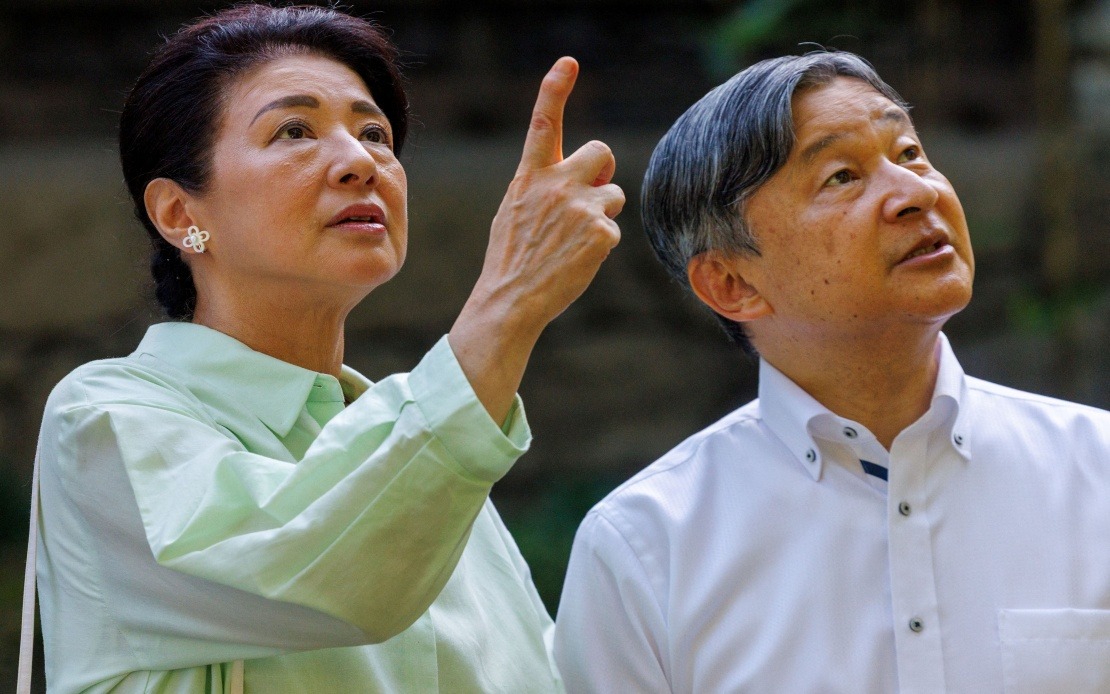
The current succession landscape reveals the severity of the institutional challenge facing Japan's monarchy. Emperor Naruhito, aged sixty-six, has only three identifiable heirs: his younger brother Crown Prince Fumihito, sixty years old; his nineteen-year-old nephew Prince Hisahito; and his ninety-year-old uncle Prince Hitachi. The demographic mathematics are unforgiving: without intervention, the imperial succession could face genuine jeopardy within a single generation. The eleven branch families targeted by the legislation share a common ancestor dating back approximately six centuries, providing historical legitimacy for their reincorporation into the official imperial line.
Historical context illuminates why these branch families remain separated from the main imperial household. Following Japan's defeat in the Second World War and the subsequent American occupation, the imperial institution underwent significant restructuring. In 1947, fifty-one members from the eleven branch families lost their royal status under occupation directives, whilst the three families descended from Emperor Hirohito's brothers retained their positions. This distinction now enables the government to target these families as sources for new heirs, since their imperial lineage remains unbroken despite their formal separation from court circles.
The legislative proposal, which originated from a government panel in 2021, deliberately circumscribes its scope in ways that have drawn criticism from reformist voices. Notably, the bill entirely omits discussion of permitting female succession or recognising imperial lineage transmitted through maternal lines—both concepts that have gained substantial traction among the Japanese public. A Kyodo News survey conducted in May found that eighty-three percent of respondents support the notion of a female emperor, indicating a significant gap between public opinion and the conservative governing coalition's policy choices.
The divergence between public sentiment and government action reflects deeper tensions within Japanese political culture regarding institutional reform. The cross-party consultation process that informed the bill's development deliberately avoided substantive engagement with female succession, with participating political representatives from all thirteen represented parties apparently accepting the framework that such discussions remained premature. Opposition forces are widely expected to mount challenges during Diet deliberations, though the ruling coalition's parliamentary dominance makes passage relatively assured.
For regional observers, Japan's imperial succession reform holds broader significance within East Asian institutional politics. Southeast Asian monarchies and Asian democracies with traditional ruling families have long monitored Japan's approaches to balancing institutional continuity with contemporary democratic expectations. The Japanese government's decision to maintain patrilineal succession while accepting female retention of imperial status represents a compromise position that acknowledges modern gender sensibilities without abandoning foundational conservative principles.
The extension of imperial status to female members upon their marriage to commoners effectively acknowledges that women can transmit imperial heritage, even whilst denying them personal succession rights. This partial modernisation suggests that even conservative governing coalitions recognise certain pressures for gender equality as politically unavoidable, yet the refusal to permit female succession reveals where institutional traditionalism ultimately draws its boundaries. The artificial distinction between preserving imperial status and permitting throne ascension creates a logical tension that future generations may find increasingly difficult to sustain.
Beyond the metropolitan political arena, the bill's passage would reshape the constitutional position of imperial branch families scattered across Japan. Thousands of individuals descended from the original branch families remain aware of their distant imperial connections, and formal reincorporation mechanisms would elevate their status within local and national social hierarchies. The adoption provisions create pathways through which promising male descendants from these families could be drawn into the imperial household, raising questions about selection criteria and the voluntary nature of such incorporation.
The legislative timeline reflects confidence that implementation can proceed smoothly, though parliamentary dynamics may complicate matters. Opposition parties retain opportunities to propose amendments, and extended Diet discussion could expose further dimensions of public resistance to the government's restrictive approach. The May polling data demonstrating overwhelming support for female succession represents a political resource that opposition figures can mobilise effectively during debate sessions.
Looking forward, Japan's imperial succession reform will likely require further iterations. The bill's passage represents a holding action rather than a definitive resolution of underlying demographic and institutional challenges. Within two decades, Prince Hisahito will mature into his prime succession years, potentially buying the institution crucial time, yet the ultimate sustainability of a male-line-only system remains questionable. Future governments may find themselves compelled to revisit female succession—not by ideological conviction but through sheer demographic necessity, should the pool of male heirs continue contracting despite the adoption provisions now being legislated.

