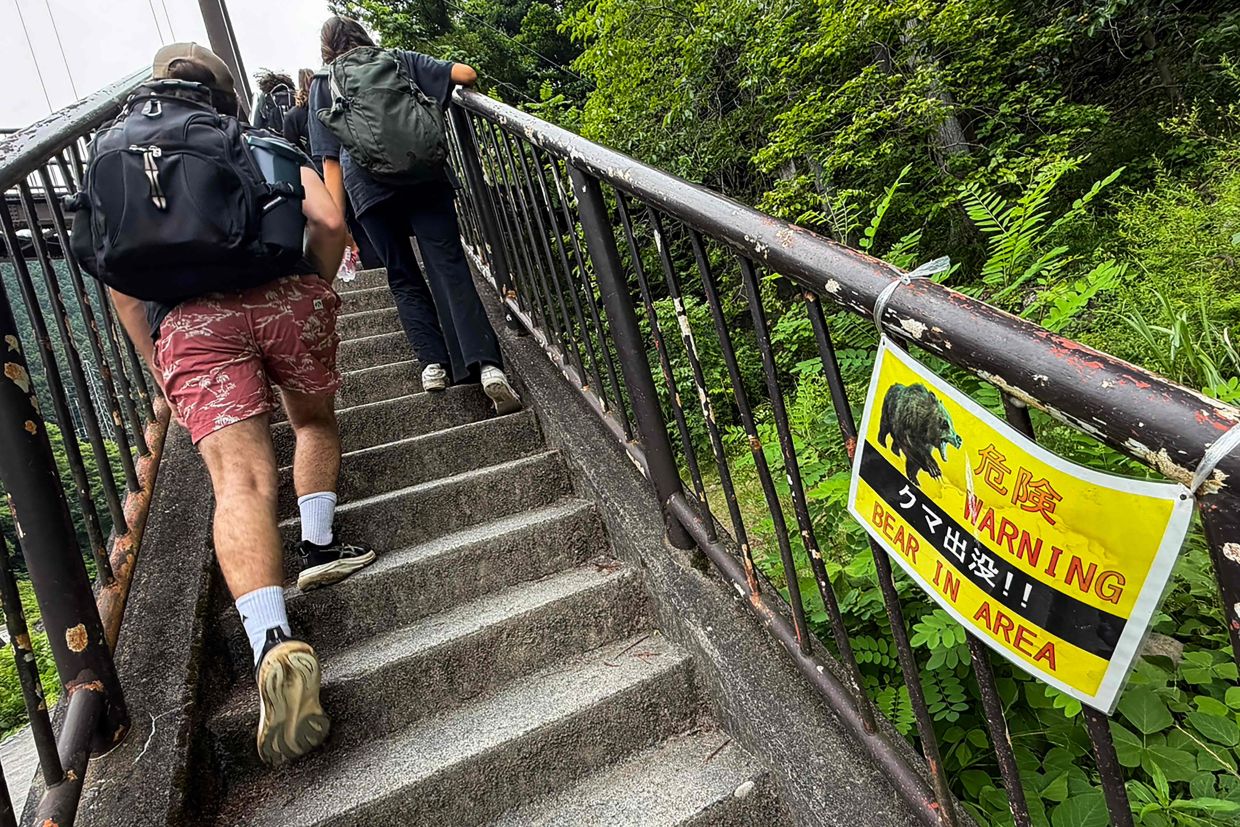
Faced with an escalating crisis of dangerous wildlife encounters, Japan has launched an ambitious surveillance programme across its mountainous regions. Environment ministry officials confirmed that the country is deploying more than 800 cameras throughout northern territories as part of a comprehensive population assessment triggered by the sharp uptick in bear-related fatalities. The initiative, which began in early July, represents a significant shift in how authorities approach wildlife management, moving from fragmented local efforts towards a coordinated national strategy.
The scale of the problem has become undeniable. Since the start of April, bears have claimed at least five lives in the Tohoku region alone, continuing a disturbing trend that saw thirteen fatal attacks recorded across the entire country during the previous fiscal year. These statistics have transformed bear encounters from isolated incidents into a matter of urgent public concern, with communities in affected areas reporting pervasive anxiety about venturing outdoors. The frequency and lethality of attacks have prompted the government to treat wildlife management with unprecedented urgency, prompting investment in sophisticated monitoring infrastructure.
The ecological backdrop to these attacks reveals deeper structural changes affecting Japan's landscape and society. Scientific analysis attributes the growth in bear populations partly to demographic shifts in rural Japan, where declining populations have meant fewer human settlements and less active land management. As villages have emptied and farming communities have contracted, bears and other wildlife have expanded their territories, reclaiming habitats that were previously maintained as farmland or actively managed forest. This trend has created expanding zones where wildlife and human activity increasingly overlap, establishing the conditions for more frequent and dangerous encounters.
In the Tohoku region specifically, residents now navigate daily life under the shadow of potential bear attacks. National news outlets provide regular coverage of bear sightings in urban environments—shopping centres, parks, and schoolyards—transforming wildlife encounters from rural nuisances into urban security concerns. Schools have implemented emergency protocols, shoppers remain vigilant, and outdoor activities carry a new element of risk. This pervasive anxiety reflects how thoroughly the crisis has infiltrated public consciousness, moving beyond abstract statistics to become a lived reality affecting daily decision-making.
The surveillance initiative itself represents an innovative approach to wildlife population monitoring. Ministry official Yu Takahashi explained that the project will employ honey-laced wine placed at approximately head height to attract bears, allowing cameras to capture the distinctive white chest markings that appear as each animal rears onto its hind legs to investigate the scent. By focusing on population groups rather than individual animals, authorities hope to develop accurate baseline data that was previously unavailable. The methodology addresses a fundamental weakness in previous efforts, where individual municipalities employed different techniques at different times, producing fragmented and incomparable data.
Initial operations will concentrate on six major bear populations within Tohoku before expanding systematically across Japan over the next four years. This phased approach allows researchers to refine monitoring techniques while building a comprehensive picture of bear distribution and population dynamics. The ambition of the project reflects recognition that effective wildlife management requires detailed scientific understanding of population size, movement patterns, and habitat use—information that has been conspicuously absent from previous responses to bear conflicts.
The human costs of inadequate preparation became evident this week when authorities announced they were investigating a possible sixth fatality. A body bearing bite marks was discovered in a mountainous area of Tohoku, suggesting the official death toll since April may have already reached six. These deaths underscore the lethal potential of human-bear encounters and the urgency underlying the government's surveillance initiative. Each incident contributes to psychological pressure on affected communities while demonstrating the inadequacy of previous safety measures.
Beyond wildlife surveillance, the crisis has highlighted gaps in public safety response systems. A separate incident in Nagoya illustrated how anxiety about bear attacks has penetrated urban consciousness. A 22-year-old Vietnamese national was arrested for obstruction of business after accidentally discharging anti-bear spray inside a post office, an incident requiring hospital treatment for five people. The episode revealed how widely bear-deterrent sprays have proliferated through society and how easily panic about wildlife threats can create secondary dangers in urban settings.
Incursions into urban areas have become increasingly brazen and disruptive. In June, authorities deployed dozens of police officers, professional hunters, and city officials in a four-day operation to trap a bear roaming through Utsunomiya, a city north of Tokyo. The operation forced mass school closures, demonstrating how wildlife incidents now disrupt essential urban services. An earlier incident in Fukushima involved a bear described as exhibiting unusual intelligence—it reportedly opened windows and activated water taps—before attacking workers at two separate factories and evading capture for several days. These incidents suggest that some bears are adapting to human environments and learning to navigate built infrastructure.
Official guidance emphasises both individual precautions and systemic prevention. Authorities recommend that people avoid mountainous areas without companions, carry anti-bear spray containing capsaicin—the active ingredient in hot peppers that produces burning sensations—and attach bells to bags to alert bears to human presence. These mountains, which constitute approximately eighty percent of Japan's total land area, remain essential for recreation, forestry, and rural livelihoods, making avoidance an impractical long-term solution. The surveillance initiative therefore represents the government's attempt to move beyond defensive measures toward proactive management based on scientific understanding of bear populations and behaviour, addressing the fundamental imbalance between human expansion and wildlife habitat preservation that has created this crisis.

