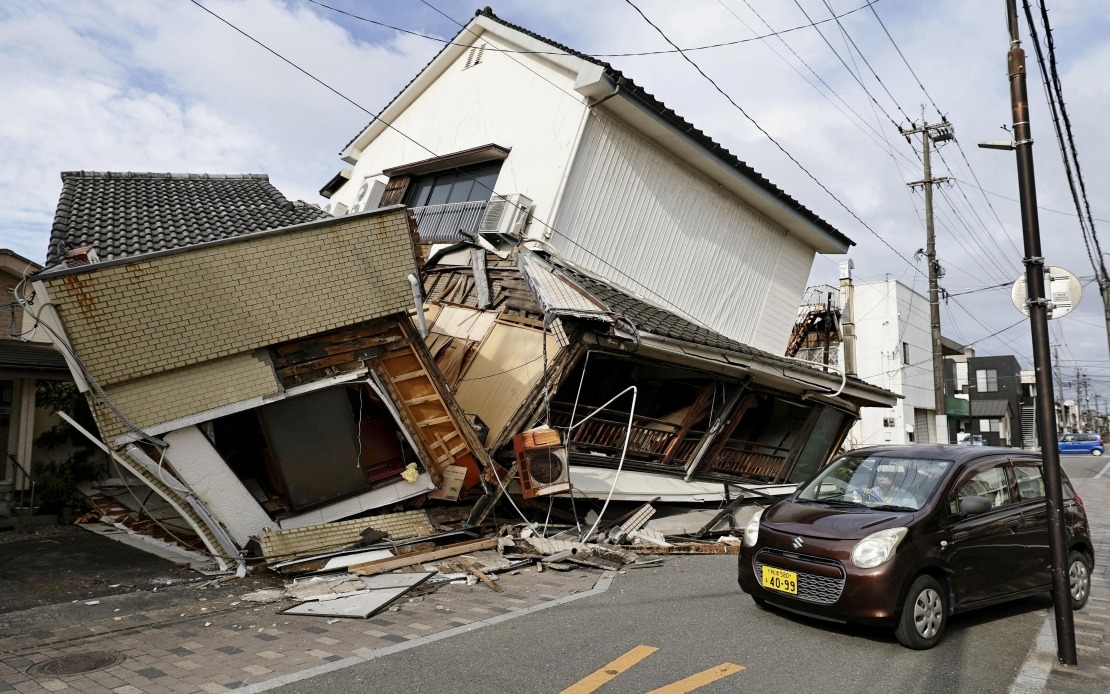
Japan's Prime Minister Sanae Takaichi confirmed on Wednesday that a major earthquake striking the southwestern prefecture of Kumamoto the previous day has claimed 13 lives, with authorities continuing search and rescue operations across the affected region. The earthquake, which registered a magnitude of 7.1, struck at 4:27 pm on Tuesday afternoon and caused widespread disruption to transport networks, utilities, and commercial activity throughout the area. The devastating natural disaster has triggered a large-scale government response, drawing emergency personnel and resources from across the country to assist in relief efforts.
The earthquake's intensity proved particularly severe in some localities, with several areas within Kumamoto Prefecture recording the maximum level 7 on Japan's seismic intensity scale, indicating extreme ground shaking. This maximum rating reflects the earthquake's destructive potential and explains the significant casualty toll and extensive structural damage reported in the immediate aftermath. The concentrated zone of maximum intensity suggests that certain communities bore the brunt of the temblor's force, necessitating focused rescue efforts in those locations.
A shopping mall operated by retail giant Aeon Group in Kashima, Kumamoto Prefecture, experienced catastrophic damage during the earthquake. The facility's second floor collapsed, an incident that prompted the evacuation of approximately 200 people before the structural failure occurred. The collapse resulted in at least two confirmed female deaths, left one woman unresponsive, and injured five others. This single incident underscores the dangers posed by building collapses during seismic events and highlights the importance of rapid evacuation procedures in commercial facilities.
The Tokyo Metropolitan Police deployed substantial emergency resources to assist in the rescue operation, dispatching at least one helicopter and an eight-member specialist team trained in disaster response. These additional personnel augmented local search efforts and provided expertise in locating survivors amidst the rubble and identifying the deceased. The involvement of metropolitan police forces demonstrates the scale of the disaster response, typically reserved for events of significant national consequence.
Japan's critical transportation infrastructure experienced major disruptions. The Kyushu Shinkansen bullet train line, a crucial transportation artery serving the southwestern region, remained completely suspended following the earthquake. This suspension prevented passenger travel through the region and disrupted freight movements along the corridor. Airlines also felt the impact, with Japan Airlines cancelling 11 flights and All Nippon Airways cancelling two flights due to earthquake-related safety concerns and potential damage to airport facilities.
Local public transport systems attempted to resume limited operations under heightened caution. The Kumamoto City Transportation Bureau announced that tram services would resume but only at reduced speeds, prioritising safety over speed. Authorities warned that any subsequent strong earthquake could necessitate immediate suspension of these services again, reflecting the ongoing seismic hazard and aftershock risk facing the region in the days following the main event.
The earthquake's economic impact extended beyond transportation. Thousands of households across Kumamoto Prefecture lost electrical power, hampering rescue efforts, communications, and basic services. Multiple businesses suspended operations throughout the affected region, creating economic uncertainty and disrupting commercial activity. These cascading failures across multiple systems illustrate how a single major earthquake can paralyse regional infrastructure and commerce simultaneously.
For Malaysian readers, this disaster serves as a sobering reminder of earthquake risks in the Asia-Pacific region. While Malaysia experiences less severe seismic activity than Japan, the region remains prone to earthquakes, particularly in Sabah and Sarawak. Japan's response to this catastrophe—rapid government acknowledgment, emergency deployment of specialist teams, and coordinated transport sector responses—offers instructive lessons in disaster management. The incident also highlights the vulnerability of commercial infrastructure and the critical importance of building codes and evacuation procedures in densely populated areas.
The Kumamoto earthquake also underscores broader regional vulnerabilities. Southeast Asia, like Japan, sits within the Pacific Ring of Fire and related tectonic zones. The scale and speed of Japan's response, despite its advanced infrastructure and disaster preparedness systems, demonstrates that even highly developed nations face significant challenges in earthquake disasters. For developing economies in the region, such events pose even greater risks due to less robust building standards, limited emergency resources, and larger populations in precarious living conditions vulnerable to seismic events.

