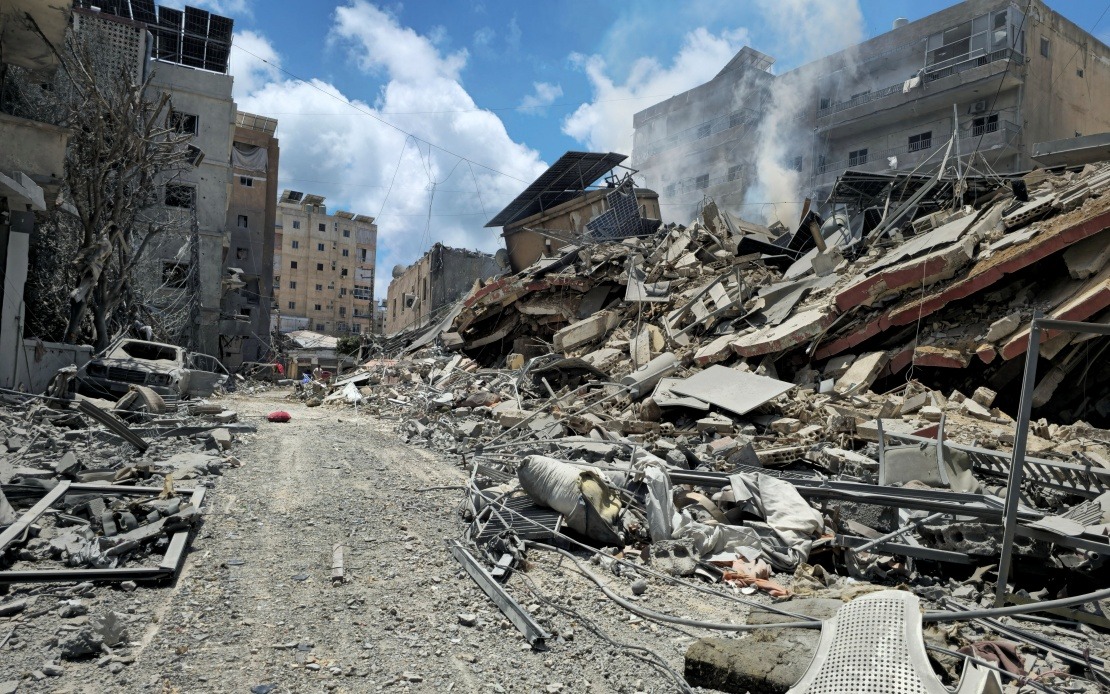
Japan has unveiled a substantial emergency humanitarian package worth US$15 million aimed at alleviating acute suffering across multiple conflict zones in West Asia, according to Foreign Minister Toshimitsu Motegi. The announcement, made Friday in Tokyo, reflects Tokyo's deepening concern about cascading humanitarian crises that threaten regional stability and underscore Japan's strategic interest in Middle Eastern affairs.
The allocation follows a deliberate distribution strategy reflecting Japan's assessment of humanitarian need and geopolitical priorities. Iran will receive approximately US$10 million, reflecting the scale of displacement and suffering following years of conflict and sanctions-related economic collapse. Lebanon, already grappling with a severe economic crisis compounded by political dysfunction, has been designated for roughly US$4 million, while Palestinians in the West Bank will benefit from approximately US$1 million in assistance. This tiered approach suggests Tokyo is attempting to balance support across multiple constituencies whilst concentrating its largest commitment where it perceives the most urgent requirements.
The humanitarian assistance will be channelled through established international organisations rather than bilateral mechanisms, a decision that underscores Japan's preference for working through multilateral frameworks. This approach offers several advantages: it minimises direct political friction with various regional actors, leverages expertise of international humanitarian bodies, and ensures funds reach vulnerable populations through tested delivery systems. Food supplies and medical materials form the core of the package, addressing the most immediate survival needs in regions where healthcare infrastructure has deteriorated significantly and food security remains precarious.
Motegi's public remarks positioned the assistance within a broader framework of regional peace and stability. His assertion that Middle Eastern peace remains vitally important to Japan reflects both geographical concerns—given Japan's energy dependence on Gulf oil and its reliance on regional shipping lanes—and ideological commitments to humanitarian international engagement. The minister acknowledged that West Asia continues experiencing significant humanitarian challenges, a notably circumspect formulation that encompasses but extends beyond the immediate conflict zones receiving assistance.
For Malaysian observers and policymakers, Japan's commitment carries particular significance within the context of regional diplomacy and humanitarian coordination. As a fellow developed Asian economy with substantial interests in Middle Eastern stability, Malaysia can draw lessons from Japan's approach to balancing humanitarian responsibility with political pragmatism. Japan's decision to work through international organisations rather than pursuing bilateral aid relationships offers a model for Southeast Asian nations seeking to maintain balanced relationships across the region's competing interests.
The announcement also reflects Japan's evolving role in Middle Eastern affairs at a time when traditional Western powers face increasingly complex challenges. Tokyo's positioning as a humanitarian actor, distinct from military or political intervention, allows Japan to maintain relationships across diverse parties whilst advancing its interests in regional de-escalation. This approach particularly resonates in Southeast Asia, where nations similarly seek non-aligned positions that enable pragmatic engagement with multiple regional powers without appearing to choose sides in intractable conflicts.
Tokyo's emphasis on continuing collaboration with relevant countries and international organisations signals Japan's commitment to sustained rather than one-off engagement. This framing suggests the current US$15 million represents immediate emergency response rather than comprehensive long-term support, implying that Japan anticipates ongoing humanitarian needs will require continued attention and resources. For regional observers monitoring international commitment to West Asian crises, Japan's statement provides some reassurance that engagement will persist beyond initial emergency deployments.
The geographical scope of Japan's assistance—spanning Iran, Lebanon, and Palestinian territories—demonstrates a recognition that humanitarian crises in West Asia are deeply interconnected. Conflict and instability in one location generate cascading effects across the region, creating refugee flows, disrupting trade routes, and destabilising neighbouring states. Japan's multi-country approach acknowledges these interdependencies rather than treating each crisis in isolation, reflecting sophisticated understanding that compartmentalised solutions prove inadequate in regions where political, economic, and humanitarian challenges overlap extensively.
From a Southeast Asian perspective, Japan's humanitarian diplomacy carries instructive implications for how developed nations in the region might coordinate assistance without triggering allegations of geopolitical alignment. Malaysia, alongside other ASEAN members, has traditionally emphasised non-interference in external disputes whilst maintaining humanitarian commitments. Japan's model of delivering assistance through international channels rather than independently offers a template that Southeast Asian nations might consider when addressing humanitarian needs in complex geopolitical environments where direct intervention risks misinterpretation.
The timing of Japan's announcement, amidst ongoing international discussions about coordinating Middle Eastern policy, suggests Tokyo recognises that humanitarian assistance serves both immediate alleviation purposes and longer-term diplomatic positioning. By demonstrating commitment to civilian welfare across multiple territories, Japan reinforces its image as a responsible stakeholder in global affairs whilst avoiding the militaristic associations that burden other major powers' Middle Eastern engagement. This soft power approach aligns with Japan's broader strategic preferences for advancing interests through civilian institutions and developmental assistance rather than military means.

