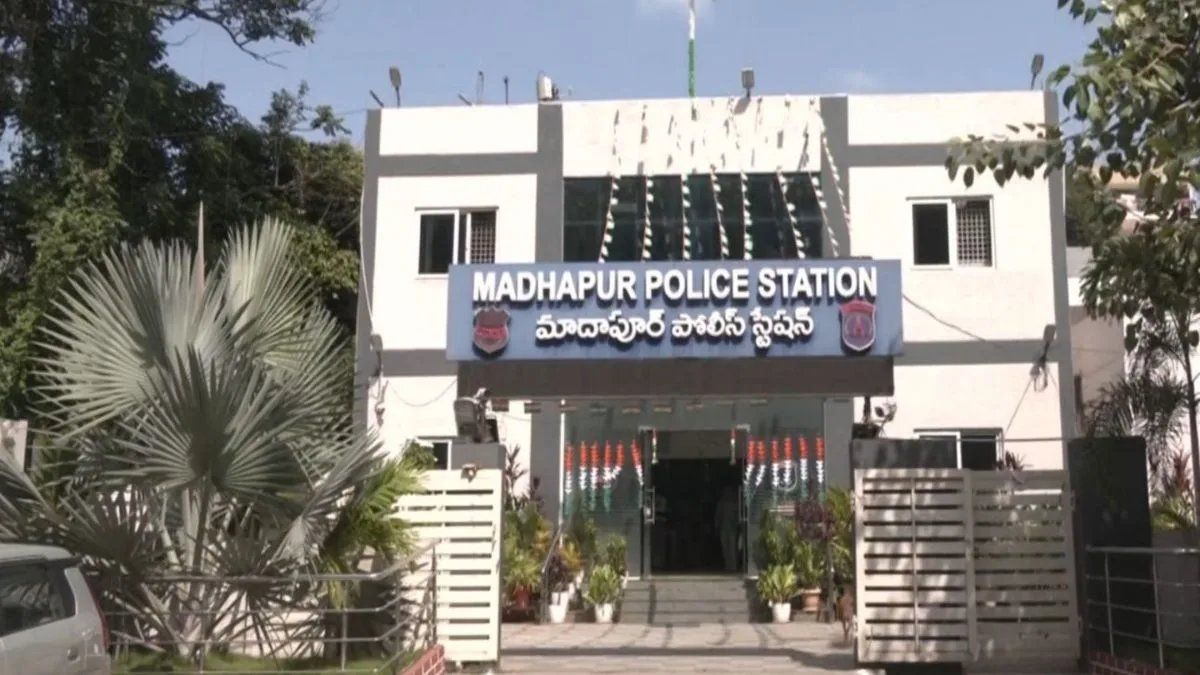
A fatal traffic accident outside a major shopping complex in Hyderabad has ignited a political firestorm after authorities granted station bail to Lingamaneni Sanjush, the son of Jana Sena Party MP Lingamaneni Ramesh, in connection with a collision that claimed the life of a 26-year-old woman. The August 16 incident, which occurred in front of Inorbit Mall in the Madhapur area, has exposed the intersection between wealth, political connections, and the Indian criminal justice system—a dynamic that resonates across South Asia as questions mount about equal application of the law.
The collision claimed the life of Bharati Mukhi, a store employee at Lifestyle within Inorbit Mall. According to police accounts, Bharati and a colleague, Pooja Ashok, had ventured out in the afternoon to collect meals from ITC Kohenur. As they returned and attempted to cross the road near the shopping complex, Bharati was struck by the vehicle operating at what officers describe as excessive speed and in a manner demonstrating rash negligence. The impact proved catastrophic, inflicting severe head trauma that rendered medical intervention futile. Medical personnel at Apollo Hospital in Jubilee Hills pronounced her deceased upon arrival.
Investigators documented that Sanjush, aged 21, was identified as the individual operating the Aston Martin at the moment of collision. Police apprehended him the same day as the incident. As part of standard protocol, authorities conducted sobriety assessments and administered narcotic screening. Blood samples were collected and forwarded to the Forensic Science Laboratory for comprehensive toxicological examination. The vehicle involved in the collision has been impounded by authorities, with the investigation continuing as forensic evidence undergoes analysis.
The grant of station bail and the issuance of notice under Section 35(3) of the Bharatiya Nagarik Suraksha Sanhita represent procedural steps taken by Madhapur police in their inquiry. A formal case was registered under Section 106(1) of the Bharatiya Nyaya Sanhita, which addresses causing death through negligence. Yet despite these procedural actions, the relative swiftness with which bail was granted—and the apparent discretion exercised in the matter—has fuelled suspicions about the intervention of political influence.
The case has rapidly transcended the boundaries of routine traffic fatality reporting to become a flashpoint for political contestation. Karthik Yellapragada, national spokesperson for the YSRCP, has articulated allegations that the incident has been deliberately suppressed from public view. Yellapragada specifically emphasised that a five-day interval elapsed between the registration of the first information report and any substantive public discussion of the matter, suggesting a coordinated effort to manage media narrative and public perception. He explicitly questioned whether an informal understanding between Telangana Chief Minister Revanth Reddy and neighbouring Andhra Pradesh counterpart Chandrababu Naidu had facilitated what he characterised as preferential treatment.
Yellapragada's broader critique centred on the apparent application of disparate standards within the justice system based on the political standing and financial capacity of the accused. He invoked the language of immediate justice, implicitly contrasting the speed with which bail was granted against the typically protracted procedures that ordinary citizens navigate when facing vehicular fatality charges. The statement underscores a recurrent anxiety within Indian democracy regarding the manner in which wealth and political connection intersect to produce unequal legal outcomes, a phenomenon that carries particular resonance in Telangana and Andhra Pradesh where regional political competition remains intense.
From a Malaysian and Southeast Asian perspective, the Hyderabad incident illuminates broader patterns of justice system fragility that extend across the region. While India's legal framework provides substantial protections and procedural safeguards, implementation remains heavily mediated by political and economic variables. The apparent ease with which a privileged defendant secured bail in a fatal traffic case—contrasted with the routine custody experiences of economically marginalised accused—demonstrates how formal legal parity coexists uneasily with substantive inequality in practice. Similar dynamics have surfaced in Malaysia and other regional jurisdictions, where high-profile accident cases involving politically connected individuals have generated comparable public scepticism regarding judicial impartiality.
The timing and character of Jana Sena's political response merit examination. As a regional player in Andhra Pradesh politics with parliamentary representation, Jana Sena maintains delicate relationships within the broader coalition dynamics of Indian politics. The decision by Jana Sena's spokesperson to challenge the handling of a case involving the party MP's son suggests internal calculations about political credibility and the management of public perception within their constituency. Rather than defending a family member of a party politician, the Jana Sena spokesperson chose to engage in the broader critique of institutional fairness, positioning the party as defender of democratic principles rather than protector of entrenched privilege.
The investigative procedures undertaken thus far—toxicological testing, vehicle seizure, and collection of forensic materials—represent standard components of Indian traffic accident investigation. The fact that these procedures have been initiated suggests that significant aspects of the formal investigative architecture remain operational despite concerns about preferential handling. Whether the investigation progresses to prosecution, and at what charge level potential proceedings might be initiated, will serve as crucial indicators of whether institutional mechanisms ultimately function to constrain or accommodate political interference.
For observers across Southeast Asia, the Hyderabad case illustrates the persistent tension between democratic institutions and particularistic power relationships that continue to shape outcomes in the region's justice systems. The incident underscores how even in jurisdictions with sophisticated legal codes and established bureaucratic procedures, political connection and wealth can operate as informal variables that alter substantive results. The political response from YSRCP highlights how civil society and opposition movements continue to monitor and challenge such apparent disparities, suggesting that mechanisms of accountability and public scrutiny, while imperfect, retain functional capacity to generate pressure for equitable application of law.
As investigation into the fatal collision continues and potential prosecution pathways remain under determination, the Hyderabad case will likely serve as reference point in ongoing regional discussions about judicial reform, institutional autonomy, and the practical preconditions for genuine rule of law. The outcome of this case—particularly whether prosecutorial decisions reflect the severity of the charges against a privileged defendant—may carry implications extending beyond Telangana's borders, informing broader assessments of whether India's justice system can credibly manage cases that implicate political personalities and economic power simultaneously.

