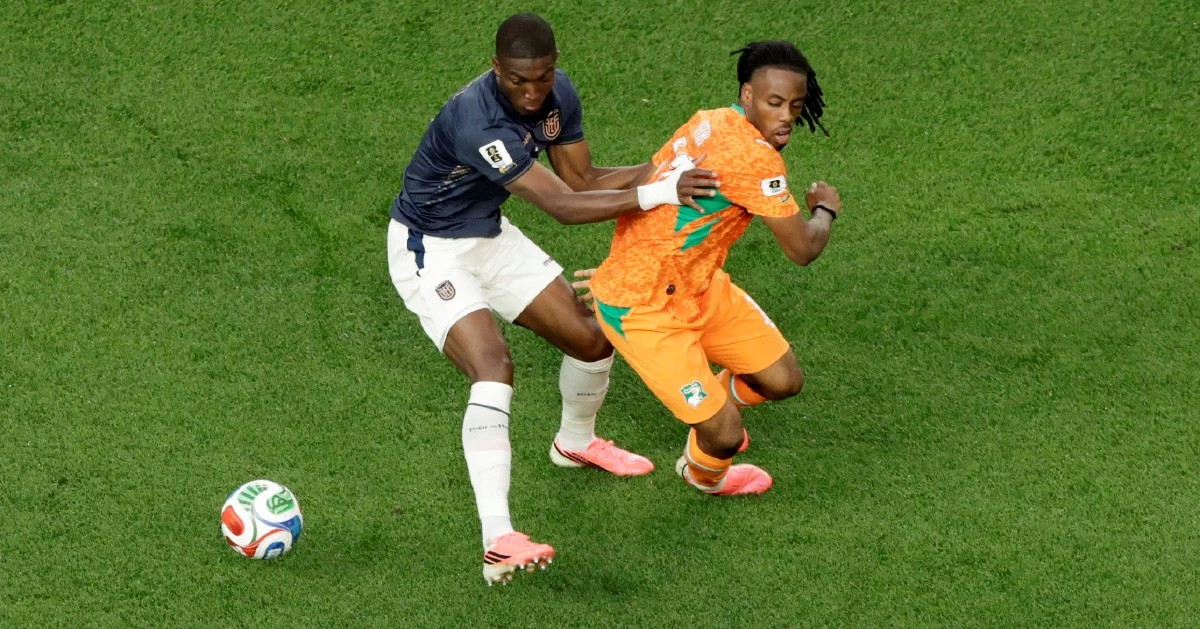
The Ivory Coast Football Federation announced Thursday that striker Elye Wahi will be barred from joining the national squad for the upcoming World Cup qualifying match against Germany in Canada this weekend, in the wake of emerging allegations concerning potential sports corruption in French professional football.
Wahi's exclusion from the matchday squad represents a significant setback for the Ivorian national team as it prepares for one of the competition's high-profile encounters. The decision follows revelations that the player had become the subject of scrutiny within an investigation examining suspected irregularities surrounding a Ligue 1 match. The federation's move underscores the serious nature of match-fixing allegations and the sporting bodies' commitment to maintaining integrity within international football.
The investigation that triggered Wahi's withdrawal centres on suspected corruption within France's top-flight league, though specific details regarding which fixture or the alleged nature of Wahi's involvement remain under examination by relevant authorities. Match-fixing investigations typically examine communications, betting patterns, and player conduct during matches to establish whether outcomes were predetermined rather than determined by genuine competition.
For Malaysia and Southeast Asian football observers, this development carries particular relevance. Corruption in professional football remains a concern across the region, and high-profile cases involving established European leagues serve as cautionary reminders of how betting syndicates and match-fixing networks operate at multiple levels of the sport. The swift action by the Ivorian Football Federation demonstrates how national federations increasingly prioritise governance standards, setting precedent that may influence how regional bodies address similar concerns.
Wahi's suspension also highlights the tension between individual players' ambitions and institutional responsibilities. As an emerging talent in European football, Wahi's absence from a World Cup qualifier carries considerable personal consequences, affecting his opportunity to contribute to his nation's qualifying campaign during a critical period. Yet the federation's decision to prioritise the integrity of the sporting process over short-term competitive advantage reflects evolving attitudes toward match-fixing within football governance.
The timing of this suspension, emerging just before a major international fixture, creates additional complications for Ivory Coast's preparation. Coaching staff must now reorganise tactical approaches and squad combinations without a player who presumably held a prominent role in their strategy against Germany. Such last-minute adjustments invariably impact team cohesion and preparation intensity during the crucial final days before competition.
From a broader perspective, incidents involving players from African nations within European competitions often receive heightened scrutiny and may carry reputational implications for African football more widely. The Ivorian Federation's decisive action—removing a player without awaiting investigation conclusions—suggests institutional commitment to transparency and accountability, potentially strengthening the federation's standing within international football governance structures.
Match-fixing investigations within Ligue 1 assume particular significance given France's position as a major footballing nation whose league stands among Europe's most closely watched. Any infiltration of corruption within such prominent competitions threatens the credibility of football across Europe and internationally. The investigation's existence may prompt broader examinations across French professional football regarding potential systemic vulnerabilities.
For the Germany versus Ivory Coast encounter specifically, Wahi's absence substantially alters competitive dynamics. Germany enters World Cup qualification as a traditional powerhouse with extensive tournament experience, whilst Ivory Coast seeks to establish itself as a credible qualifying competitor. The removal of an attacking option diminishes Ivory Coast's tactical flexibility and depth in critical offensive positions.
The broader context encompasses FIFA's expanding focus on match-fixing prevention across international competitions. Qualifying campaigns, though less commercially prominent than tournament finals, remain vulnerable to corruption attempts given their importance in determining which nations advance to World Cup finals. FIFA and continental confederations have implemented increasingly sophisticated monitoring systems, yet investigations such as this one demonstrate that vulnerabilities persist.
Wahi's situation underscores how globalisation of professional football creates complex jurisdictional challenges. A player contracted to a European club may face investigations by French authorities whilst simultaneously subject to disciplinary processes within international football governance structures. The Ivorian Federation's decision to act unilaterally, without awaiting the corruption investigation's conclusions, reflects the hierarchical nature of football discipline, where institutional enforcement mechanisms operate independently from criminal investigations.
Looking forward, this incident may prompt discussions within African footballing circles regarding support mechanisms for players facing corruption allegations. The visibility of such cases, particularly when involving talented athletes during critical international fixtures, can influence how African federations balance protective measures for accused players against institutional governance obligations.
The World Cup qualifying campaign continues, and Ivory Coast must adapt to circumstances beyond its control. Yet the federation's willingness to make difficult decisions regarding player participation, irrespective of competitive consequences, sends clear messaging that institutional integrity supersedes individual achievement—a principle increasingly central to modern football governance across confederations and national associations worldwide.

