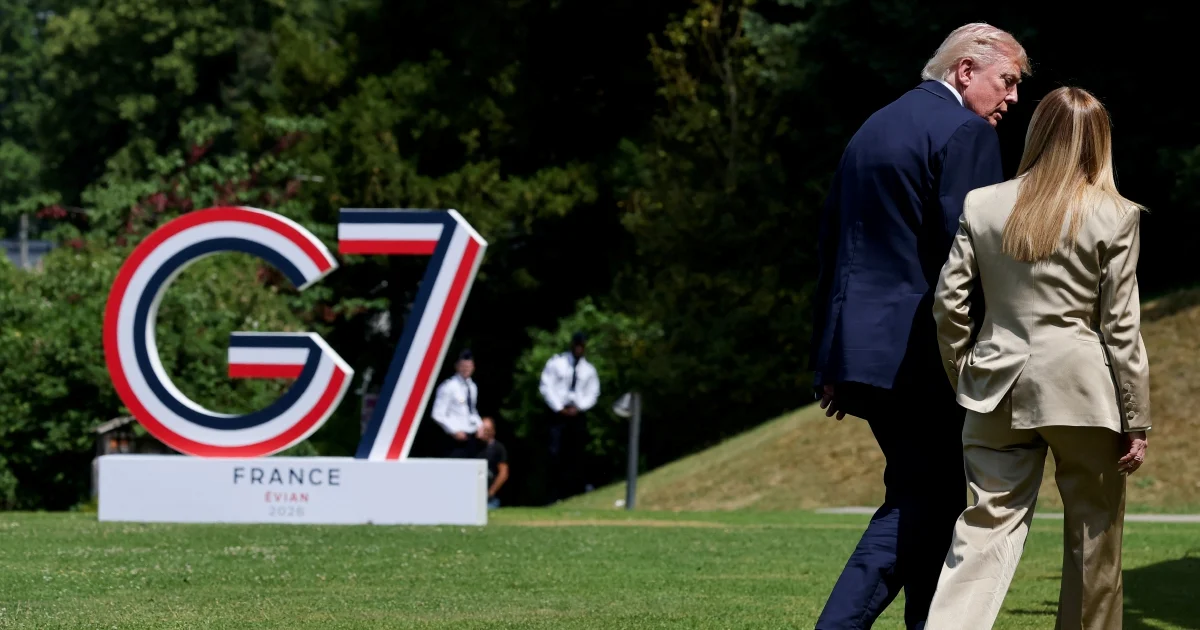
Italy erupted in indignation on Friday after US President Donald Trump allegedly made disparaging remarks about Prime Minister Giorgia Meloni, characterising her as having sought a photograph opportunity with him. The inflammatory comments prompted Italy's foreign ministry to cancel a previously scheduled visit to the United States, signalling the severity of Rome's displeasure at what officials view as an unwarranted slight against the country's elected leader. The incident marks an unexpected rupture in relations between two major Western allies, particularly given the proximity of their conservative political leaders in the international arena.
The reported remarks, in which Trump allegedly claimed Meloni had "begged" for a photo opportunity, struck many Italian political figures and commentators as disrespectful and condescending. In Italy's political culture, where dignified representation and respect for national leadership remain paramount values, such characterisations are regarded not merely as personal insults but as affronts to Italian sovereignty and standing. The timing of the comments, appearing to trivialise what Rome considered a significant diplomatic engagement, intensified the perception of dismissiveness emanating from Washington.
Official Italian response crystallised swiftly through the foreign ministry's decision to withdraw from its scheduled American visit. This symbolic act of protest, though not constituting a complete severance of diplomatic relations, conveys unambiguously that Rome will not passively accept what it interprets as mockery of its premier. The cancellation represents a carefully calibrated demonstration of discontent—sharp enough to register displeasure internationally, yet restrained enough to avoid irreversible damage to the bilateral relationship. Such measured responses characterise mature diplomacy between allied nations navigating disagreements.
The incident occurs against a complex backdrop of evolving transatlantic dynamics. Italy, as a founding member of the European Union and a linchpin of NATO, maintains substantial strategic importance to Washington's global positioning. Meloni's government, despite its right-wing orientation, has sought to balance Italian interests with broader Western alliance commitments, making the relationship intricate but nominally cooperative. Trump's apparent derision towards the Italian leader thus introduces unexpected friction into calculations that both capitals had presumed were aligned.
For Malaysian and broader Southeast Asian observers, this episode illuminates how even mature, institutionalised relationships between powerful nations remain vulnerable to personal dynamics and rhetorical overreach by political leaders. The incident demonstrates that formal alliance structures do not automatically insulate bilateral ties from damage inflicted by careless or deliberately provocative public statements. In regional contexts where diplomatic protocols and face-saving remain cultural touchstones, such transatlantic friction carries illustrative weight regarding the fragility of international partnerships.
Meloni has cultivated a reputation as a pragmatic conservative willing to engage constructively across traditional dividing lines within the Western bloc. Her government has undertaken efforts to strengthen defence capabilities, support Ukraine against Russian aggression, and maintain cohesion within NATO—positions generally aligned with American strategic preferences. The apparent disrespect from Trump thus appeared to reward precisely the collaborative stance Italy has attempted to maintain, introducing unpredictability into the calculus of smaller allied nations determining their own diplomatic positioning.
The terminology employed by Trump—specifically the characterisation of Meloni "begging" for photographic documentation—carries particular sting within diplomatic contexts. Photographs and bilateral meetings constitute tangible symbols of international recognition and parity. By reducing such an encounter to a matter of supplication, Trump's remarks implied a hierarchical relationship between leaders, with Italy cast in a subordinate posture. Italian officials and observers interpreted this language as fundamentally incompatible with the respect that ought to characterise relations between sovereign democracies of comparable development and geopolitical weight.
Reactions within Italy transcended typical partisan divisions, with political figures across the ideological spectrum expressing disapproval at Trump's apparent mockery of their national leadership. This broad-based response underscores how such international affronts can temporarily supersede domestic political fragmentation, uniting a nation around defence of national dignity. The cancellation of the foreign minister's visit therefore commands support across Italy's political establishment, from Meloni's coalition partners to opposition parties, each recognising the necessity of responding to perceived disrespect.
The implications for transatlantic relations extend beyond bilateral Italian-American ties. Other European leaders and governments monitoring this interaction will draw conclusions regarding Trump's approach to allied relationships and his willingness to subject interlocutors to public ridicule. Such perceptions influence calculations about reliability, predictability, and the dependability of alliance commitments when tested by diplomatic friction or diverging interests. European capitals increasingly recognise that maintaining confidence in American leadership requires consistent demonstration of respect for allied sovereignty and dignity.
Moving forward, resolution of this diplomatic incident will likely depend on whether Trump or his administration offers clarification or acknowledgement of Italian sensitivities regarding the reported remarks. The Italian response, while firm, remains reversible—the foreign minister's visit can be rescheduled once suitable political conditions permit. However, restoring the relationship to its previous baseline will necessitate demonstration that the American president recognises the inappropriateness of his comments and understands the importance Italy attaches to respectful treatment of its democratic leadership. Without such acknowledgement, the incident risks becoming emblematic of a broader pattern of disregard that could gradually erode the institutional foundations of Italian-American cooperation.
For observers across Asia-Pacific seeking to understand contemporary Western alliance dynamics, this episode serves as a reminder that personal temperament and rhetorical choices by leaders can disrupt even well-established institutional relationships. The incident suggests that while formal structures and shared strategic interests provide stability, they cannot entirely immunise partnerships against damage inflicted by public statements perceived as degrading or insulting to national honour. Nations carefully calibrating their own international positioning must account for such unpredictability when assessing the reliability and desirability of close alignment with particular powers.

