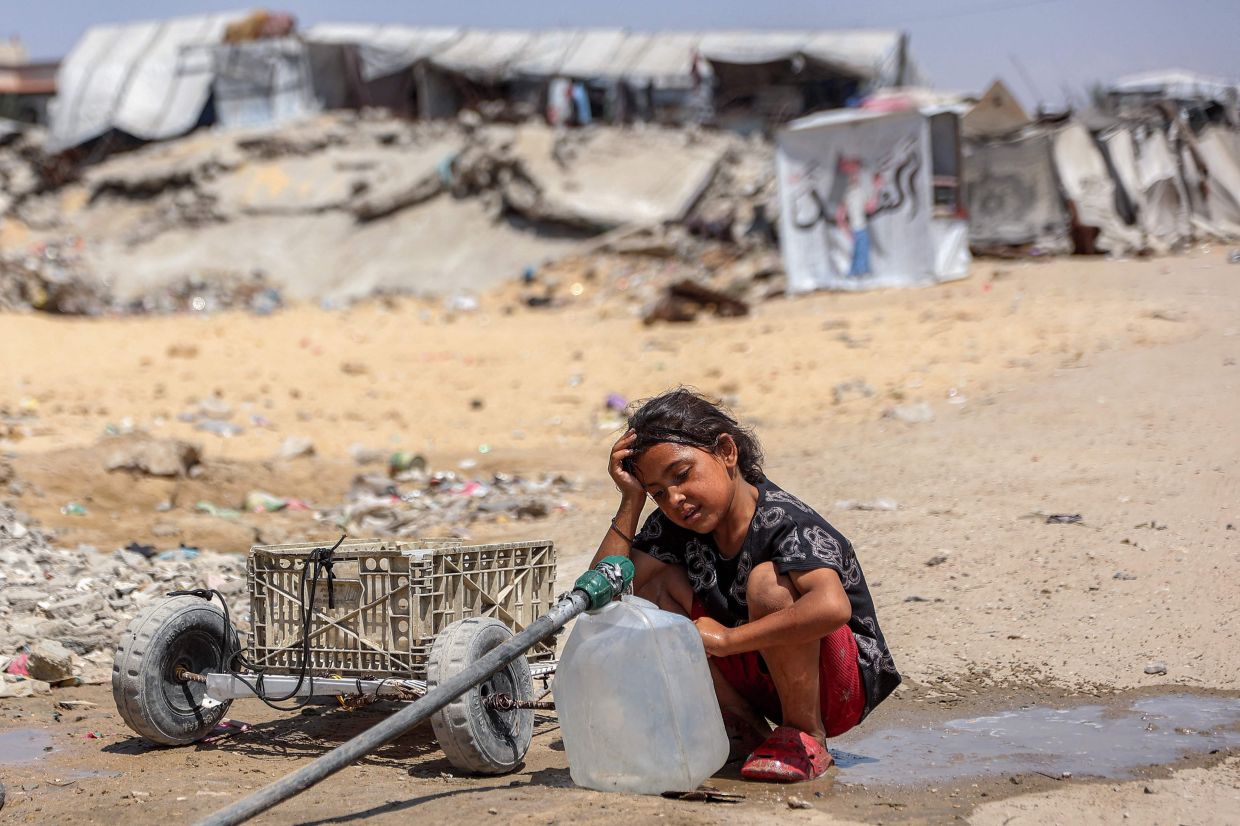
The Israeli military has razed more than nine-tenths of the Gaza Strip, with occupation forces now commanding approximately four-fifths of the conflict-affected enclave, according to a weekly Palestinian Government Communication Centre situation report released this week. The assessment, drawing on accounts from local observers and official Palestinian sources, paints a picture of widespread destruction across one of the world's most densely populated territories and marks an escalating phase in the months-long conflict that has displaced hundreds of thousands of civilians and created a humanitarian crisis of staggering proportions.
The Palestinian Government Communication Centre at the Prime Minister's Office issued the report covering the period from June 29 to July 6, during which Israeli military activities intensified substantially across multiple population centres. Khan Younis, Rafah, and Gaza City experienced concentrated operational campaigns during this week, resulting in at least eight documented Palestinian deaths according to local medical personnel and humanitarian monitors on the ground. The scale of loss reflects the intense nature of current military engagements across the territory, which has already experienced months of bombardment and ground operations.
Beyond the casualty toll, the weekly assessment highlights the physical destruction accompanying these operations. Israeli occupation forces conducted extensive shelling campaigns targeting civilian residential zones while simultaneously demolishing homes, a pattern that has characterised the conflict and contributed to the massive displacement figures. Palestinian families have been forced from their homes in successive waves, with those displaced by earlier operations now facing further displacement as military operations expand into new areas. The cumulative effect has created a cascading humanitarian emergency with limited capacity for civilians to find safe shelter or access basic services.
The conflict extends well beyond Gaza's borders into the occupied West Bank, where the Palestinian report documents a parallel surge in military activity during the same reporting period. Israeli occupation forces conducted widespread raids across multiple Palestinian population centres, including Ramallah, Nablus, Hebron, Bethlehem, Jenin, Qalqilya, Tulkarem, and East Jerusalem. These operations involved forcible home invasions, arrests of Palestinian residents, restrictions on movement through checkpoints, and strategic road closures designed to limit Palestinian access to services and employment. Such actions represent a distinct operational pattern focused on control and security enforcement rather than direct military conflict with armed actors.
Parallel to official military operations, the Palestinian report documents what it characterises as coordinated attacks by Israeli settler militias against Palestinian communities and property. During the reporting week, these groups reportedly set fire to a cafeteria in al-Lubban ash-Sharqiya village, physically assaulted Palestinian shepherds grazing livestock east of Bethlehem, attempted to seize agricultural animals, and blocked access routes to Burqa village. These incidents reflect a pattern of settler violence that Palestinians view as systematic harassment designed to pressure them from disputed territories, though Israeli authorities typically characterise such incidents as responses to security threats or isolated criminal acts by extremists.
The agricultural sector has emerged as a particular focal point for destruction, according to documentation by the Palestinian Ministry of Agriculture. The ministry's weekly briefing identified a significant acceleration in Israeli actions directly targeting Palestinian farming infrastructure and livelihoods across the West Bank. This dimension of the conflict receives less international attention than military operations or settler violence, yet it carries profound implications for Palestinian food security and economic survival, particularly as agricultural activity represents a primary livelihood source for rural Palestinian communities.
The scale of agricultural damage documented by Palestinian authorities is substantial. Official records indicate that approximately 2,559 olive trees were either uprooted, burned, or otherwise damaged during the reporting period, concentrated in the Salfit, Jenin, and Nablus regions. Olive cultivation holds deep cultural and economic significance across Palestinian society, and such destruction represents both immediate economic loss and the destruction of long-established agricultural heritage. At least 125 farming families experienced direct impacts from these incidents, facing the loss of crops, productive capacity, and associated infrastructure necessary for their operations.
The financial toll from documented agricultural losses reached approximately US$11.78 million during just this single reporting week, a figure that underscores the economic dimension underlying the Israeli-Palestinian conflict. For a population already facing severe economic hardship, unemployment, and restricted access to markets, such agricultural destruction deepens economic desperation and limits survival options for rural populations. The concentration of damage in Salfit, Jenin, and Nablus suggests targeting of areas with significant Palestinian agricultural production, potentially reflecting both security concerns and territorial disputes over land control.
For Malaysia and Southeast Asia, the Palestinian report carries several implications worth considering. The documentation of destruction across Gaza and the West Bank contributes to the broader international record on this conflict, shaping perceptions among Muslim-majority nations and influencing diplomatic positions at international forums. Malaysia has traditionally maintained strong solidarity with Palestinian causes, and reports of this scale of destruction typically influence Malaysian government statements and voting patterns at the United Nations and other international bodies.
The humanitarian dimensions of the conflict documented in this report underscore why Southeast Asian nations, despite geographic distance, maintain focused engagement with Palestinian issues. Malaysia's significant Palestinian diaspora community and historical role as a supporter of Palestinian rights mean that developments in Gaza and the West Bank resonate within domestic political discourse. The documentation of agricultural destruction and civilian displacement feeds into broader narratives about proportionality and international humanitarian law that inform regional diplomatic calculations.
The broader pattern evident in the Palestinian report—extensive infrastructure destruction in Gaza combined with intensified security operations in the West Bank—suggests a conflict entering a phase with profound long-term consequences for Palestinian state-building, economic development, and humanitarian conditions. The 90 per cent destruction figure, if accurate, would represent levels of physical devastation comparable to post-conflict reconstruction scenarios that typically require international assistance and years of rebuilding. For the international community, including Southeast Asian nations, such developments raise questions about reconstruction responsibilities, humanitarian obligations, and long-term conflict resolution pathways that will occupy diplomatic agendas for years to come.

