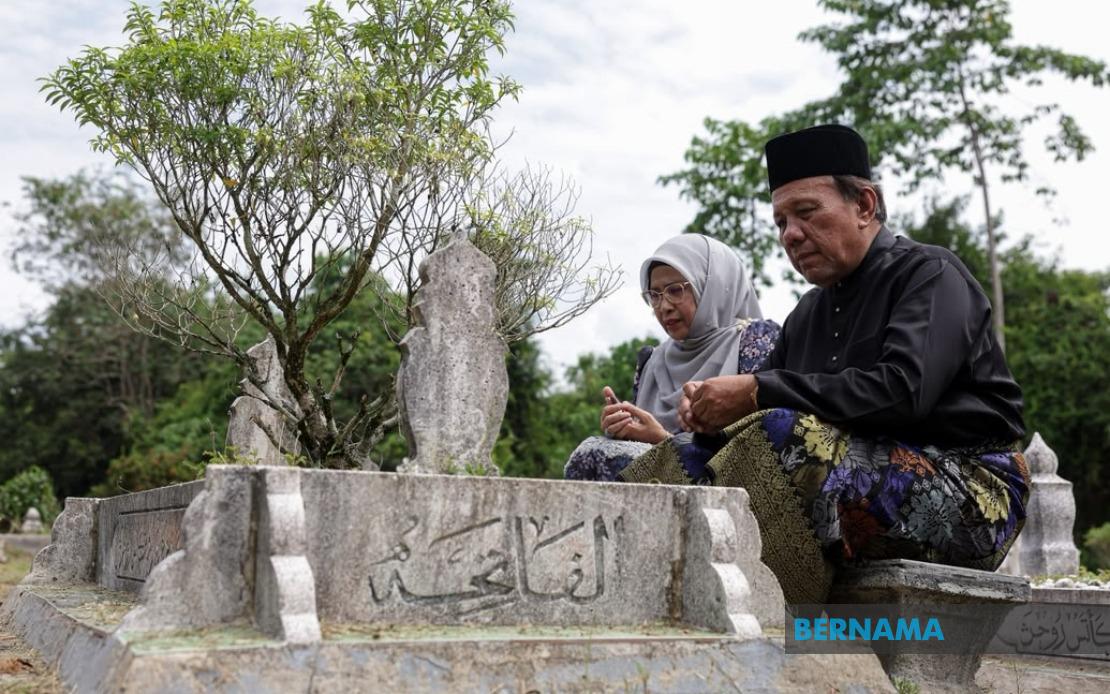
Datuk Ismail Lasim wasted little time honouring his family's memory on a significant day in his political career. Within hours of taking the oath as Menteri Besar of Negeri Sembilan, the newly elected leader and his wife, Datin Noraishah Othman, travelled to the Tebing Tinggi Muslim cemetery in Kuala Pilah to pay their respects at the graves of his parents. The visit, undertaken in traditional black Malay formal dress, reflected the personal values Ismail brings to his new role at the helm of the state administration.
Ismail's ascent to the position of Menteri Besar culminated weeks of political manoeuvring following the 16th Negeri Sembilan state election. The Juasseh state representative secured the confidence of the Yang di-Pertuan Besar, Tuanku Muhriz Tuanku Munawir, who administered the oath of office at Istana Besar Seri Menanti. The ceremony formally invested him with the powers and responsibilities of steering one of Malaysia's smaller states through an increasingly complex political landscape.
Ismail's parents played formative roles in his life, though both have passed away in recent years. His father, the late Lasim Yaman, lived to the age of 97 before passing on March 5, 2020, having witnessed his son's political rise. His mother, the late Bedah Othman, preceded her husband in death, passing away on September 16, 2014. The decision to visit their resting place immediately after taking office carries symbolic weight, suggesting that Ismail views his new responsibilities through the lens of family legacy and personal grounding.
The election results that preceded Ismail's swearing-in demonstrated a decisive preference among Negeri Sembilan voters for experienced governance. Barisan Nasional, the coalition backing Ismail, captured 18 of the state assembly's seats, securing a commanding position in the legislature. Perikatan Nasional, the opposition coalition, managed to win seven seats, leaving them substantially outnumbered. Together, Barisan Nasional and Perikatan Nasional formed the government structure with a two-thirds supermajority, giving the administration considerable legislative firepower to implement its agenda without relying on independent assemblymen.
This electoral outcome carries particular significance for Malaysian politics at the state level. Negeri Sembilan, despite its smaller size compared to Selangor, Johor, or Sabah, serves as a bellwether for political sentiment in the central region. The dominance of Barisan Nasional reflects a continued confidence in the coalition's traditional parties, even as the political environment at the federal level remains fractious and coalition-dependent. The result suggests that voters in smaller states may prioritise stability and established governance over the appeals of newer political formations.
Ismail's background and political trajectory have been shaped by decades of involvement in Negeri Sembilan's administrative and political machinery. His representation of the Juasseh constituency reflects deep roots in the Kuala Pilah area, where his family graves now rest. This geographical continuity between his constituents, his personal history, and the seat he represents creates a foundation of local legitimacy that extends beyond mere electoral numbers. The proximity of the cemetery visit to his oath-taking suggests an awareness of how personal narrative and political identity intersect in Malaysian politics.
The composition of Negeri Sembilan's legislature following this election reflects broader patterns within Barisan Nasional's support base. The coalition's dominance in securing 18 seats indicates that its component parties—primarily UMNO, MCA, and MIC—retain substantial organisational capacity and grassroots appeal in the state. However, the seven seats won by Perikatan Nasional, predominantly through PAS, signal that the opposition coalition maintains a credible presence even in states where it does not control the government, suggesting that Malaysian electoral politics continue to feature genuine competition across different regions.
For Ismail personally, the transition from state assemblymen to chief minister represents a significant elevation in responsibility. As Menteri Besar, he becomes accountable for the state's economic development, infrastructure planning, education and health services, and the intricate relationships between state and federal authorities. These duties extend beyond the legislative chamber into executive functions that determine the quality of daily life for approximately one million Negeri Sembilan residents. His immediate pivot to family observance following the formal ceremony may reflect an understanding that such weighty responsibilities require personal anchoring and spiritual grounding.
The election itself took place against a backdrop of shifting political alliances that have characterised Malaysian politics since the 2018 general election. While the federal government comprises an unstable coalition spanning multiple political camps, the state results indicate that voters are capable of delivering clear mandates when presented with distinct choices. Negeri Sembilan's voters chose experience and continuity embodied by Barisan Nasional, providing Ismail with a stable legislative foundation for his tenure as Menteri Besar.
Looking forward, Ismail's administration will face the standard challenges confronting Malaysian state governments: managing limited revenue streams, balancing development pressures with environmental concerns, and addressing the expectations of a diverse population. His early demonstration of personal values through the cemetery visit may set a tone for his leadership style, suggesting that despite the demands of high office, he intends to remain connected to the community foundations that enabled his political rise. The next chapter of Negeri Sembilan's governance now rests in his hands.

