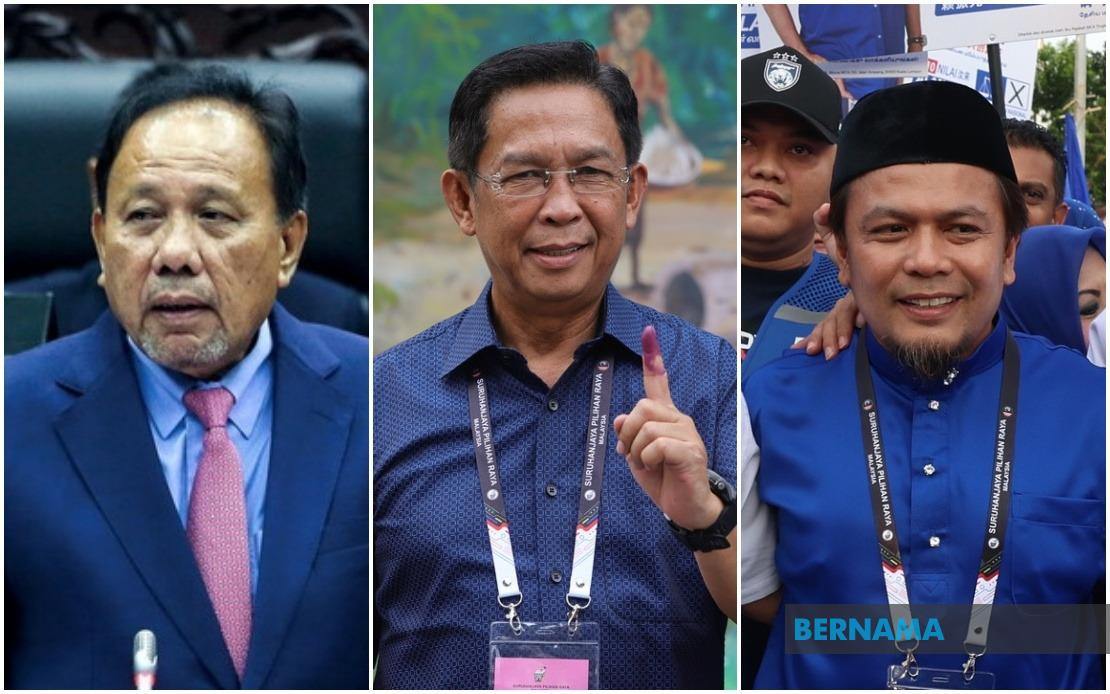
Datuk Ismail Lasim, the UMNO chief for Kuala Pilah and a member of the party's Supreme Council, has emerged as a frontrunner for the Negeri Sembilan Menteri Besar appointment following the state's recent election victory. The 67-year-old politician successfully retained his Juasseh state seat in the 16th Negeri Sembilan state election, positioning himself as a leading candidate for the top executive position in the northern state.
Two other prominent figures are also being considered for the role. Datuk Seri Jalaluddin Alias, the 62-year-old Negeri Sembilan UMNO liaison chairman and Member of Parliament for Jelebu, retained his Pertang state seat and represents another credible option. The third candidate is Datuk Mohd Asna Amin, 47, who previously served as state deputy speaker and successfully won the Lenggeng seat, bringing a younger profile to the selection pool.
The swearing-in ceremony for Negeri Sembilan's new Menteri Besar was scheduled to take place this morning at Istana Besar Seri Menanti in Kuala Pilah. Ismail was observed arriving at the palace during the ceremony's scheduled time, suggesting his likely appointment to the position. The formal investiture would mark a significant moment in the state's political landscape following weeks of uncertainty.
The election results delivered a substantial mandate for the ruling coalition, with Barisan Nasional claiming 18 of the 36 available state seats while Perikatan Nasional captured 11 seats. This combined strength of 29 seats provides the two coalitions with a commanding two-thirds majority, granting them substantial latitude in state governance and policy implementation. A total of 103 candidates competed across the state for these 36 constituencies, reflecting robust political engagement in Negeri Sembilan.
The political landscape shifted dramatically from the previous state election, where Pakatan Harapan had led with 17 seats, supported by a coalition government with Barisan Nasional's 14 seats, while Perikatan Nasional held just five seats. This reversal fundamentally altered the state's political composition and set the stage for the current government formation.
The path to this election began with significant political turbulence. In April, Negeri Sembilan's Barisan Nasional component withdrew support for the then-Menteri Besar Datuk Seri Aminuddin Harun, destabilizing the government. The situation escalated on June 5 when the Negeri Sembilan State Legislative Assembly was formally dissolved, initiating the electoral process that concluded with this decisive result.
Before the election, Barisan Nasional chairman Datuk Seri Dr Ahmad Zahid Hamidi sought audience with Tuanku Muhriz at Istana Hinggap in Seremban to present the three shortlisted candidates for the Menteri Besar position. This formal presentation reflected proper constitutional protocol, ensuring the state ruler's involvement in the selection process as prescribed by Negeri Sembilan's constitutional arrangements.
The selection of Negeri Sembilan's new Menteri Besar carries implications beyond the state itself. The leadership transition reflects broader shifts within UMNO and the coalition dynamics between BN and PN at the state level. For Malaysian observers tracking Peninsular politics, the appointment signals how the ruling parties are consolidating power following their electoral gains.
For Negeri Sembilan's residents, the new administration faces inherited challenges and opportunities. The state will require focused attention on economic development, infrastructure projects, and service delivery. The two-thirds majority affords the government substantial legislative capacity to implement its agenda without requiring opposition support, though this also places heightened accountability expectations on the ruling coalition's performance.
The decisive electoral outcome suggests that Negeri Sembilan voters endorsed the return of Barisan Nasional-led governance after a single term under Pakatan Harapan's stewardship. The transition reflects broader electoral trends visible across Malaysia, where different regions have demonstrated varied preferences for political direction. Understanding these regional variations remains crucial for national political analysis.
The new Menteri Besar, regardless of which candidate among the three receives formal appointment, will lead a government with substantial resources and mandate. With a two-thirds majority and backing from both BN and PN—uncommon coalition configurations—the incoming leadership enjoys favorable conditions for policy implementation. The challenge will lie in translating this numerical advantage into tangible improvements for the state's development and public welfare.

