A two-week detention under the Internal Security Act in 1974 proved to be the crucible that forged one of Kedah's most influential motivational figures. Dr Shukri Abdullah, who was honoured as the state's Tokoh Maal Hijrah at a ceremony in Alor Setar, credits the experience—rooted in his activism as a student leader at Universiti Sains Malaysia and his participation in the Baling Demonstrations—with redirecting his entire life trajectory. Now 76, Dr Shukri has spent more than three decades galvanizing Malaysian students and parents, but his path to becoming a beacon of personal transformation was anything but straightforward.
The immediate aftermath of his release from ISA detention stripped away his scholarship, a blow that could easily have derailed the young activist. Instead, Dr Shukri channeled the shock into steely determination. He resolved not to squander his potential or live with the regret of unfulfilled possibilities. This moment of clarity marked a profound psychological shift—from viewing himself as a victim of circumstance to recognizing himself as the architect of his own future. His conviction that human beings possess the capacity to fundamentally reinvent themselves through awareness and deliberate effort has become the philosophical bedrock of his motivational work across Malaysia.
The transformation was neither immediate nor effortless. Dr Shukri's academic record as a secondary student had been decidedly average, hardly the credentials one would expect for a future top-performing university graduate. When he first applied to university, his application was rejected—a rejection that might have confirmed the expectations set by his middling school performance. Rather than accepting this verdict as final, he pivoted strategically, taking up employment as a journalist with Utusan Melayu in 1980, a role that provided both financial sustenance and valuable life experience. After a year in the newsroom, he reapplied to USM and gained admission, demonstrating a persistence and pragmatism that would define his character.
Once admitted, Dr Shukri's commitment to education became almost singular in its intensity. He devoted himself entirely to his studies, emerging eventually as USM's overall top student—a distinction that earned him the privilege of delivering the valedictory address at his graduation ceremony. The achievement resonated far beyond academic accolade; it represented the full vindication of his belief in human capacity for transformation. From being an undistinguished school pupil to becoming the university's most accomplished graduate, Dr Shukri had authored a narrative of reinvention that would later inspire countless others facing their own apparent limitations.
His intellectual ambitions extended beyond Malaysia's shores. Dr Shukri pursued postgraduate studies in the United Kingdom, where he completed a PhD from the University of Essex in an impressively compressed timeframe of two years and two months. This scholarly achievement demonstrated both intellectual rigor and the capacity to work with focused intensity—qualities that would later distinguish his career as an educator and motivator. Upon returning to Malaysia, he initially served as a lecturer at USM, maintaining a foothold in academic institutions while beginning to sense a calling toward broader engagement with students and families beyond the classroom.
The trajectory from academic lecturer to full-time motivational speaker reflects Dr Shukri's evolving understanding of where his greatest impact could be realized. He stepped away from the formal structures of university teaching to establish himself as an independent voice guiding students and parents through motivational programmes. This transition, made in his early fifties, demonstrated confidence in his own convictions and a willingness to forge an unconventional professional path. For more than three decades now, he has maintained active engagement with Malaysian society, becoming a recognized figure in the landscape of personal development and youth guidance.
Dr Shukri's family circumstances—he is the father of ten children and grandfather to twenty-two—provide him with a lived laboratory for understanding the challenges facing modern Malaysian families. His advocacy for clear goal-setting among young people stems from tangible experience with the consequences of directionless youth and the seductive pull of unproductive activities. More importantly, he underscores the critical role of parental guidance in establishing life direction during formative years, a message that resonates particularly in contemporary Malaysia where rapid social change has sometimes outpaced traditional frameworks for transmitting values.
His philosophy of excellence—anchored in discipline, self-awareness, and the determination to effect personal change—offers a counterpoint to narratives of fixed ability or circumstantial determinism. In a region where educational achievement often determines life trajectory and social mobility, Dr Shukri's lived example carries particular weight. His journey from detained activist to academic achiever to societal mentor challenges the assumption that early setbacks or institutional obstacles represent final verdicts on human potential. Instead, he demonstrates that the fundamental determinants of success lie in internal commitment and strategic action rather than in initial circumstances.
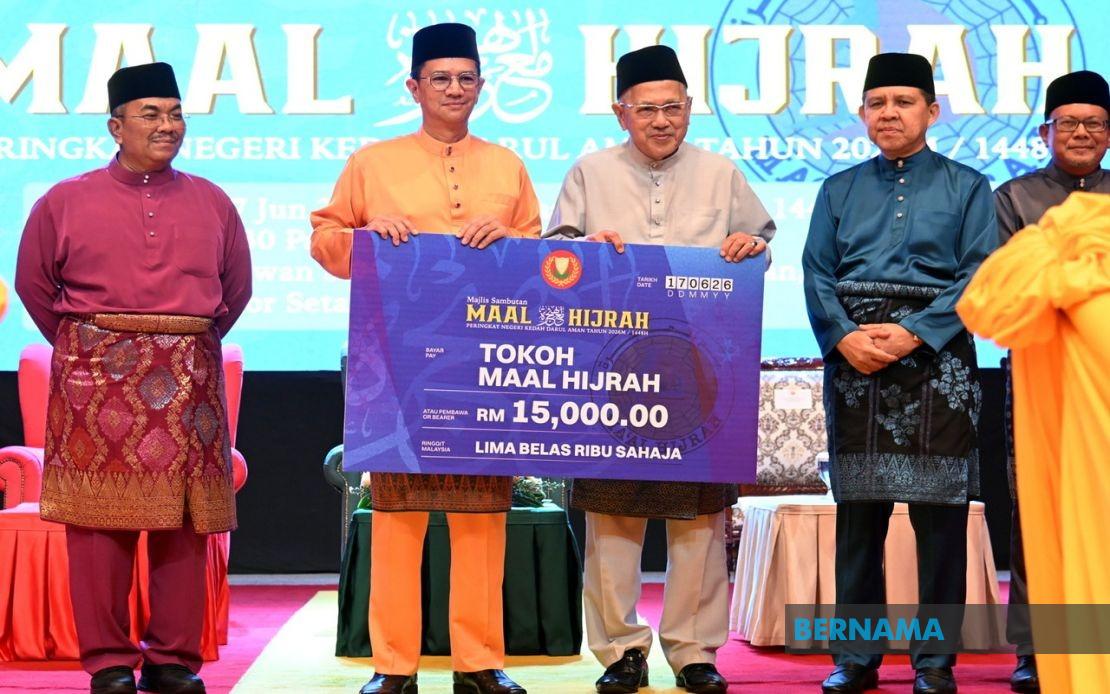
The recognition Dr Shukri received at Alor Setar—a certificate of appreciation and RM15,000 in cash from the Raja Muda of Kedah, Tengku Sarafudin Badlishah Sultan Sallehuddin—represents formal acknowledgment of three decades of service to Malaysian society. Yet from Dr Shukri's perspective, such honors pale beside the deeper satisfaction of having transformed his own life and influenced countless others in the process. His continued active involvement in sharing his experiences suggests a man who has found genuine purpose in his calling and shows no signs of diminishing his engagement with successive generations of Malaysians navigating the complexities of personal and professional development.