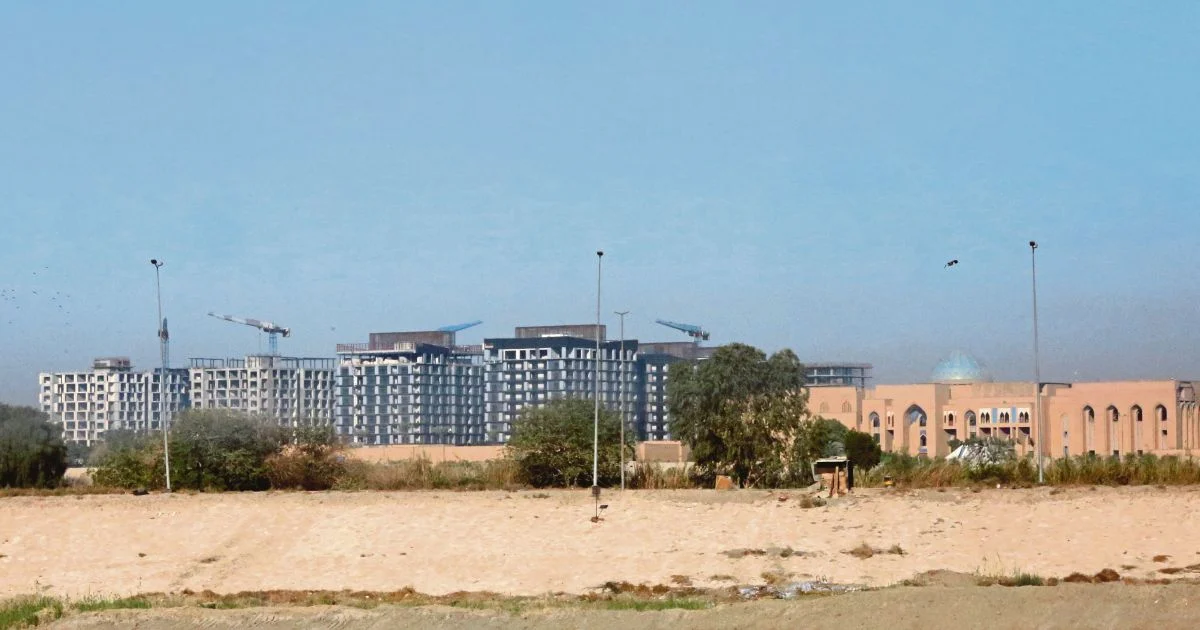
A major crackdown unfolded in Baghdad's fortified Green Zone early Sunday as Iraqi security forces conducted extensive raids targeting government officials and parliamentarians accused of corruption. The operation, supported by substantial military presence throughout the restricted government quarter, represents an escalation in Iraq's struggle against endemic graft within its state institutions and legislative bodies.
The Green Zone, home to Iraq's primary government offices, parliament, and diplomatic missions, has long symbolised both the concentration of state power and the systemic corruption that plagues the country's governance structures. Security details and protective barriers surrounding this heavily fortified enclave normally restrict movement, making the operation's execution particularly significant. The scale of the deployment required to conduct simultaneous arrests across multiple locations within the zone underscores the operation's importance within broader reform initiatives.
Among those detained were sitting members of parliament suspected of leveraging their legislative positions for personal financial gain. These arrests carry particular weight given the political sensitivities surrounding any action targeting the legislative branch in Iraq, where parliamentary immunity and factional divisions have historically protected officials from accountability. The decision to move against MPs signals potential shifts within Iraq's power structures and suggests growing political will to challenge entrenched interests.
Corruption in Iraq remains one of the most persistent obstacles to institutional development and public trust in government. Transparency International's Corruption Perceptions Index consistently ranks Iraq among the world's most corrupt nations, with estimates suggesting billions in public funds are lost annually to graft, embezzlement, and misappropriation. This fiscal haemorrhage directly impacts Iraq's capacity to rebuild infrastructure damaged during the conflict with the Islamic State and to provide basic services to its population.
The operation reflects Iraq's complex relationship with accountability mechanisms. Previous anti-corruption drives have achieved mixed results, often stalling when powerful factional interests mobilise political pressure or when cases become entangled in sectarian rivalries. However, this latest crackdown appears to have institutional backing, suggesting possible consolidation of political consensus around the necessity of reform among key power brokers.
For Malaysian observers, Iraq's experience offers instructive parallels regarding the challenges of implementing anti-corruption initiatives within divided political systems. Like Malaysia, Iraq navigates tensions between genuine reform aspirations and factional interests resistant to accountability. The difference lies in Iraq's weaker institutional capacity and the overlapping nature of political competition with sectarian and ethnic divisions, which complicate efforts to maintain non-partisan anti-corruption operations.
The detention of officials without immediate public disclosure of specific charges has generated concern among human rights advocates monitoring Iraqi governance. Transparency in investigation procedures and charges against detainees remains crucial for distinguishing genuine anti-corruption efforts from politically motivated persecution. International observers and civil society organisations continue monitoring whether the operation follows due process standards and whether charges rest on credible evidence.
Iraq's anti-corruption efforts have significant implications for regional stability and international relations. Corruption undermines Iraq's capacity to combat terrorism financing, maintain border security, and manage resources effectively. Donors and investors require confidence in Iraqi institutions before committing substantial capital. Success in demonstrating functional accountability mechanisms could improve investor confidence and strengthen Iraq's international standing beyond the region.
The Green Zone itself represents a paradox in Iraqi governance. Constructed after 2003 as a symbol of institutional strength and security, it has instead come to epitomise the distance between the governing elite and ordinary Iraqis, who often lack basic services while officials enjoy protected luxury. Public perception of Green Zone corruption contributes significantly to citizen disengagement from democratic processes and strengthens the appeal of alternative governance models offered by militias and armed groups.
These raids occur within Iraq's broader political calendar, as factional movements negotiate power-sharing arrangements and ministerial allocations. The timing may reflect calculations by leading political blocs to demonstrate commitment to reform while marginalising rivals. Whether the operation achieves genuine institutional reform or serves factional interests remains unclear, though sustained follow-through on prosecutions and convictions would provide stronger signals of serious intent.
The international community, particularly the United States and regional powers invested in Iraq's stability, has long emphasised anti-corruption as essential to Iraqi state consolidation. This operation suggests Iraqi decision-makers increasingly recognise that governance failures stemming from rampant corruption threaten the legitimacy and functionality of state institutions in ways that security operations alone cannot address.
For Southeast Asia and Malaysia particularly, Iraq's experience demonstrates how corruption corrodes democratic institutions and state capacity. While Malaysia's anti-corruption framework differs significantly from Iraq's, the fundamental challenge—ensuring that accountability mechanisms function effectively despite political resistance—remains universally relevant. Iraq's struggles underscore the importance of strong, independent institutions capable of withstanding political pressure to protect corrupt officials.

