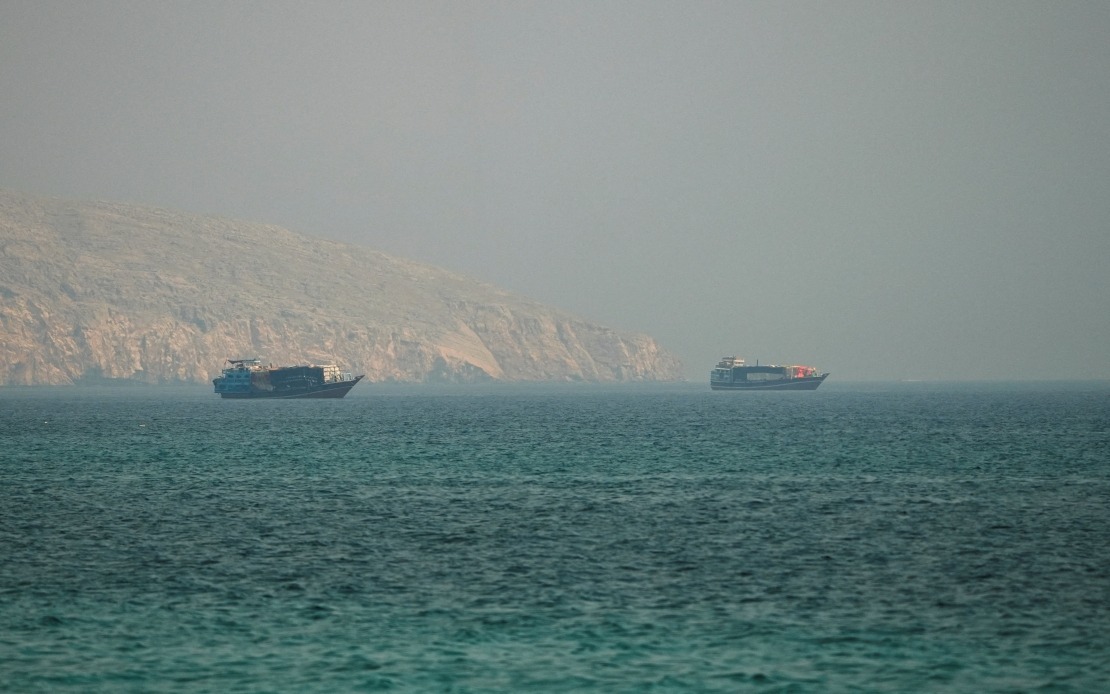
Escalating tensions between Washington and Tehran have reached a critical juncture, with Iran's security establishment signalling willingness to deploy its most potent economic weapon against perceived American aggression. Mohammad Bagher Zolghadr, secretary of Iran's Supreme National Security Council, cautioned on Saturday that the reimposed US maritime blockade could provoke Iranian retaliation through the closure of the Strait of Hormuz and other strategically vital waterways, according to state broadcaster IRIB.
The warning carries substantial weight in global geopolitical calculations, particularly for Malaysia and the broader Indo-Pacific region. The Strait of Hormuz sits as one of the world's most critical maritime chokepoints, with roughly one-fifth of global petroleum passing through its narrow waters annually. For energy-importing nations throughout Southeast Asia, including Malaysia, any disruption to this passage represents a direct threat to fuel security and economic stability. The implied consequences of Zolghadr's statement extend far beyond the Middle Eastern theatre, potentially reverberating through supply chains and energy markets that Asian economies depend upon for growth and industrial production.
Zolghadr's remarks came in direct response to President Donald Trump's administration reimposing a comprehensive maritime blockade on Iran, an action announced by the US military's Central Command on July 14. The Trump administration characterizes this enforcement mechanism as necessary to prevent Iranian attacks on commercial shipping and to guarantee unobstructed navigation through international waters. However, Tehran contests this framing, asserting that any transit arrangement through the Strait of Hormuz—which runs along Iran's coastline—should operate under protocols administered by Iranian authorities rather than external powers.
The security official deliberately framed the potential consequences of continued confrontation in terms calculated to resonate with American domestic politics. By noting that economic disruptions would reverberate through the American energy market and affect voters ahead of November's congressional elections, Zolghadr was signalling Iran's awareness of domestic US political pressures and attempting to leverage them as a restraining influence on Washington's policies. This approach reflects a strategic calculation that highlighting the costs of escalation to ordinary Americans might constrain decision-making in the Trump administration.
Recent weeks have witnessed a marked deterioration in US-Iran military interactions, with Washington conducting strikes against Iranian targets while Tehran has responded with direct attacks on American military installations and equipment positioned throughout the region. This cycle of tit-for-tat military action creates genuine risks of miscalculation or unintended escalation. Each side's actions, interpreted as provocative by the other, generates pressure for retaliation that can spiral beyond what either party originally intended.
The fundamental dispute between Washington and Tehran centres on competing visions of maritime governance in the Persian Gulf. The United States, as the dominant global naval power, champions the principle of freedom of navigation through international waters, viewing constraints on shipping as contrary to international law and global economic interests. Iran, conversely, views its geographic position along the Strait of Hormuz as conferring legitimate authority to regulate traffic passing through adjacent waters, particularly when it perceives external powers as threatening its security or economic interests.
For Malaysia and other Southeast Asian economies, the implications of potential Hormuz closure deserve serious consideration. These nations possess limited energy reserves and depend heavily on imported petroleum to fuel power generation, transportation, and industrial sectors. A significant disruption to Middle Eastern oil supplies would translate into sharp price increases that would ripple through consumer prices, manufacturing competitiveness, and government budgets across the region. The economic impact would likely exceed that experienced during the 2022 energy crisis, given the centrality of the Strait of Hormuz to global supply flows.
The blockade issue also touches on broader questions about the legitimate use of economic coercion in international relations. While states possess the technical capability to disrupt maritime traffic through narrow passages, unilateral closure of strategically vital shipping routes represents a form of economic warfare with implications extending far beyond the disputants directly involved. Third parties, including developing economies with minimal involvement in US-Iran disputes, would bear disproportionate costs from such disruptions. This asymmetry raises questions about the equity and sustainability of conflict resolution approaches based on economic strangulation.
Iran's explicit threat to consider closing the Strait of Hormuz should be understood as both a genuine warning and a negotiating signal. By publicly articulating this option, Iranian leaders may be attempting to establish a deterrent against further escalation while simultaneously signalling to other global actors—including potential mediators—that the current trajectory is unsustainable. Whether this constitutes a credible threat depends partly on calculations of costs to Iran itself, as closure would devastate Iran's own oil export revenues and international standing. Nevertheless, the willingness to articulate such threats suggests Tehran perceives the current blockade as sufficiently threatening to its interests to justify consideration of extraordinary responses.
The regional dynamics deserve attention from Malaysian policymakers and business leaders. Southeast Asian nations have traditionally pursued neutral stances in US-Iranian disputes while attempting to maintain commercial relationships with both parties. However, neutrality becomes increasingly difficult when major powers' conflicts directly threaten vital economic interests. Malaysia's maritime interests in the region, its energy security requirements, and its position as a responsible maritime stakeholder all argue for close monitoring of developments and potential diplomatic efforts to de-escalate tensions before they produce tangible disruptions to global commerce.

