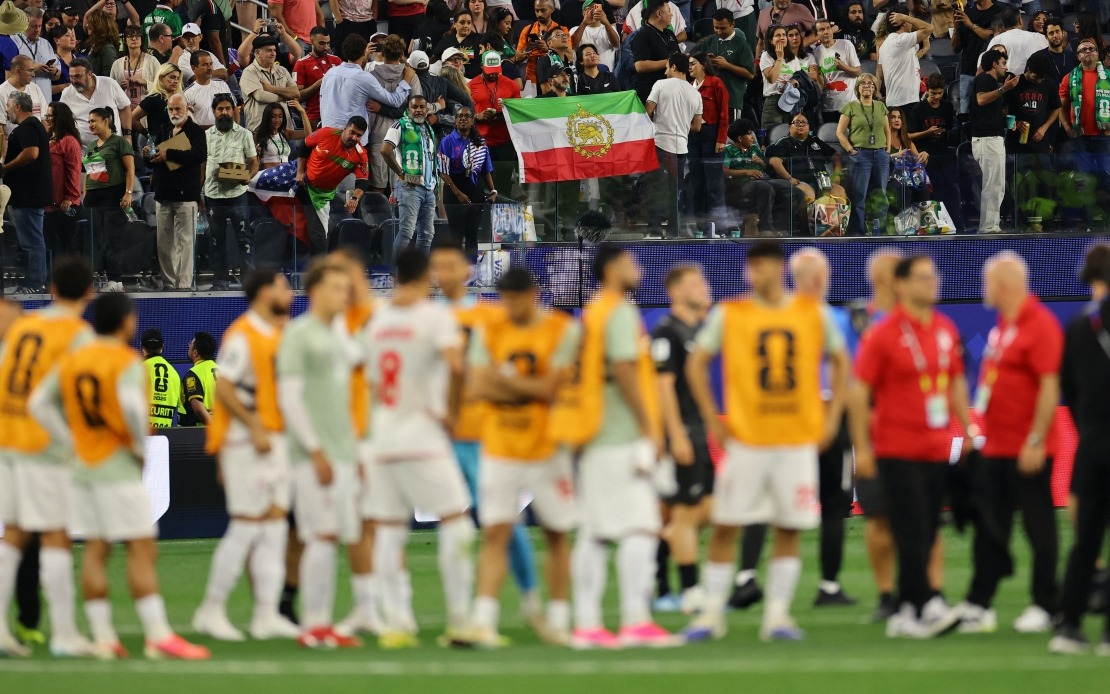
Iran's national football team manager Amir Ghalenoei has characterised his squad as the "most repressed team in the whole World Cup," claiming they were unexpectedly ordered to depart Los Angeles for their Mexican training base immediately after their opening fixture against New Zealand on Monday evening. The abrupt relocation, coming without notice just as the final whistle sounded, frustrated preparations that had anticipated an overnight stay in California followed by a recovery session the next morning.
Ghalenoei expressed frustration over the cumulative effects of extended travel on his players' physical condition. Rather than allowing adequate rest following their competitive match, the immediate departure compounded the fatigue accumulated during long hours of air travel to reach their designated training location. The coaching staff had structured their immediate post-match schedule around recovery protocols designed to maintain player fitness and mental freshness during a demanding tournament.
When asked about the source of the directive, Ghalenoei did not explicitly identify who had ordered the departure, leaving ambiguity about whether the instruction came from World Cup organisers, FIFA officials, or another authority. However, Iran captain Mehdi Taremi offered a potential clue during subsequent comments, noting that FIFA President Gianni Infantino had visited the Iranian team in their dressing room following Monday's encounter. This detail suggested possible high-level involvement in decisions affecting the Iranian delegation's movements.
Taremi's remarks carried deeper implications beyond the immediate logistical inconvenience. The captain alluded to the longstanding geopolitical tensions between the United States and Iran, suggesting that factors beyond standard tournament administration may have influenced how the Iranian team was treated. His cryptic statement—"For sure, he wants to try to help us, but it's about other things, too. Everyone knows it"—implied that broader political considerations might be affecting operational decisions affecting Iran's World Cup participation.
The context of these tensions adds significant weight to Taremi's comments. The captain referenced an over 100-day military conflict between the two nations that was reportedly approaching resolution through an imminent peace agreement. Against this backdrop, the treatment of the Iranian football delegation in the United States took on additional meaning, potentially reflecting deeper diplomatic and security concerns that transcended sport. The captain's reluctance to explicitly state these concerns reflected the delicate diplomatic situation.
Iran's accommodation arrangements had already undergone substantial disruption prior to this incident. The team had originally planned to establish their World Cup base in Tucson, Arizona, but relocated to Tijuana in Mexico during late May following visa complications and logistical obstacles. This earlier move already indicated the administrative challenges the Iranian delegation faced in operating from United States territory, suggesting a pattern of obstacles rather than isolated incident.
The relocation to Mexico represented a significant operational adjustment requiring reassessment of training schedules, facility access, and daily routines during the crucial preparation phase. Having already endured the inconvenience and disruption of changing their primary base of operations, the Iranian team found themselves facing additional upheaval through the unscheduled departure from Los Angeles. For a squad preparing to compete at the highest international level, such instability in logistical planning and unexpected disruptions could have meaningful implications for performance and player morale.
Ghalenoei's public complaint about his team's treatment carries importance for regional and international observers. Southeast Asian nations, many maintaining complex diplomatic relationships with both the United States and Iran, may view such reports as revealing potential inconsistencies in how World Cup hosts and FIFA handle different national delegations. The suggestion that one team might face operational restrictions or disadvantages based on geopolitical factors rather than sporting considerations raises questions about fairness and neutral administration of international tournaments.
The incident also reflects broader tensions within international football regarding how political circumstances intersect with sporting administration. When national teams travel to countries with which their governments have contentious relationships, questions naturally arise about whether such teams receive equivalent treatment and support compared to delegations from nations with stronger diplomatic ties to the host or key decision-makers. The Iranian team's experience suggests these concerns may not be merely theoretical.
For Malaysian and Southeast Asian football observers, the situation underscores the complex environment in which international tournaments operate. Nations participating in World Cups and other major competitions must navigate not only athletic challenges but also diplomatic and logistical complications that can significantly impact their performance. The experiences of teams like Iran highlight how factors beyond the pitch can substantially influence tournament outcomes and squad preparation.