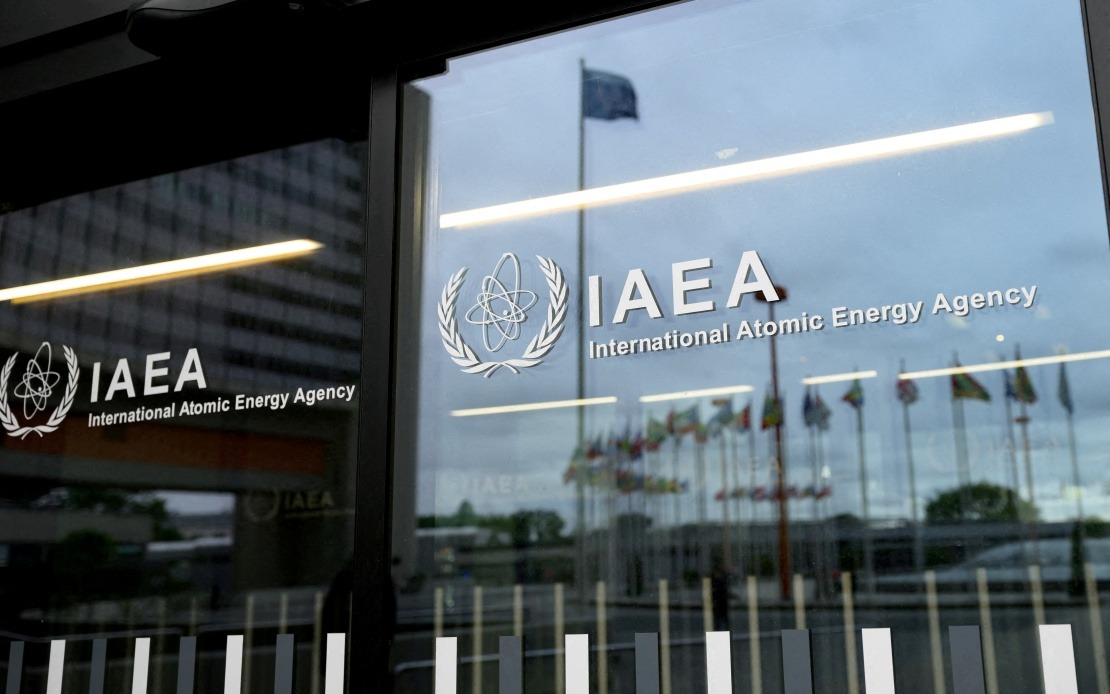
Iran has firmly rejected international atomic energy inspectors' requests to visit its nuclear facilities, declaring that any such access hinges entirely on the conclusion of a comprehensive accord with the United States and the lifting of all economic sanctions. The stance was articulated by Kazem Gharibabadi, Iran's deputy foreign minister for legal and international affairs, who signalled on Wednesday that Tehran will not grant the International Atomic Energy Agency (IAEA) preliminary access to disputed nuclear sites and materials before a final nuclear agreement is reached with Washington.
Gharибabadi's position hardened negotiations that have proceeded under a 60-day framework established by a memorandum of understanding signed on June 18 between Tehran and the US. His statement amounted to a direct rebuff of IAEA Director General Rafael Grossi, who declared earlier the same day that the agency planned to conduct inspections at Iranian nuclear installations in light of the newly-signed peace accord. The two sides have already begun preliminary talks, with the first round of negotiations conducted in Switzerland over the weekend and into Monday.
The deputy minister made clear that scrutiny of Iran's nuclear programme, a longstanding flashpoint between Tehran and Western powers, remains contingent on reciprocal American action. He emphasised that access to facilities and nuclear materials "will be reviewed and resolved solely within the framework of the final agreement and as a result of the other party's practical action to terminate all sanctions." This formulation suggests Iran views inspection permissions as leverage in broader negotiations, with sanctions relief serving as the primary incentive for cooperation.
For Malaysia and the broader Southeast Asian region, Iran's negotiating posture carries important implications. The Middle East remains a critical trade partner and energy supplier for many ASEAN nations, and instability stemming from unresolved nuclear tensions threatens regional commerce and security. Malaysia, with significant trading relationships throughout the Gulf, has a vested interest in de-escalation and a negotiated settlement that restores international confidence in Iran's nuclear programme.
Grossi had requested a direct meeting with Iran's negotiating delegation while in Switzerland, but Gharibabadi confirmed that no such encounter took place in recent days. This breakdown in direct contact between the IAEA and Iranian officials underscores the depth of mistrust characterising current nuclear diplomacy. The absence of preliminary technical discussions with the UN's nuclear watchdog suggests that substantive verification mechanisms remain unresolved even as the 60-day negotiating window has opened.
The backdrop to this dispute involves substantial physical damage to Iran's nuclear infrastructure. Three major facilities at Fordow, Natanz, and Isfahan sustained bombardment during a 12-day military confrontation in June 2025. These same sites had previously come under attack in late February of this year, when the United States and Israel conducted coordinated strikes targeting Iranian nuclear and military installations. The cumulative damage and the sensitive nature of these facilities explain Tehran's reluctance to permit external inspections before securing guarantees of sanctions relief and security assurances.
The June 18 memorandum represents a tentative thaw after months of heightened military tension. However, the agreement provides solely a framework for negotiation rather than substantive commitments from either party. The 60-day negotiating period is designed to produce a final accord addressing Iran's nuclear programme and the comprehensive sanctions regime that has strangled Tehran's economy. How quickly negotiations progress will determine whether the preliminary stage concludes in good faith or descends into mutual recrimination.
Iran's insistence on linking inspection access to sanctions removal reflects a fundamental asymmetry in the negotiation. From Tehran's perspective, the country has already endured the consequences of Western pressure through economic isolation and military strikes. Granting inspection privileges before receiving tangible benefits in the form of sanctions relief would constitute a unilateral concession. Conversely, Western capitals and the IAEA argue that nuclear transparency must precede confidence-building measures and sanctions reduction.
For Southeast Asian observers and policymakers, this impasse illustrates the fraught nature of nuclear diplomacy in the post-agreement phase. Malaysia and other ASEAN members maintain careful diplomatic balances with both Iran and Western powers, and protracted nuclear brinkmanship threatens to force uncomfortable choices. A successful negotiated outcome would reinforce the principle that disputes can be resolved through dialogue rather than military force—a principle central to ASEAN's own regional architecture.
The next phase of negotiations will test whether either party can bridge the inspection access gap. American and European negotiators must determine whether they can offer sufficient sanctions relief and security guarantees to persuade Iran to accept preliminary IAEA inspections. Iran, conversely, faces pressure to demonstrate flexibility on nuclear transparency in exchange for concrete economic benefits. The outcome will ripple across the Middle East and influence regional stability calculations that directly affect trade, energy supplies, and security dynamics affecting Southeast Asia's interests.

