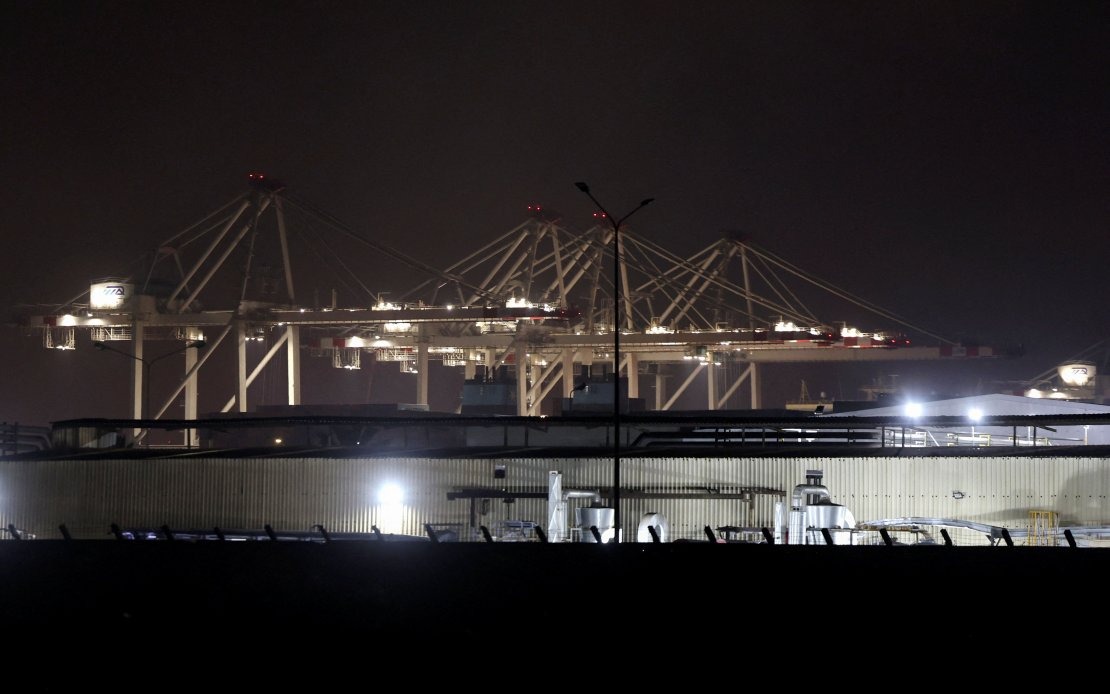
In the aftermath of a drone strike that ignited fires aboard two gas-carrying vessels moored at Egypt's Damietta Port on the Mediterranean, Iran's Foreign Minister Abbas Araghchi has issued a sharp warning about what he characterises as Israeli-orchestrated false-flag operations designed to destabilise the region. His statement, posted on the X platform on Thursday, reflects Tehran's deepening concern over geopolitical manipulation in one of the world's most strategically significant maritime corridors and an Arab nation that remains central to Middle Eastern affairs.
Araghchi's rhetoric elevated the incident beyond a simple security incident, framing it within a broader narrative of regional tension and alleged hostile foreign intervention. By invoking the concept of false-flag operations—covert actions carried out to appear as though conducted by another party—the Iranian official attempted to position his country as a voice of regional caution and stability, even as the Mediterranean gateway to Asia-Europe trade remained under threat. The language employed in his statement underscores Tehran's interpretation that external forces are actively working to fracture Muslim-majority nations and undermine cooperative frameworks in the Middle East.
The emphasis that Egypt constitutes "an important friend and partner in the region" and that "its security is of utmost importance to us" signals Iran's commitment to maintaining strong diplomatic ties with Cairo, even amid broader regional tensions. This positioning carries particular weight given Egypt's pivotal role as the custodian of the Suez Canal, arguably the world's most critical chokepoint for maritime commerce. For Malaysian and Southeast Asian readers navigating trade routes and supply chains, any disruption to Egypt's security environment carries direct implications for commodity prices, shipping insurance costs, and regional economic stability.
The Iranian minister's call for vigilance "against Israeli plots and false-flag operations designed to undermine regional peace" represents part of a broader rhetorical strategy employed by Tehran whenever security incidents occur in strategically sensitive locations. By associating such incidents with Israeli plotting, Iran attempts to consolidate support among allied states and regional actors who share historical grievances or strategic competition with Tel Aviv. However, Egyptian authorities have adopted a notably more measured stance, emphasising factual investigation rather than premature attribution.
Egyptian Prime Minister Mostafa Madbouly's approach to the incident demonstrates Cairo's diplomatic balancing act in an increasingly polarised regional environment. His statement that authorities had recovered the drone's wreckage and were conducting thorough security analysis indicated Egypt's intention to reach conclusions based on tangible evidence rather than geopolitical assumptions or pressure from neighbouring powers. This measured response reflects Cairo's role as a regional heavyweight with interests in maintaining stability across multiple fault lines—between Israel and Palestinian territories, among Gulf states, and with major powers including Russia and the United States.
The preliminary findings pointing to drone involvement, coupled with the absence of any claimed responsibility as of the initial investigation phase, created a vacuum of attribution that multiple regional actors could potentially exploit for their respective narratives. This uncertainty becomes particularly significant for maritime commerce and insurance markets, where clarity regarding threat actors directly influences risk assessments and premiums. The Damietta Port attack, whether ultimately attributable to state or non-state actors, sends reverberations through global supply chains already strained by multiple geopolitical tensions.
For Southeast Asian nations with substantial maritime trade passing through Middle Eastern waters, the incident highlights vulnerabilities in sea lanes that carry everything from energy resources to manufactured goods destined for Asian markets. Malaysia, as a significant maritime trader and participant in global commerce networks, faces potential indirect consequences from any escalation of drone attacks or maritime insecurity in the eastern Mediterranean. The pattern of such incidents, whether authentically representing state policy or serving as covers for other actors' intentions, gradually raises insurance costs and risk premiums affecting every nation dependent on these critical trade routes.
Iran's invocation of "Muslim solidarity" in response to the Damietta Port attack reflects an effort to mobilise ideological and religious frameworks as counterweights to perceived Western or Israeli dominance in regional affairs. This appeal carries significance beyond immediate security concerns, extending into questions of how Muslim-majority nations should coordinate their foreign policies and respond to external pressures. For Malaysia and other Muslim-majority states in Southeast Asia, such rhetoric creates diplomatic expectations and potential expectations regarding alignment on Middle Eastern issues, even when direct strategic interests may be limited.
The absence of any claimed responsibility for the drone attack introduces a dimension of strategic ambiguity that serves no party's interests transparently. Whether the attack was indeed conducted by Israeli forces as Iran implies, carried out by non-state actors with their own agendas, or represents some other actor's operation remains to be determined through Egypt's investigation. This uncertainty underscores how modern hybrid warfare tactics—employing drones, cyber operations, and false-flag allegations—have complicated international relations and made attribution increasingly difficult in real-time security environments.
Egyptian investigators face significant pressure to complete their security analysis thoroughly while regional actors position themselves based on preliminary assessments. The recovered drone wreckage offers the most reliable evidence available, and Egyptian authorities' commitment to factual analysis rather than geopolitical speculation provides a model for regional security governance. For Malaysia and ASEAN nations observing these developments, Egypt's investigative approach offers lessons in maintaining credibility and independence when international pressure mounts to rush toward predetermined conclusions.
The incident at Damietta Port ultimately illustrates how a single security event can rapidly become absorbed into larger narratives about regional competition, state intentions, and ideological struggles. Iran's warning about false-flag operations, while fitting into established patterns of Iranian diplomatic messaging, nonetheless reflects genuine concerns about regional destabilisation and the weaponisation of attribution ambiguity. Egyptian authorities' focus on evidence collection and verification demonstrates how professional security responses can help separate actual threats from rhetorical positioning, a distinction increasingly important as such incidents multiply across the Middle East and beyond.

