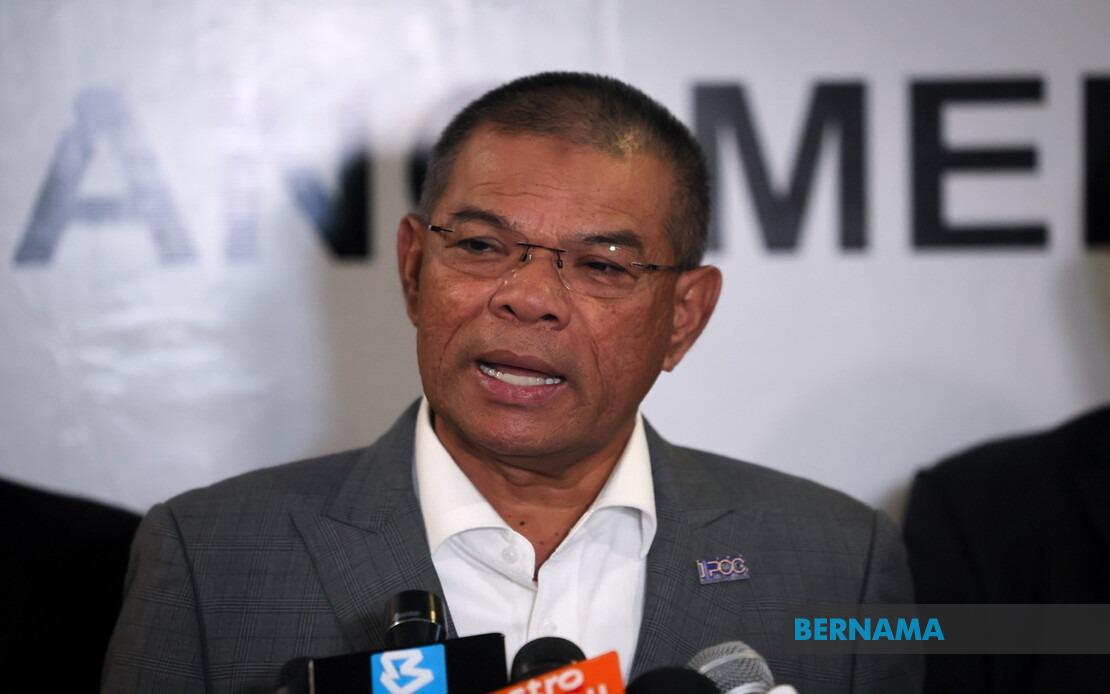
Malaysia's Independent Police Conduct Commission has processed 1,635 public complaints since commencing operations in 2023 through July 24, 2026, signalling that citizens are increasingly willing to utilise independent mechanisms to report police misconduct. Home Minister Datuk Seri Saifuddin Nasution Ismail disclosed these figures at a press conference in Putrajaya following the Home Ministry's monthly assembly, underscoring what officials view as a positive indicator of public trust in the institution's independence.
Of the total complaints received, 844 cases representing 76 percent have been successfully resolved, according to Saifuddin Nasution's statement. The minister reported that the IPCC received 372 complaints during 2024 alone as of mid-July, demonstrating a consistent stream of public engagement with the oversight body. This resolution rate suggests the IPCC is functioning as an operational mechanism rather than merely a symbolic institution, though the absolute numbers remain modest relative to Malaysia's police force size and population.
The nature of complaints provides insight into public grievances against law enforcement. Saifuddin Nasution identified the most prevalent category as cases where complainants reported receiving no feedback whatsoever following their initial police reports. This pattern highlights a systemic communication gap between police and the public, suggesting that bureaucratic responsiveness rather than outright misconduct may constitute a significant friction point in police-community relations across Malaysia.
Understanding the IPCC's operational structure proves essential for contextualising these statistics. The commission functions as a classification and routing mechanism rather than a centralised investigative authority handling all matters internally. When complaints contain suspected corruption elements, the IPCC forwards such cases to the Malaysian Anti-Corruption Commission, creating a formal referral pathway that leverages specialised investigative capacity. This structural design reflects Malaysia's broader institutional approach to separating police oversight from anti-corruption investigation.
Among the outstanding cases awaiting resolution, two distinct categories emerge. Some complainants remain dissatisfied with how the police themselves conducted investigations into their original reports, while others have simply not received responses from police following their initial complaint submission. These unresolved matters potentially represent systemic weaknesses in police administrative processes and communication protocols rather than investigations into alleged officer misconduct per se.
The IPCC has formally initiated 22 investigation papers since its establishment, including five opened during the current year. Of these investigations, 11 have reached completion while 11 remain ongoing. This investigative workload, though small in absolute terms, suggests the commission is actively examining specific allegations rather than confining itself to administrative categorisation. The relatively prolonged investigation timeline for the remaining cases indicates that thorough inquiry requires substantial time commitment.
Although some observers might characterise the 1,635 total complaints as a modest volume, Saifuddin Nasution framed this as validation of public confidence in the IPCC as a functional complaint channel. The minister's interpretation reflects government messaging that the institution's establishment has successfully opened an alternative accountability pathway. However, comparatively low complaint volumes could alternatively indicate either limited public awareness of the IPCC's existence and function, or persistent citizen preferences for other complaint mechanisms including traditional police internal affairs processes.
The government is pursuing awareness expansion through visual communication campaigns. Saifuddin Nasution witnessed the formal handover of IPCC complaint posters, which will be distributed to Royal Malaysia Police information corners nationwide. This grassroots publicity effort represents a strategic commitment to educating the public about available complaint channels and reinforces the administration's stated dedication to strengthening police personnel integrity and accountability through collaborative stakeholder engagement.
Context for the IPCC's work became evident through a concurrent development involving serious police misconduct. Authorities arrested 12 police personnel of varying ranks on suspicion of extorting RM2 million from a Vanuatu national, with Dang Wangi police chief ACP Sazalee Adam confirming these arrests. Saifuddin Nasution highlighted this enforcement action as evidence of the police force's zero tolerance policy toward internal misconduct, though observers might note the apparent tension between claiming zero tolerance while simultaneously requiring external oversight bodies to process significant complaint volumes.
The extortion case exemplifies precisely the category of allegations that independent oversight bodies exist to address. That the IPCC and police leadership can point to decisive prosecutorial action demonstrates that institutional mechanisms do produce tangible consequences for officers engaged in criminal activity. Whether the IPCC played a role in identifying or investigating these particular officers remains unclear from available information.
For Malaysian citizens considering whether to lodge complaints against police, the IPCC data presents a mixed signal. The 76 percent resolution rate suggests reasonable prospects that complaints will receive formal handling. However, the prevalence of unresolved cases involving communication failures indicates that complainants should not necessarily expect rapid or comprehensive feedback. The referral arrangements with other agencies mean that complaint resolution may extend beyond the IPCC's direct authority.
Regionally, Malaysia's IPCC experience provides comparative data for other Southeast Asian nations evaluating independent police oversight models. The institutional framework combines internal police mechanisms with external independent review, reflecting a hybrid approach to accountability rather than establishing a fully autonomous investigative authority with prosecutorial power. This model's effectiveness in driving systemic police reform remains an open question that will require longer-term evaluation as the IPCC accumulates additional operational experience.

