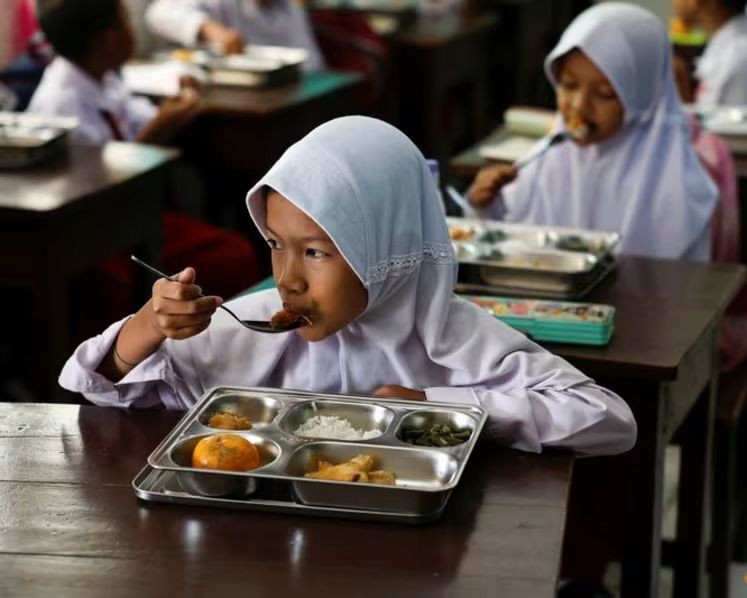
Indonesia's ambitious free meals initiative has been struck by fresh administrative turmoil, with the head of the National Nutrition Agency stepping down this week, deepening questions about the government's ability to sustain what remains President Prabowo Subianto's signature policy commitment. Nanik Sudaryati Deyang, who assumed leadership of the agency in June, formally announced her resignation on Wednesday, citing urgent health concerns requiring immediate overseas treatment. Her departure represents the second major leadership change at the agency in roughly six weeks, exposing deep fractures within an institution struggling to manage one of the world's most ambitious mass feeding programmes.
The timing of Nanik's exit compounds the challenges facing an initiative that has already weathered multiple crises since its nationwide rollout began in January 2025. Her predecessor was removed from office and subsequently arrested on corruption allegations linked to the massive project, signalling that the entire institutional structure overseeing the programme may be compromised. Nanik herself inherited a portfolio burdened not only by her predecessor's legal troubles but also by persistent logistical failures, food safety incidents involving mass poisonings, and quality control problems that have undermined public confidence in the programme's delivery mechanisms.
In a social media statement, Nanik revealed that her medical condition—severely restricted arteries attributed to extreme workplace stress—had reached a critical stage requiring intervention abroad. She framed her decision as one made jointly with President Prabowo, who she said sympathetically accepted her resignation. This narrative of a health-driven exit, however, cannot be disentangled from the mounting operational and financial pressures bearing down on the agency. The convergence of medical crisis and institutional dysfunction suggests a workplace environment of exceptional strain, where senior officials face both the burden of managing a dysfunctional programme and potential legal exposure.
The financial squeeze on the initiative has intensified considerably in recent months. The National Nutrition Agency announced just before Nanik's resignation that the 2026 budget allocation had been slashed for the second consecutive year, dropping from 268 trillion rupiah to 229 trillion rupiah, equivalent to approximately USD 12.79 billion. This reduction is particularly stark when measured against the original budgetary framework: the current allocation represents a shortfall of more than 100 trillion rupiah compared to the initial 335 trillion rupiah earmarked for the programme. Agency officials have indicated that further cuts remain probable, pending an additional budget review, suggesting that the financial constraints facing the initiative may continue to worsen.
These budgetary reductions have direct implications for programme scope and beneficiaries. The free meals scheme was originally designed to serve approximately 83 million Indonesians, encompassing schoolchildren, pregnant women, and other vulnerable populations across the archipelago. Prior to the most recent budget reduction, the agency reported having distributed meals to 62.5 million individuals, demonstrating that even before the latest cuts were implemented, the programme had already fallen substantially short of its ambitious target. With budgets being progressively trimmed, the prospect of reaching even the current beneficiary numbers appears increasingly uncertain.
Nanik sought to defend the initiative against mounting criticism, reframing debates about its viability as misplaced political controversy. She argued that the programme should be understood not as a political undertaking but as a direct nutritional intervention for children, positioning it within a public health framework rather than as a campaign pledge. This characterization reflects broader tensions within Indonesia regarding fiscal priorities and the appropriate role of government spending on social welfare. The initiative has attracted scrutiny beyond domestic audiences, with international observers questioning whether Indonesia's fiscal position can sustain such an expansive commitment given competing demands on the budget.
The institutional arrangements governing the programme are also undergoing potential restructuring. Nanik indicated that President Prabowo is contemplating the establishment of a supervisory board to provide oversight of the National Nutrition Agency, and that she has been asked to lead this new body. While details remain sparse, this suggests recognition at the presidential level that the current institutional model requires supplementary governance mechanisms. Whether such a board would address the underlying systemic problems—including procurement integrity, supply chain management, and quality assurance—or merely add another administrative layer remains to be seen.
The successor to Nanik has not yet been publicly identified, though she indicated that her replacement would be drawn from within the agency's existing hierarchy, specifically a junior colleague. This internal promotion strategy may reflect limited external appetite for heading such a troubled institution. For Malaysia and other regional economies, the Indonesian case offers instructive lessons about the challenges of implementing universal social programmes at scale, particularly in contexts where institutional capacity, budget stability, and political will must align sustain long-term initiatives.
The broader implications for Indonesia's fiscal trajectory are significant. The free meals programme was a central commitment in Prabowo's election campaign, representing his vision for prioritising social spending and child welfare. Yet the programme has become a focal point for debates about Indonesia's budgetary sustainability, with escalating costs and operational failures raising questions about whether the government can maintain such commitments without compromising other spending priorities or fiscal discipline. The repeated budget cuts suggest that competing priorities—defence spending, infrastructure, and debt service—are beginning to constrain the latitude available for this flagship social initiative.
Stakeholders across the region are watching how Indonesia navigates these challenges. Other Southeast Asian nations pursuing expansionary social policies face similar questions about programme design, implementation capacity, and fiscal sustainability. The Indonesian experience demonstrates the gap between ambitious policy objectives and implementation realities, as well as the human toll that bureaucratic dysfunction can exact on officials tasked with delivering unwieldy programmes. For Indonesia itself, the next few months will be critical in determining whether the free meals initiative can be stabilised under new leadership or whether it represents an overextended commitment that the state cannot adequately resource or manage.

