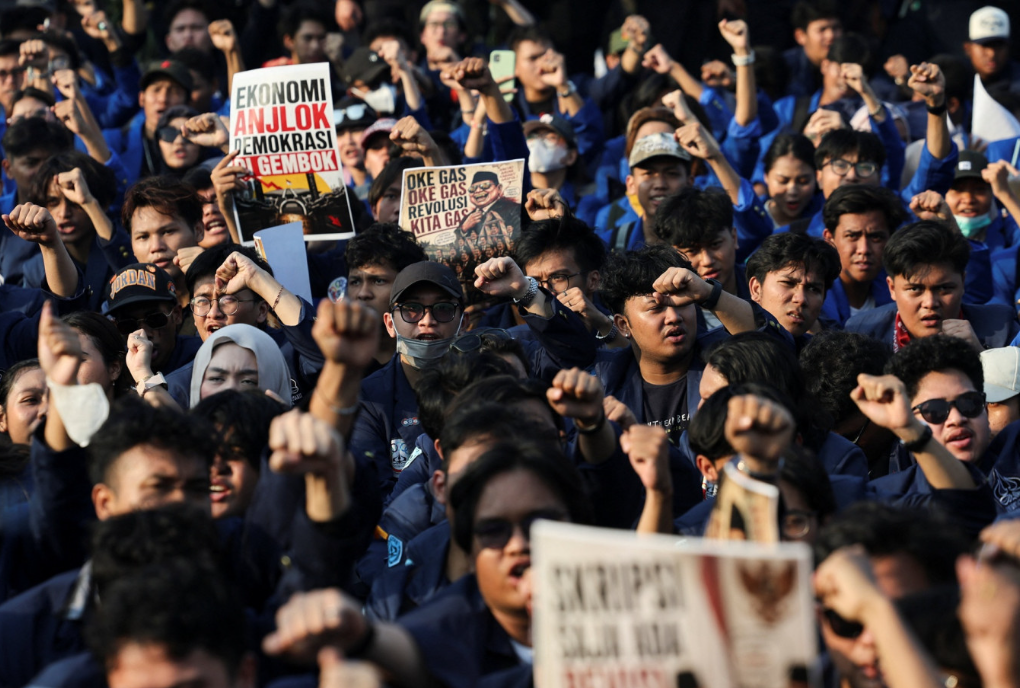
Indonesia's signature free meal initiative, launched by President Prabowo Subianto as a flagship anti-malnutrition effort, has become a flashpoint for competing political and economic interests, with demonstrations sweeping across the archipelago reflecting deep divisions over government spending priorities and programme integrity.
The programme, which targets approximately 83 million beneficiaries including schoolchildren and pregnant women with an allocation of at least Rp 335 trillion for this year, was intended to combat childhood stunting and malnutrition nationwide. Yet barely eighteen months after its January launch, it has encountered mounting resistance from students who question both its financial sustainability and operational credibility. In Bali, hundreds of university students gathered outside the regional legislative council in Denpasar on Monday demanding a comprehensive review, citing unresolved questions about food safety incidents and suspected corruption within the implementing agencies.
The student movement represents a significant portion of the opposition narrative, with activists questioning whether the programme represents prudent governance at a moment when the government is simultaneously implementing broader austerity measures. The Bali protest specifically called upon the Supreme Audit Agency to conduct thorough investigations into the programme's execution, reflecting growing skepticism about oversight mechanisms. In Jakarta's more prominent demonstrations, thousands of students affiliated with the Indonesian Islamic Student Movement staged multiple rallies at the House of Representatives complex, with one gathering occurring just days after a previous assembly of over one thousand activists at the same venue. These protesters have been particularly incensed by the recent arrest of three senior officials from the National Nutrition Agency, which administers the programme, on corruption allegations that have amplified questions about institutional integrity at the highest levels.
The scope of student activism extended across multiple regions and institutional actors. Demonstrations in Batam, Riau Islands saw coordinated action by students from various universities, while similar protests emerged in Jakarta, West Nusa Tenggara and East Java. The Batam Student Movement Alliance framed their activism explicitly as a form of democratic accountability, with coordinator Muryadi Agus Priawan articulating the rationale as ensuring government policies genuinely serve public interests rather than becoming vehicles for bureaucratic excess or misappropriation. The student protests have coalesced around demands for either comprehensive restructuring of the programme's management or its suspension pending transparent evaluation of effectiveness and proper targeting.
Yet the narrative grows more complex when examining the economic dependencies that the free meal programme has created across Indonesia's service and agricultural sectors. In Batam, hundreds of kitchen workers staged counter-demonstrations at the regional legislative council, highlighting how proposed efficiency measures directly threaten household incomes. These workers, numbering approximately one thousand five hundred in Batam alone, are employed on daily wage arrangements to prepare and distribute meals, making them vulnerable to any reduction in programme scope. The planned shift from six to five days of weekly distribution, combined with suspension during school holiday periods, translates directly into lost earnings for families dependent on this income source. Protest coordinator Langga Husein underscored that the financial impact extends beyond kitchen staff to pregnant women, breastfeeding mothers and toddlers who require continuous nutritional support regardless of school calendars.
The agricultural dimension adds yet another layer to this contentious policy debate. In Bandar Lampung, Lampung, residents rallied to defend the programme's continuation, recognising how its substantial commodity procurement requirements have strengthened local agricultural markets and benefited farmer incomes. The programme's appetite for corn, rice, cassava, fruits and vegetables has created meaningful demand that has supported price stability and rural economic activity. Field coordinator Maradoni articulated this perspective, noting that rural constituencies view the meal scheme not merely as welfare provision but as a stimulus to primary production and regional economic development. This agricultural constituency's support introduces a counterargument to student assertions about wasteful spending, reframing the programme as productive investment in rural-urban economic linkages.
Government responses have attempted to balance these competing pressures through graduated modifications rather than programme suspension. The National Nutrition Agency has announced budget reduction from the originally planned Rp 335 trillion to Rp 228.4 trillion, coupled with targeted efficiency measures designed to improve targeting while maintaining core functionality. The planned school holiday suspension and exclusion of seventy six schools in relatively affluent areas represent attempts to concentrate resources on populations with greatest nutritional vulnerability. Government Communications Agency head Muhammad Qodari has consistently maintained that the programme will continue, advocating for improvement rather than abandonment, a position that reflects administration determination to preserve a signature policy while acknowledging implementation challenges.
The corruption allegations underpinning much student activism carry particular significance given Indonesia's historical struggles with institutional integrity and public resource management. The arrest of three senior National Nutrition Agency officials has lent credibility to longstanding concerns about whether large-scale welfare programmes can be executed transparently in institutional environments with weak oversight and accountability mechanisms. This concern resonates across middle-class constituencies, including university students who possess both political voice and capacity for sustained mobilisation. The Supreme Audit Agency investigations that students are demanding would provide independent verification of whether programme funds reach intended beneficiaries or leak through corrupt channels, a determination that would substantially reshape public perception of the initiative.
For Malaysia and broader Southeast Asia, Indonesia's meal programme turmoil offers instructive lessons about implementing large-scale social welfare initiatives in contexts of fiscal pressure and institutional capacity constraints. The competing demonstrations reflect fundamental tensions between efficiency and equity, between fiscal consolidation and poverty alleviation, that confront developing economies across the region. Indonesia's experience demonstrates how even well-intentioned flagship programmes can encounter implementation challenges that undermine public confidence if institutional oversight is inadequate. The programme's scale—affecting 83 million people—makes this case particularly relevant to Malaysian policymakers contemplating expanded social protection systems.
The path forward for Indonesia's free meal programme remains uncertain, caught between student demands for fundamental restructuring, worker concerns about income loss, agricultural sector interest in maintained commodity demand, and government commitment to programme continuation with modifications. The government's budget reduction and efficiency measures represent incremental adjustment rather than the comprehensive overhaul that protesting students demand. Whether these modifications will satisfy public concerns about programme integrity and cost-effectiveness, or whether mounting pressure will force more substantial reconsideration, remains to be determined. The competitions between competing constituencies—each with legitimate claims on government attention—will likely shape Indonesian social policy beyond just this single initiative.

