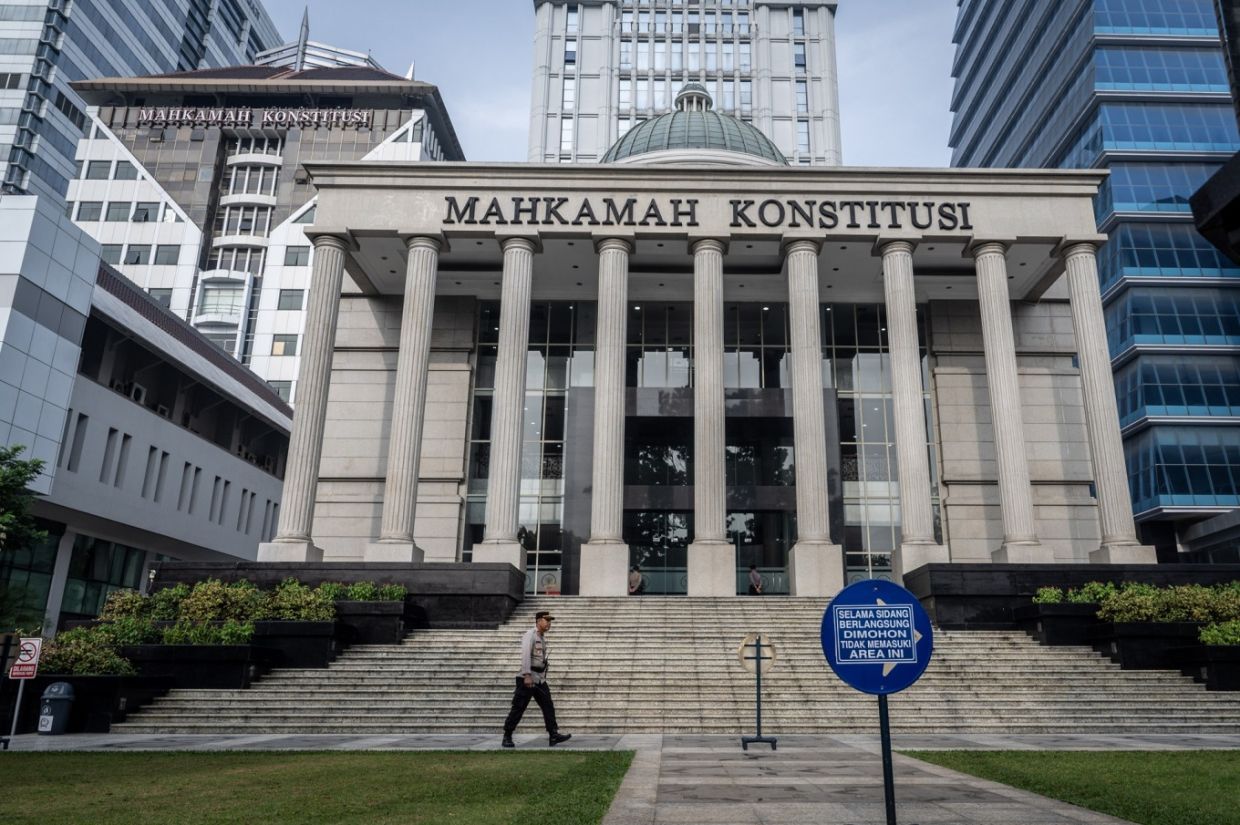
Indonesia's highest court has delivered a significant blow to President Prabowo Subianto's signature free nutritious meal initiative, ordering the government to stop financing the programme through education budget allocations. The Constitutional Court's nine-justice panel made this decision on Thursday after hearing arguments from education advocacy groups and academics who challenged the funding mechanism as unconstitutional. The ruling addresses a fundamental tension between expanding social welfare programmes and protecting constitutionally mandated education spending levels.
The petition, brought forward by education nonprofit Yayasan Taman Belajar Nusantara alongside a university lecturer and contract teacher, successfully argued that meals provision does not constitute an educational expense under Indonesian law. The court's reasoning rested on a plain reading of the 1945 Constitution, which explicitly requires that no fewer than 20 per cent of the national budget be dedicated to education. By drawing meal programme funds from this protected education allocation, the government effectively diluted resources available for schools, teachers and learning infrastructure.
While the court's final implementation deadline is set for 2028, Justice Enny Nurbaningsih signalled openness to faster compliance during Thursday's ruling announcement. She suggested that if the government proves willing to restructure its 2027 budget—currently under deliberation since early 2026—it should segregate meal programme financing immediately rather than wait three years. This language reflects judicial pragmatism; courts recognising budget cycles require time but also encouraging executive action sooner than the formal compliance window allows.
The financial dimensions of this dispute are substantial. The free meals initiative received Rp 335 billion in 2024 allocations, but escalated dramatically to Rp 229 trillion following budget cuts and operational corrections. This represents a significant share of Indonesia's Rp 3.8 quadrillion annual budget. More critically, the Rp 229 trillion currently devoted to meals accounts for roughly one-third of the Rp 769 trillion total education budget. Under strict mathematical terms, this arrangement means that only two-thirds of what the government designates as education spending actually supports schools and pedagogical functions, a proportion that concerned the constitutional bench.
The meal programme has endured turbulent circumstances since its debut in early 2025. A corruption scandal engulfing the National Nutrition Agency (BGN) resulted in the arrest of former head Dadan Hindayana alongside two deputies, shaking public confidence and prompting investigations into whether funds were misappropriated or inefficiently deployed. Additionally, multiple mass food poisoning incidents undermined the programme's reputation for safety and quality control. These operational breakdowns created political space for legal challenges that might otherwise have faced steeper hurdles.
Public support for the initiative has eroded substantially over recent months. According to polling data from Saiful Mujani Research and Consulting released this month, satisfaction levels collapsed by 30 percentage points, falling from 62.5 per cent last November to just 33.8 per cent today. This dramatic swing reflects accumulating frustration over the programme's expense relative to perceived benefits, combined with food safety scandals and governance failures that signalled mismanagement.
For Malaysia and other Southeast Asian neighbours watching Indonesia's experience, the constitutional court decision offers instructive lessons about institutional checks on executive power. In a region where presidents and prime ministers sometimes enjoy considerable latitude in budget allocation, Indonesia's court demonstrated that even flagship programmes championed by sitting administrations must comply with constitutional constraints. This reinforces that independent judiciaries can effectively challenge even popular political figures when legal grounds exist, though implementation timelines remain negotiable.
The ruling creates immediate headaches for budget planners and programme administrators. The government must now devise alternative funding sources outside education allocations, potentially drawing from health, welfare or general revenues. This reshuffling becomes more complicated because the meal initiative remains politically significant for the Prabowo administration, which has branded it as addressing malnutrition among vulnerable populations. Appearing to downgrade the programme could invite criticism from social advocates, while hastily finding replacement funding might strain other priority areas.
Looking ahead, the 2028 deadline provides breathing room but also uncertainty. If the government does not voluntarily restructure its 2027 budget as Justice Nurbaningsih suggested, implementation becomes automatic. This creates perverse incentives for delay, as budget adjustments always prove contentious among competing interests. Conversely, proactive restructuring demonstrates respect for judicial authority and might mollify the court in any future litigation related to the programme.
The decision also raises broader questions about how Indonesia balances social spending ambitions with constitutional safeguards designed to protect education investment. While providing nutritious meals supports child development and school attendance, the court's message is clear: such initiatives must not crowd out direct educational expenditure on classrooms, teachers and curricula. This tension between vertical stacking of social programmes within limited budgets versus protecting foundational sectoral allocations will likely resurface as Southeast Asian governments pursue increasingly complex welfare agendas.

