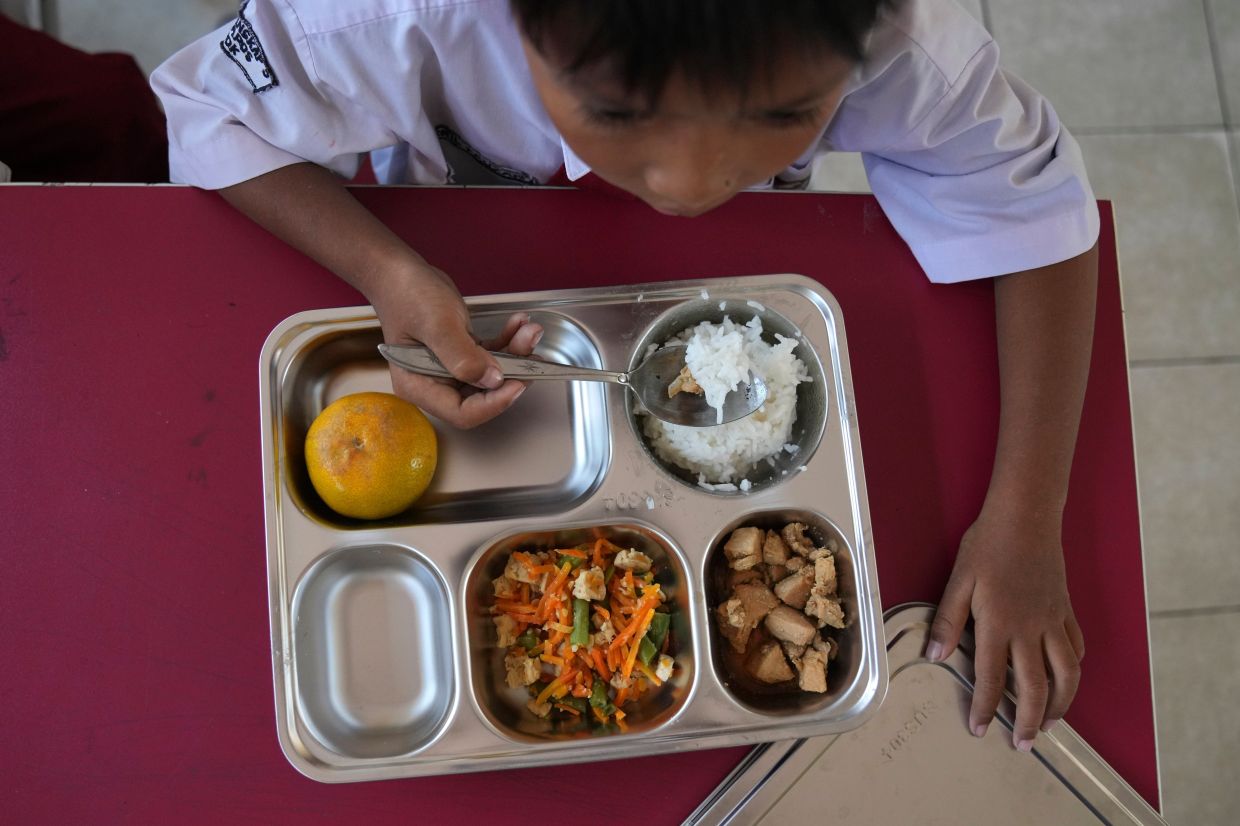
Indonesia's leading anti-corruption watchdog is intensifying pressure on the government to fundamentally reassess President Prabowo Subianto's ambitious free meals initiative, one of his administration's marquee policy commitments. Indonesia Corruption Watch has escalated its criticism beyond the recent detention of the scheme's former administrator, now demanding a comprehensive suspension and far-reaching investigation that extends well beyond the handful of officials already in custody. The intervention marks a critical juncture for a programme that, despite its noble objectives of tackling malnutrition and poverty, has become entangled in controversy barely 18 months after its establishment.
The immediate trigger for the intensified scrutiny came with the dismissal and subsequent detention of Dadan Hindayana, the National Nutrition Agency's founding chief, on suspicion of corruption. Four additional individuals, notably including two of Hindayana's senior deputies, were also apprehended as authorities opened a formal investigation into the sprawling operation. However, Indonesia Corruption Watch argues that this enforcement action merely scratches the surface of systemic problems within an agency that, despite its youth, already operates in 60 million households nationwide. Wana Alamsyah, the organisation's law and investigation chief, advocates for nothing less than the complete dissolution of the National Nutrition Agency, characterising it as fundamentally compromised and requiring radical restructuring rather than incremental reform.
The corruption watchdog's position reflects deep concerns about governance failures embedded in the programme's architecture. Wana contends that the initiative suffered from inadequate planning and precipitous implementation, creating conditions where misconduct could flourish unchecked. The investigation must expand substantially to encompass all beneficiaries of governance lapses, he argues, including vendors supplying the kitchens and members of procurement committees responsible for awarding contracts. This broader analytical approach suggests that individual wrongdoing by senior officials may represent merely the visible manifestation of systematic dysfunction pervading the entire supply chain and administrative apparatus.
The government's response has focused on containment and repositioning rather than wholesale abandonment. Nanik S. Deyang, appointed as the agency's new chief, has outlined a recalibration strategy that acknowledges previous missteps while preserving the core mission. Her restructuring plan envisions spending substantially less than the 268 trillion rupiah budgeted for the current year, pivoting toward geographically targeted implementation emphasising remote regions where nutritional deficiencies are most acute. Critically, Deyang has signalled that pursuing the original target of 82.9 million recipients matters less than ensuring the distributed meals meet genuine nutritional standards and quality benchmarks that previous operations apparently failed to maintain.
This strategic recalibration hints at the underlying tensions that have plagued the programme's expansion. Early concerns about logistics, food safety, and nutritional adequacy coalesced with accumulating evidence of institutional vulnerabilities. Reports of foodborne illness incidents, widespread complaints regarding meal quality, and the prevalence of ultra-processed offerings gained traction across social media platforms. Yet government officials remained largely non-responsive to this emerging chorus of criticism, according to the anti-corruption group's assessment, treating concerns as incidental rather than structural. The apparent indifference to grassroots feedback contrasts sharply with the decisive action taken following the formal corruption allegations, raising questions about institutional priorities and the calculus behind timing enforcement responses.
Wana articulates a strikingly candid interpretation of the government's sudden pivot: deteriorating fiscal conditions may have necessitated budget recalculations and programme retrenchment, but facing significant opposition from communities benefiting from the kitchens already established, policymakers required a mechanism to legitimise scaling back the initiative. The detention of Hindayana and subsequent associates, while perhaps warranted on merit, conveniently provided political cover for the broader reorientation. This analysis underscores how corruption allegations become entangled with legitimate policy disputes, complicating the task of distinguishing genuine wrongdoing from tactical repositioning in response to fiscal pressures.
Beyond immediate governance failures, the investigation has illuminated troubling structural vulnerabilities within the kitchen network underpinning meal distribution. Indonesia Corruption Watch's analysis of 102 foundations operating kitchens across 38 provinces identified extensive linkages to politically-connected stakeholders spanning politicians, government officials, military personnel, and business networks. These patronage relationships create pervasive conflict-of-interest scenarios that compromise procurement objectivity and resource allocation impartiality. A separate study by the Jakarta-based Centre of Economic and Law Studies found that nearly four-fifths of surveyed respondents perceived potential conflicts arising from the direct appointment mechanisms governing vendor selection, identifying this process as inherently susceptible to favouritism and abuse.
Regional considerations amplify concerns about equitable implementation and effectiveness. Multiple analyses note that the programme was deployed universally across Indonesian schools without targeting concentrations of malnutrition in poorer rural areas where need is most pronounced. This universal coverage approach stands in tension with both budgetary constraints and optimal resource allocation principles. By extending meals to all schools regardless of socioeconomic context, the initiative diluted its capacity to address the most severe nutritional deficits while simultaneously creating administrative complexity that facilitated mismanagement and misconduct. The mismatch between deployment strategy and stated poverty-alleviation objectives raises fundamental questions about programme design that transcend individual corruption and implicate policymaking itself.
Public response has intensified scrutiny on the enterprise beyond official circles. Student-led protests in Jakarta last month specifically targeted the free meals initiative as wasteful spending, with clashes between demonstrators and police forces highlighting the political contestation surrounding Prabowo's fiscal priorities. Subsequent demonstrations in major cities prompted authorities to mobilise over 6,000 police and military personnel in the capital, indicating the level of tension surrounding the programme's continuation. This street-level mobilisation reflects broader anxiety about resource allocation amid competing development priorities and mounting fiscal pressure from global factors affecting Indonesia's energy subsidy commitments.
Investor sentiment has likewise absorbed the negative implications of the programme's trajectory. Financial markets remain jittery regarding Indonesia's budgetary sustainability, with the free meals initiative representing a prominent symbol of potentially unsustainable public expenditure. The coinciding pressures from elevated fuel costs driven by Middle Eastern geopolitical tensions have further strained fiscal space, intensifying scrutiny of discretionary spending irrespective of its developmental rationale. Economic analysts and think tank researchers increasingly question whether the promised employment, health, and broader economic benefits justify the substantial budgetary commitment, particularly if implementation failures undermine credibility and effectiveness.
Deyang's announced moratorium on establishing new kitchen facilities represents an attempt to arrest expansion while introducing enhanced vetting mechanisms for prospective operators. The reorientation toward utilising existing school infrastructure rather than constructing dedicated kitchen facilities offers marginal efficiency gains while reducing future institutional proliferation. However, this incremental reform falls considerably short of the wholesale interrogation demanded by corruption watchdogs, suggesting continuing philosophical gaps between government technocrats and accountability advocates regarding the initiative's appropriate scope and governance architecture. The outcome will substantially influence Indonesia's capacity to deliver on anti-poverty commitments while maintaining public confidence in institutional integrity.