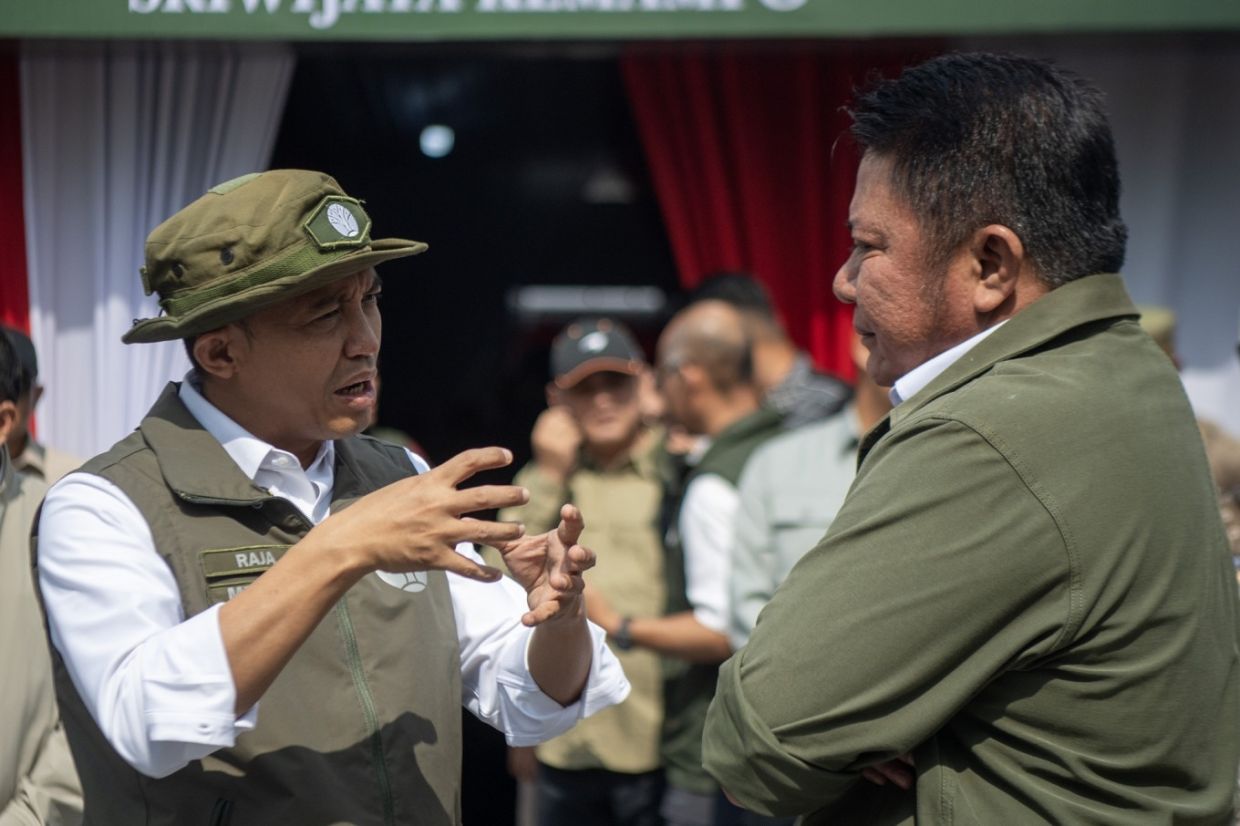
Indonesia's Corruption Eradication Commission (KPK) has resumed its investigation into alleged bribery involving Forestry Minister Raja Juli Antoni, with investigators now scrutinising discrepancies between the amount of illicit funds the minister claims to have received and what he subsequently returned. The development signals renewed pressure on a senior official already facing public and parliamentary scrutiny over his handling of what authorities describe as improper gifts linked to forest conversion requests.
According to KPK spokesperson Budi Prasetyo, graft investigators are examining a significant gap between the money reportedly transferred to Raja Juli and the total sum he later reported returning. The central figure in the alleged scheme is Suhardiman Amby, regent of Kuantan Singingi in Riau province, who is suspected of offering the minister kickbacks during a June 2 meeting between the provincial administration and the Forestry Ministry. Investigators allege that Suhardiman presented Raja Juli with an envelope containing S$14,000 (US$10,919) in Singaporean currency—a gesture the minister later characterised as unwelcome.
The investigation has uncovered a broader pattern of alleged misconduct beyond the minister's interaction with the regent. Other officials within the Forestry Ministry apparently received kickbacks totalling S$12,500 from various Kuantan Singingi administrators during the same period. The timing and coordination of these transfers suggest a coordinated effort to influence ministry decision-making, though investigators have not yet established direct causal links between the payments and specific policy outcomes. The accumulation of multiple transactions across different officials points to what authorities view as a systematic attempt to cultivate influence within the ministry.
Raja Juli reported the initial bribery attempt to the KPK on July 3, claiming he had rejected Suhardiman's offer outright. The minister asserted that he returned the envelope on June 12—ten days after the alleged meeting—at Kuantan Singingi Police headquarters, maintaining that accepting such a gift would have violated his official responsibilities. However, this narrative has come under scrutiny as KPK investigators probe the specific amounts involved and the chain of custody for the returned funds. The distinction between the envelope's original contents and what Raja Juli claims to have returned has emerged as a critical factual question in the investigation.
Under Indonesian law, public officials who receive improper gifts in connection with their duties face strict obligations. Regulations require that such gifts be reported to the KPK within thirty days of receipt; reporting to local police, as Raja Juli allegedly did, does not satisfy legal requirements. Convictions for accepting illicit gifts carry potential sentences of up to twenty years imprisonment alongside fines reaching Rp 1 billion (US$55,867). The legal framework reflects Indonesia's commitment to combating corruption within its bureaucracy, though enforcement depends heavily on the strength of evidence and the credibility of officials' accounts.
The underlying motive for the alleged bribery relates to a land-use matter with significant environmental implications. Kuantan Singingi administration has requested that the Forestry Ministry reclassify more than 1,800 hectares of limited production forest (HPT)—designated areas intended exclusively for low-intensity timber harvesting and industrial development—into other categories. Such reclassification would fundamentally alter the permitted uses of the land and potentially open it to development projects the current classification prohibits. The KPK suspects that Suhardiman's financial inducements were intended to influence the ministry's decision-making on these controversial reclassification requests.
Budi Prasetyo's revelation that Raja Juli and Suhardiman met at least three times between April and June adds another layer of complexity to the investigation. These multiple encounters suggest a relationship characterised by repeated engagement rather than a single isolated incident. Whether these meetings formed part of a deliberate courtship aimed at securing the minister's support or represented routine administrative contact remains unclear, but the frequency of interaction has heightened official suspicion regarding the nature of their relationship. The pattern contrasts sharply with Raja Juli's characterisation of the June 2 meeting as an ordinary ministry-regency coordination session.
Suhardiman himself faces separate corruption charges stemming from an investigation that initially focused on kickbacks he allegedly paid to the regency's secretary, Zulkarnain, in exchange for the latter's appointment to a regional administrative position. The KPK's decision to expand Suhardiman's case file to encompass the alleged bribes to Raja Juli and other ministry staff suggests investigators view these transactions as part of a wider pattern of corrupt conduct rather than isolated incidents. As a member of President Prabowo Subianto's Gerindra Party, Suhardiman's arrest and implication in multiple schemes carries potential implications for the ruling coalition's political standing.
Raja Juli occupies a particularly sensitive position as secretary-general of the Indonesian Solidarity Party (PSI), a minor coalition partner in the government. His ministerial appointment positions him as a bridge between his party and the executive branch, making any corruption allegations politically significant beyond the immediate merits of the case. Members of the House of Representatives' Commission IV, which oversees forestry and land-use policy, have demanded his appearance to address questions about his conduct and the ministry's handling of Kuantan Singingi's reclassification requests. When the minister failed to appear at a scheduled July 14 meeting, claiming he was on a religious pilgrimage to Saudi Arabia, the absence reinforced perceptions of evasiveness among critical lawmakers.
The Forestry Ministry has attempted to deflect criticism by emphasising its cooperation with the KPK investigation while asserting that no forest reclassification decisions have been granted in connection with the alleged bribes. Officials note that the three proposals from Kuantan Singingi submitted during the relevant period have been either rejected or remain pending verification, suggesting the alleged corruption did not translate into favourable policy outcomes. This defensive posture acknowledges the seriousness of the investigation while attempting to minimise the practical damage caused by the alleged misconduct. Whether such protestations will satisfy parliamentary skeptics remains uncertain, particularly given the public attention the case has attracted.
The case illuminates broader vulnerabilities within Indonesia's forest governance systems and the persistent challenges authorities face in combating corruption among senior officials. The involvement of a cabinet minister and provincial regent highlights how corruption networks can extend across multiple administrative levels and political party structures. For Malaysian and regional observers, the case demonstrates both the robustness of Indonesia's anti-corruption institutions—the KPK's willingness to investigate a sitting minister—and the difficulties that persistent cultural and structural factors pose for clean governance. The investigation's ultimate outcome will signal whether Indonesia's anti-corruption mechanisms can effectively hold powerful officials accountable or whether political pressure and administrative resistance will limit their impact.

