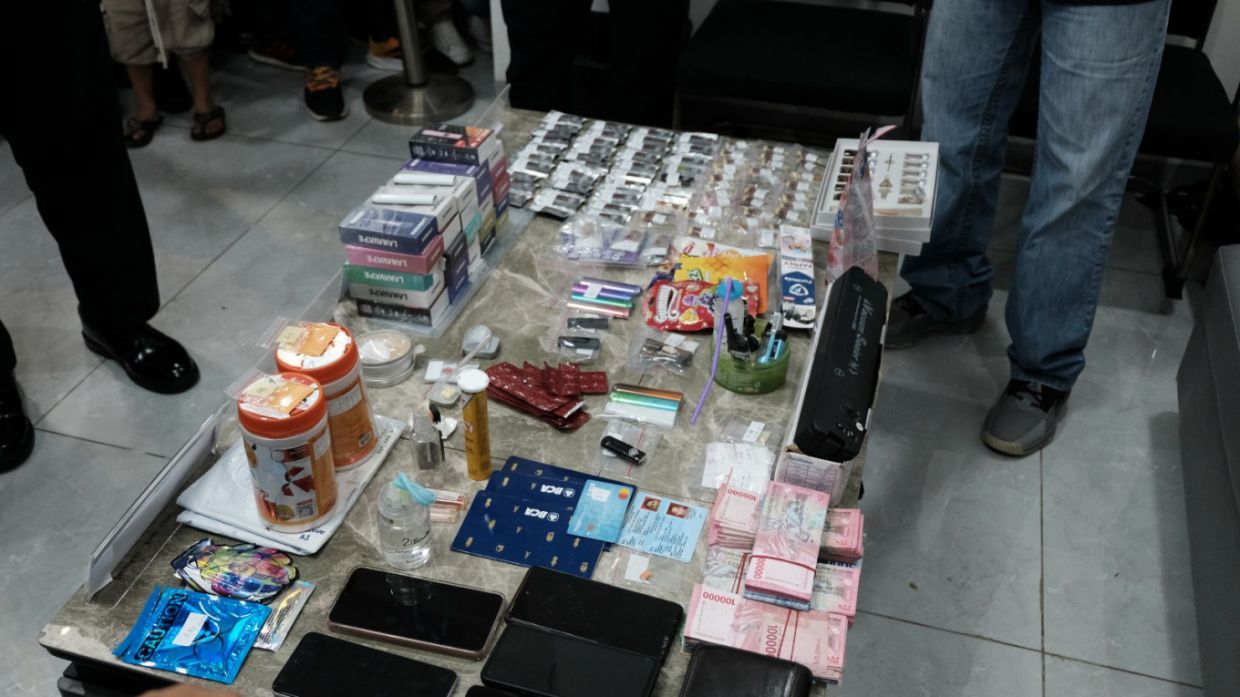
Indonesian law enforcement agencies have successfully broken up an international drug trafficking operation centred in Batam, with authorities arresting six local suspects and launching a manhunt for two Malaysian nationals accused of orchestrating the supply chain. The National Narcotics Agency (BNN) and Indonesia's Customs and Excise Directorate General executed coordinated raids across multiple locations in the Riau Islands, recovering substantial quantities of narcotics and dismantling what officials characterised as a highly systematised smuggling and distribution network that exploited the region's porous maritime borders.
According to BNN deputy for enforcement Insp. Gen. Aswin Sipayung, the syndicate operated with sophisticated operational discipline, managing every stage of the illicit supply chain from initial smuggling through illegal seaports to final packaging and street-level distribution throughout Batam and surrounding areas. This vertical integration represented a significant security concern for Indonesian authorities, who have intensified focus on transnational drug trafficking networks that exploit Southeast Asia's interconnected maritime routes and permeable land borders. The scale and organisation of the operation underscores how Malaysian-based criminal enterprises have increasingly targeted Indonesian markets, particularly in border regions where enforcement capacity remains stretched.
The investigation originated with a routine customs inspection at Soekarno-Hatta International Airport, where officers intercepted a suspicious package originating from Malaysia that had been deliberately mislabelled as Orange Fiber Xtra, a commercial food supplement product. Subsequent laboratory analysis at the Customs and Excise Laboratory in Jakarta revealed the package contained MDMA, ketamine, and other prohibited substances—a discovery that triggered expanded joint operations between customs and narcotics personnel. This detection methodology highlights how border security infrastructure, when properly resourced and coordinated, can serve as an effective early-warning mechanism for larger trafficking networks.
The investigation quickly yielded results, with authorities apprehending a man identified as BAP as he attempted to collect the intercepted shipment in Batam on Wednesday. BAP's cooperation with investigators enabled rapid follow-up arrests, leading to the detention of three additional suspects at a Baloi hotel, including ED who allegedly placed the drug order, alongside NC and TFS. The speed of the subsequent arrests suggests that BAP provided operationally useful intelligence regarding the network's structure and personnel, a pattern increasingly common as trafficking networks operate with tighter coordination but less operational security consciousness.
Additional raids targeting residential and commercial properties controlled by network members uncovered extensive drug caches distributed across multiple locations. Officers raided an apartment belonging to TFS in Teluk Tering and a boarding house in the Sakura Garden shophouse area of Batu Ampar, where they detained two further suspects, AJ and DA. The properties yielded dozens of vape cartridges and e-cigarette pods containing etomidate—a pharmaceutical compound increasingly misused as a recreational drug in Southeast Asia—alongside conventional narcotics including methamphetamine, ketamine, and tablets branded as Happy Five and packaged Happy Water drinks. The use of vaping devices as drug delivery mechanisms reflects evolving smuggling tactics designed to evade detection by mimicking legitimate commercial products.
Concurrently, customs authorities at Batam Centre International Ferry Terminal intercepted a separate smuggling attempt by a Malaysian passenger identified as PS arriving from Stulang Laut International Ferry Terminal in Johor Bahru. PS was carrying 48 cartridges containing etomidate, representing an independent but potentially coordinated smuggling operation. This simultaneous interception suggests either coordinated regional supply chains or copycat operations responding to market demand, both of which indicate growing transnational drug trafficking sophistication in the Johor-Riau corridor.
The consolidated seizures across all operations totalled substantial quantities of narcotics and paraphernalia: 1,076.18 grams of MDMA, 50 grams of methamphetamine, 25.6 grams of ketamine powder, 86 Happy Five tablets, 10 ecstasy pills, 170 vape cartridges containing etomidate, 12 vials of etomidate weighing 226 grams, 88 vape devices, nine bongs used for methamphetamine consumption, three plastic sealing devices, and six digital scales. Additionally, authorities confiscated four vehicles—a Toyota Alphard van, Toyota Agya hatchback, Chery SUV, and two motorcycles—suggesting the network maintained multiple logistics assets for distribution operations. This inventory magnitude indicates a mid-tier trafficking enterprise rather than small-scale street dealing.
Authorities identified the syndicate's deceptive packaging methodology as a critical operational feature, with network members concealing drugs and etomidate cartridges within dried food packages and food supplement sachets before resealing them with specialised plastic equipment to maintain the appearance of legitimate consumer products. This camouflage technique exploits the high volume and low scrutiny typically afforded to food and supplement imports within regional trade flows, particularly across Malaysia-Indonesia maritime routes where customs inspection capacity remains constrained relative to cargo volumes.
The investigation remains ongoing, with authorities investigating potential connections to a separate etomidate manufacturing facility recently raided by joint BNN and Customs teams in Batam, suggesting the syndicate may have had domestic production capabilities supplementing Malaysian imports. If confirmed, such manufacturing infrastructure would represent significant operational advancement, transforming the network from a simple distribution channel into an integrated supply-production enterprise.
Two Malaysian nationals identified as SL and WKC have been designated as primary suspects and placed on international wanted lists. These individuals are believed to have served as the syndicate's principal suppliers, coordinating the logistics of moving narcotics from Malaysian sourcing points into Batam and adjacent Indonesian territories. Their continued evasion suggests they have relocated from Malaysian jurisdiction or maintained low operational profiles while potentially continuing supply relationships with successor networks.
Batam Customs and Excise Office head Agung Widodo characterised the operation as a continuation of intensified daily border monitoring, projecting that the enforcement action would prevent approximately 6,770 potential drug users from addiction and avert approximately Rp10.8 billion (US$599,000) in state healthcare and rehabilitation expenditures. These projections, whilst difficult to verify independently, reflect official estimates of societal costs attributable to drug trafficking networks and justify continued investment in border enforcement infrastructure.
The arrested suspects face prosecution under Indonesia's stringent narcotics legislation, specifically Articles 114(2), 132(1), and 112(2) of Law No. 35/2009 on Narcotics, which carry penalties ranging from five years' imprisonment to capital punishment for trafficking offences, alongside maximum fines of Rp10 billion. The severity of potential sentences reflects Indonesia's increasingly punitive approach to transnational drug trafficking, positioning narcotics enforcement as a priority national security concern requiring deterrent-scale penalties.
For Malaysian policymakers and law enforcement agencies, this operation illustrates how Malaysian-based criminal networks utilise Malaysian territory as a narcotics sourcing and transit point for regional distribution, a pattern that undermines regional stability and strains bilateral law enforcement cooperation. The successful dismantling reflects competent Indonesian enforcement but also highlights ongoing vulnerabilities in the Malaysia-Indonesia border region that trafficking networks continue to exploit, suggesting that sustained coordination and information-sharing between both nations' drug enforcement agencies remains essential for addressing transnational narcotics operations.

