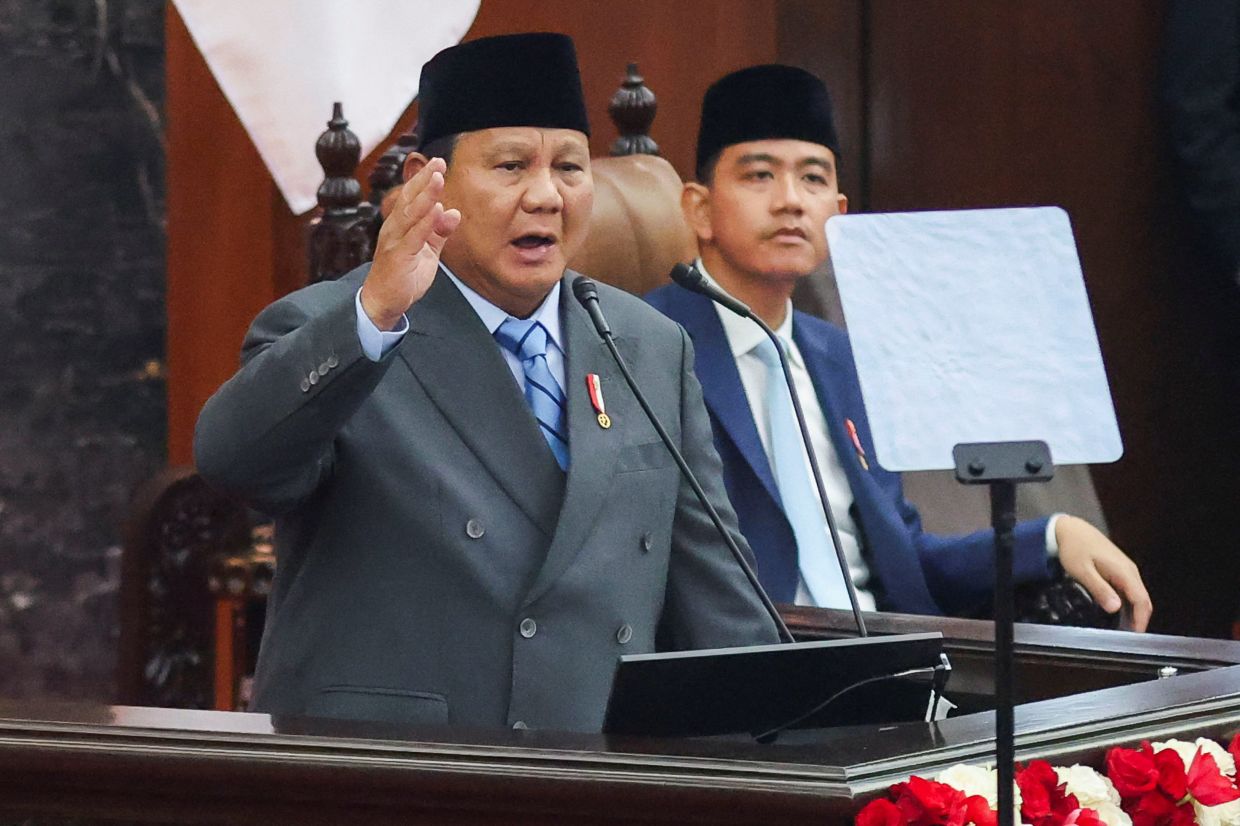
Indonesia is embarking on an unprecedented restructuring of its public sector, with President Prabowo declaring his intention to shut down more than 750 state-owned enterprises before year-end in what he characterised as potentially the largest corporate overhaul globally. Speaking during his address to parliament on Friday, the president revealed that the discovery of Indonesia's true scale of state ownership — 1,074 enterprises rather than the previously assumed 300 to 400 — had prompted decisive action to eliminate what he termed chronically unproductive entities masking financial reality through falsified earnings reports.
The magnitude of Indonesia's state enterprise portfolio came to light only after the establishment of the Danantara sovereign wealth fund last year, which was tasked with consolidating oversight of state assets. This revelation exposed a governance crisis embedded within Southeast Asia's largest economy, where sprawling networks of underperforming public companies have operated with minimal accountability or strategic purpose. Prabowo's characterisation of these enterprises as existing "as they please, with no sense of responsibility to the nation, to the state" underscores frustration with a system that has permitted institutional dysfunction to persist despite decades of anti-corruption rhetoric.
Progress towards the restructuring target has already commenced, with 290 closures completed to date, leaving approximately 300 viable enterprises to remain operational by the end of 2024. The selection criteria focus on retaining only those organisations demonstrating genuine productivity and value creation for Indonesian citizens. This philosophical shift represents a departure from the previous model, which tolerated the existence of numerous zombie enterprises sustained primarily through the salaries and perquisites provided to executives. The administration estimates that the consolidation has already generated approximately 50 trillion rupiah (exceeding USD 2.8 billion) in annual overhead savings through elimination of directors' compensation packages, facility costs, vehicle allocations, and travel expenditures.
The financial performance improvements accompanying this restructuring appear substantial, with state-owned enterprise profits increasing by more than 75 per cent between 2024 and 2025 to reach 326 trillion rupiah. Such gains suggest that previous financial disclosures were indeed substantially misrepresented, validating the president's contention that reported profits had been artificially inflated. The administration projects additional savings exceeding 70 trillion rupiah by the current year's conclusion, contingent upon accelerated implementation of efficiency measures across the remaining portfolio.
Beyond financial metrics, Prabowo has signalled an intention to pursue accountability for past mismanagement through judicial mechanisms. He proposed establishing a special ad hoc court with jurisdiction to investigate the governance practices and executive conduct of state-owned enterprises spanning the previous three decades. Such retrospective investigations would represent an extraordinary intervention into corporate history, potentially implicating hundreds of former and current board members and senior managers. However, the president simultaneously suggested that lawmakers consider provisions offering partial amnesty to officials willing to demonstrate contrition and compliance, suggesting a pragmatic recognition that wholesale prosecutions could prove administratively overwhelming and politically divisive.
Indonesia's corruption landscape remains persistently troubling, with the nation scoring only 34 out of 100 on Transparency International's 2025 Corruption Perceptions Index, positioning it among the lower-ranked countries globally. The prevalence of graft within state enterprises represents merely one manifestation of deeper systemic integrity deficits permeating both public administration and private commerce. Rising public frustration with corruption has become intertwined with broader grievances regarding economic hardship, particularly as households confront inflation pressures amplified by Middle East tensions and their ripple effects on global energy markets. The state enterprise restructuring has thereby assumed symbolic importance as evidence of governmental responsiveness to citizen demands for institutional reform.
Among Prabowo's signature initiatives facing criticism over cost and effectiveness is the universal school meals programme, which he acknowledged Friday requires enhancement to ensure efficiency gains without compromising the initiative's developmental objectives. The president reaffirmed commitment to combating childhood malnutrition, noting that approximately one in four Indonesian children experience stunting — a statistic reflecting deficient early-life nutrition with long-term consequences for cognitive and physical development. This health challenge intersects directly with the state enterprise overhaul, as improved fiscal capacity through enterprise consolidation theoretically permits enhanced investment in social programmes without expanding the overall budgetary footprint.
Macroeconomic stability remains central to the administration's broader agenda, with Prabowo expressing confidence that real gross domestic product growth will attain 6.0 per cent by 2026's conclusion. Second-quarter 2024 growth registered 5.3 per cent, following first-quarter expansion of 5.6 per cent, though international analysts have consistently questioned the reliability of Indonesia's official growth statistics. The president has reframed national development objectives beyond conventional growth metrics, emphasising that investment quality and distributional outcomes — particularly improvements in living standards for lower-income populations — warrant equal or superior emphasis relative to aggregate expansion rates.
For Malaysian observers and regional policymakers, Indonesia's enterprise restructuring presents both cautionary lessons and relevant benchmarks. Malaysia has similarly grappled with underperforming government-linked companies, though typically addressing such challenges through incremental rather than wholesale transformations. The Indonesian approach's potential efficacy in simultaneously improving fiscal outcomes and institutional accountability while managing political and social disruption will likely inform broader Southeast Asian discussions regarding public sector efficiency and anti-corruption strategy. The extent to which Indonesia successfully executes this restructuring whilst maintaining economic stability and managing distributional impacts will carry implications for regional governance models and investor confidence across the archipelago.

