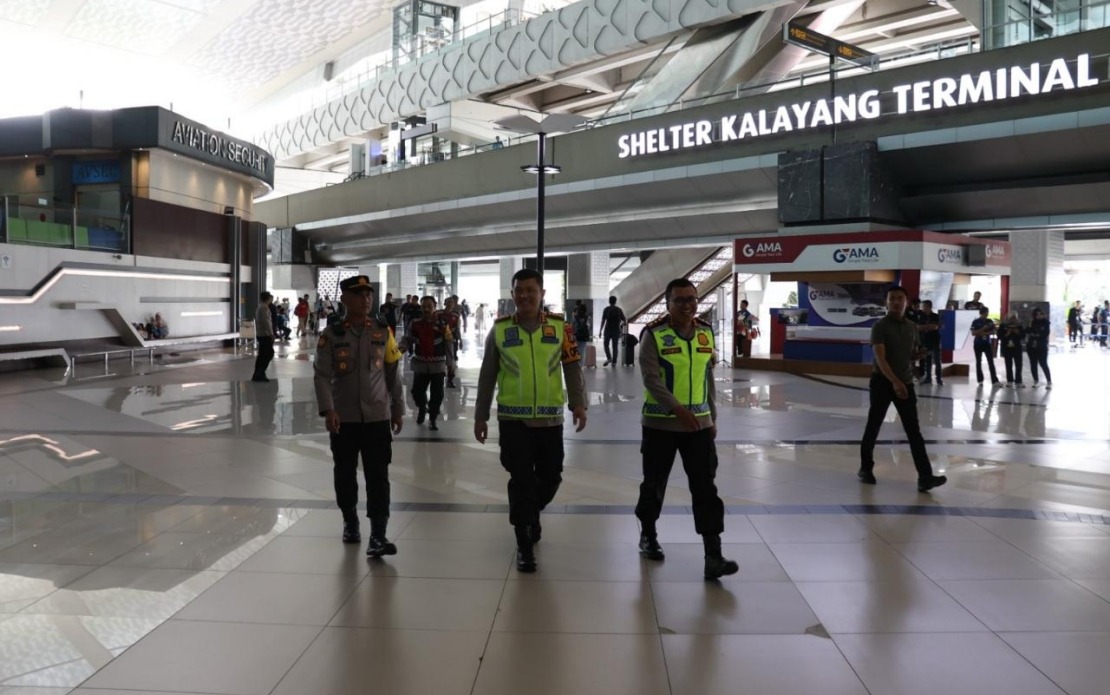
Indonesia's customs and excise authorities have moved to strengthen security procedures at Soekarno-Hatta International Airport in response to a significant drug smuggling case involving a Malaysian airline pilot. The enhanced measures come after the arrest of a 39-year-old pilot on July 29, who allegedly attempted to bring approximately 25 kilogrammes of ecstasy into Indonesia concealed within luggage marked with crew identification tags. The seized narcotics, valued at roughly Rp60 billion or approximately RM13.51 million, represent one of the larger contraband operations detected at the country's busiest aviation hub in recent months.
Hengky Tomuan Parlindungan Aritonang, head of Soekarno-Hatta's main customs office, announced the new security framework during a Saturday briefing, emphasizing that the response would focus specifically on more rigorous baggage examination protocols rather than expanding into drug screening testing. The revised approach recognizes that Indonesia maintains an obligation to preserve expedited processing for legitimate crew operations while simultaneously closing vulnerabilities that criminal networks have exploited. This balancing act reflects the complexities modern airports face in managing both operational efficiency and security imperatives at high-traffic international terminals serving the Southeast Asian region.
The incident has prompted a comprehensive review of how the airport handles crew luggage, a traditionally fast-tracked process designed to minimize delays for pilots and flight attendants who operate multiple routes daily. Under the revised system, random inspections will be conducted on flight personnel from both international and domestic carriers, with particular attention to identifying suspicious behavioral patterns or anomalies in luggage composition. Authorities acknowledged that while maintaining the dedicated crew lane facility remains operationally necessary, the screening intensity within that pathway will be substantially elevated to prevent future exploitation of this historically privileged access.
Investigations revealed that the Malaysian pilot had allegedly fabricated his crew documentation or misused legitimate credentials to access the crew baggage handling system, concealing the contraband beneath layers of clothing inside a suitcase bearing authentic crew claim tags. This method of deception highlights how sophisticated smuggling operations have become, with criminals studying airport protocols and security gaps to engineer increasingly complex infiltration strategies. For Malaysian authorities and carriers operating from this hub, the incident underscores the necessity of enhanced vetting procedures and documentation controls for staff accessing crew-only zones.
Beyond the immediate arrest, authorities have identified several aggravating factors in this case that suggest organized criminal involvement rather than individual criminal enterprise. The suspect tested positive for MDMA, methamphetamine, and cocaine, indicating possible personal substance abuse alongside trafficking activities. Additionally, preliminary investigations found evidence that the individual had previously engaged in narcotics smuggling operations, suggesting a pattern of criminal behavior spanning multiple attempts and jurisdictions. This history indicates that standard background checks and ongoing monitoring of aviation personnel may require enhancement throughout Southeast Asian carriers and airports.
The financial incentives underlying such operations remain substantial enough to tempt individuals with access to secure airport facilities. Authorities determined that the pilot had been promised RM50,000 (approximately Rp220 million) for facilitating this single shipment, a sum representing significant compensation relative to typical aviation worker salaries while remaining modest compared to the contraband's street value. This disparity illustrates how syndicates operating international drug trafficking networks structure their recruitment, targeting employees in critical infrastructure positions with relatively modest inducements while retaining the substantial profit margins from subsequent distribution.
Indonesian customs officials have indicated that investigations are continuing into identifying the mastermind allegedly orchestrating this smuggling operation. The pursuit of higher-level organizers is crucial, as dismantling supply chains requires addressing both street-level facilitation and the command structures directing international contraband movement. For Malaysia, cooperation with Indonesian law enforcement in pursuing these investigations carries implications for domestic security, as the operational networks may maintain connections to Malaysian ports, airports, or distribution centers.
The timing of this case coincides with broader regional challenges regarding synthetic drug trafficking through aviation networks. Southeast Asia has experienced surging volumes of ecstasy, methamphetamine, and designer drugs transiting through major hubs, with organized criminal syndicates increasingly leveraging air cargo and crew baggage systems to circumvent traditional narcotics detection methods. Soekarno-Hatta's position as a major regional aviation nexus makes it a logical target for such operations, connecting major population centers and serving as a hub for numerous Asian and international airlines.
For the aviation industry across Malaysia and Indonesia, this incident carries operational and reputational implications. Airlines face pressure to implement more stringent personnel vetting, background monitoring, and access control systems to prevent employees from becoming vectors for smuggling operations. The enhanced screening protocols at Soekarno-Hatta may establish a template that other major Southeast Asian airports adopt, potentially increasing processing times and operational costs while strengthening security perimeters.
The case also reflects persistent vulnerabilities in crew credential verification systems across the region. As airports and airlines modernize access control infrastructure, integrating biometric identification, real-time database verification, and multi-factor authentication for crew privilege access becomes increasingly essential. Malaysian aviation authorities may review whether comparable measures require implementation at Kuala Lumpur International Airport and other domestic terminals to prevent similar exploitation domestically.
Indonesia's response demonstrates a commitment to addressing aviation security threats while maintaining operational functionality, a balance that benefits legitimate travelers and carriers across the region. The focus on baggage screening rather than introducing intrusive drug testing reflects practical acknowledgment that comprehensive chemical screening would create unworkable delays at major international airports. However, the enhanced random inspection regime may serve as a deterrent for potential recruitment efforts by smuggling syndicates seeking to exploit crew access privileges.

