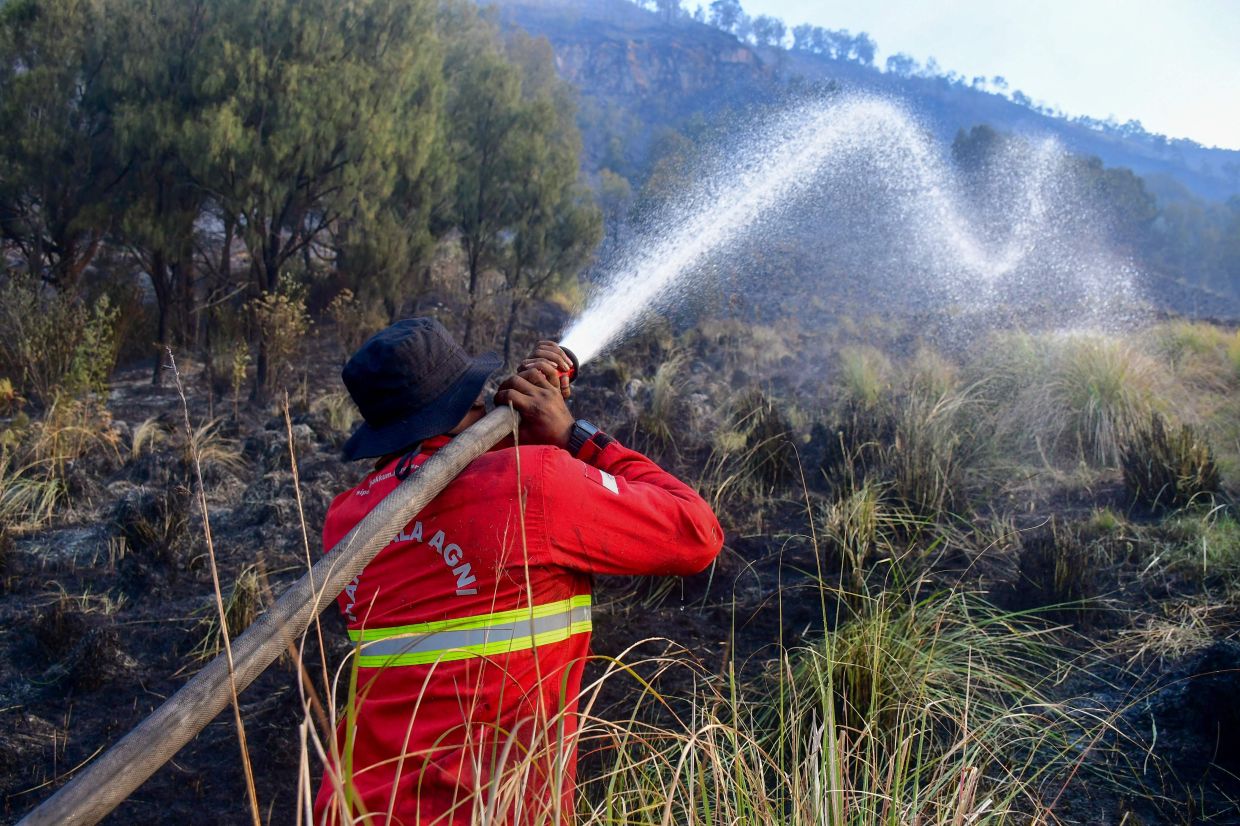
Indonesia has implemented a comprehensive closure of Mount Bromo, one of Southeast Asia's most visited volcanic destinations, effective from Saturday evening as firefighting efforts intensify against an expanding forest fire that has engulfed large swathes of the Bromo Caldera region in East Java. The Bromo Tengger Semeru National Park authority moved to seal all entry points beginning at 10pm on Saturday to create conditions for emergency responders to work unimpeded while ensuring that the thousands of tourists who regularly flock to this iconic volcanic landscape face no exposure to immediate danger.
The park's decision to suspend tourism operations entirely represents a dramatic step reflecting the severity of the situation on the ground. The authority has cordoned off five separate access points that typically funnel visitors into the national park: the Cemorolawang entrance in Probolinggo Regency, Wonokitri in Pasuruan Regency, and the dual entry points at Jemplang and Coban Trisula in Malang Regency, along with the Senduro gateway in Lumajang Regency. Each of these routes normally accommodates steady streams of domestic and international tourists eager to experience the dramatic volcanic landscape and witness sunrise views across the caldera. The comprehensive nature of the closure underscores the authorities' assessment that conditions have deteriorated beyond acceptable safety thresholds.
The practical implications for tourists caught in this disruption have been addressed through a structured accommodation framework. Visitors who have already secured tickets through online booking systems for dates falling within the closure period possess two straightforward options: they may reschedule their visits to a later date once the park reopens, or they may pursue refunds through the booking platform. This approach aims to balance the immediate imperative of visitor safety with recognition of the financial implications for tourism operators and individual travellers who had planned holidays to this popular destination.
The underlying fire situation began its destructive progression on Monday and had consumed an estimated 176.20 hectares across territories spanning both Probolinggo and Malang regencies by the time authorities made their closure announcement. Abdul Muhari, head of the Disaster Data, Information, and Communication Centre at Indonesia's National Disaster Management Agency, provided updates indicating that as of Saturday night, active hotspots continued emitting visible smoke despite ongoing suppression efforts. The persistence of these hotspots, combined with moderate wind conditions at the time, suggested that the fire retained significant energy and remained capable of rapid spread should atmospheric conditions shift in unfavourable directions.
Government response has mobilized substantial aerial firefighting resources to combat the blaze. Two helicopters, each equipped with a 1,000-litre water-carrying capacity, were deployed to participate in aerial suppression operations. These aircraft represent critical resources for tackling fires across volcanic terrain where ground access can prove challenging due to the rugged topography and unstable ground conditions inherent to caldera environments. The deployment of these assets reflects the magnitude of challenge that ground-based firefighting teams alone could not adequately address, particularly when dealing with fires spreading across expansive forested zones at varying elevations.
The Bromo situation represents only one component of a broader wildfire crisis affecting Indonesian volcanic regions during this period. A separate fire incident struck Mount Rinjani National Park in East Lombok Regency, where flames consumed approximately 30 hectares within the Sembalun Resort area. That fire ignited at approximately 8pm on Friday evening and burned through the night before being brought under control around 1:30am on Saturday morning. Though this incident was contained more rapidly than the Bromo fire, it underscores how multiple volcanic zones across eastern Indonesia have become simultaneously vulnerable to fire conditions, suggesting widespread environmental factors favouring fire propagation across the region.
The investigation into the origins of both fires remains ongoing, with authorities declining to issue preliminary conclusions regarding whether these incidents resulted from natural causes such as spontaneous combustion in dry vegetation, accidental ignition by visitors, or deliberate action. This investigative restraint reflects standard disaster management practice, avoiding speculation that could mislead public understanding before forensic examination of fire origins is complete. For Malaysia and other neighbouring nations monitoring Indonesia's disaster management capacity and fire prevention protocols, these incidents underscore the complexity of managing large protected areas where tourism demands must be balanced against environmental protection and public safety.
The closure of Mount Bromo carries significant implications for East Java's tourism economy, which depends substantially on visitor revenue flowing to local communities surrounding the national park. Hotels, guide services, transport operators, and hospitality businesses built around serving tourists attempting to reach this destination will experience immediate revenue disruption during the suspension period. However, Indonesian authorities have prioritized the demonstrable principle that visitor safety supersedes economic considerations in emergency circumstances, a stance that regional observers would generally recognize as appropriate crisis management.
The timing of this incident and the scale of response raise broader questions about Indonesia's preparedness for increasingly severe fire seasons that climate scientists associate with shifting precipitation patterns. Mount Bromo's status as one of the nation's premier tourist attractions means that fire incidents here receive elevated official attention and resource allocation compared to fires in less economically prominent locations. The contrast between the robust response here and the often-limited firefighting capacity deployed in more remote areas reflects structural inequities in disaster management resource distribution across the archipelago. For Malaysian environmental observers and tourism professionals monitoring regional patterns, the incident illustrates how climate-driven fire seasons are reshaping access to and enjoyment of Southeast Asia's natural attractions.

